EKIP– Expert Club for Economics and Politics A Different Opinion
Houston, we have a problem. Judging by all the news and statements from the government on the subject, it seems that Budget 2021 will be the most wasteful in a long, long time. The entire budget preparation process and the discussions surrounding it are extremely puzzling to anyone with basic economic literacy. Why, at a time of crisis, difficult business activity, increased risk of unemployment, and shrinking tax revenues, is there almost only talk about social spending?
The main fiscal measures – vote buying?
In the table below you can see all the major fiscal measures that the government has announced it will include in Budget 2021 so far. Note that all of them are in the social sphere on the expenditure side of the budget, without exception. There is not a single measure on the revenue side, in terms of taxes. On top of that, all spending measures are expansionary, that is, aimed at increasing, not reducing, spending. Raising wages, raising pensions, expanding the scope of social benefits, etc.
Table 1: Main fiscal measures in Budget 2021 announced so far:

*This increase was introduced a few months ago, but apparently also applies to 2021
Sources: See here and here
There is no talk of any reforms to the tax system, the regulatory framework, any reforms that would stimulate private investment. Unless we count the temporary reduction of VAT on food and beverages in establishments, but that was a measure introduced this year. No tax cuts are yet planned for next year, and the budget is just a few weeks away from being finalized.
Reforms? Where we are going, we don't need reforms!
In fact, the only reforms envisaged by the government are those that would allow it to spend more. In terms of fiscal rules, two key changes have already been proposed. The first concerns the Public Finance Act, in the part that regulates the maximum allowable size of the budget deficit. Until now, it was 2% of GDP, but the government proposes to increase it to 3%. In addition, it is proposed to remove the spending of funds from the European Union from the expenditure part of the consolidated fiscal program. The aim is to circumvent the rule that states that the state cannot spend more than 40% of GDP.
Of course, the relaxation of fiscal rules is presented to us as a necessity in a period of unusual and crisis circumstances. We are told that the deficit must be higher so that the state can spend more to combat the pandemic and the economic crisis caused by it. But is that really the case? Think carefully about the main spending measures announced by the government so far. In your opinion, which of them is directly aimed at combating the specific economic effects of the pandemic? The increase in pensions and monthly supplements to them? No, pensioners have not suffered from the crisis, they cannot lose their jobs or have their income decrease. They rely almost entirely on a fixed income from the state, and it has remained unchanged.
Leave all logic here.
What about social benefits? There has been a lot of talk in recent weeks about expanding the scale of child benefits, specifically in relation to the "fairness" of this type of social assistance. But the logic, both from a principled and financial perspective, is elementary. First, social benefits are for the poor, people with low incomes, not those with medium and high incomes. Second, from a financial perspective, how significant a help will 40 leva provide for a family with a total income of 4,000 leva or even 2,000 leva? The proportional increase in the income of such families is 2% and 1% for one child, respectively. This money will literally not be felt by these families. What is the point then of giving them this money? Especially considering that we are in a crisis, the money in the budget is tight, and there are far more needy households - those in poverty or at risk of poverty.
The salaries of public sector employees remained. Here, at least in some respects, the government has tried to introduce some minimal level of logic. Recall that a few months ago, the salaries of employees in 34 separate administrations increased, which the government claims are working on the "front line" in the fight against the coronavirus. Of course, how much this is really the case can be argued. The little logic ends there, however, because in 2021, salaries in municipal administrations are also increasing by 20%, and all salaries in the budget sphere are increasing by 10%, as has happened annually in the last few years.
As we have repeatedly said over the past few years, such a measure is unreasonable even in periods of economic boom, let alone recession. The massive increase in salaries of the kalpak without reforms and without even any prioritization is an extremely vicious measure, especially in a country with a rather bloated public administration, such as Bulgaria. The crisis and the decline in treasury revenues could have played the role of an incentive to finally carry out some reform in this regard, to prioritize the digitalization of the extremely backward model of public management and reducing the number of civil servants. Alas, the exact opposite is happening.
Crisis? Budget 2021 recognizes only elections
On top of all this, the unions are demanding an even greater increase in public sector wages, and the employees of the Ministry of Internal Affairs are demanding an additional increase specifically in their salaries, otherwise they will protest. If this happens, the government is very likely to bend, given the protest and pre-election situation in the country. In general, in fact, this is precisely the direction in which the government's measures are aimed - to calm existing (or potential) public discontent and, let's face it, to buy votes for next year's elections. It is precisely the inflated size of the state sector in Bulgaria that makes it such a potent vote bank. If you manage to secure the sympathies of pensioners, you are a direct favorite for the elections. It is no coincidence that almost all fiscal measures are in this direction.
While the government tries to buy votes by handing out money to pensioners and civil servants, the private sector, that part of the economy that actually produces something, not just redistributes, continues to suffer. The crisis hit private sector workers hard – have you heard of any civil servant being laid off because of the pandemic? Or having their salary taken off? Of course not. Public sector jobs and salaries are always much more resilient during a crisis, because whether they will decrease or not is ultimately influenced mostly by political, not economic, factors.
Private sector? Dogs ate the private sector
In the private sector, however, when money starts to run out or simply decrease, wage and job cuts are almost inevitable. Not to mention the suspension of planned investments, which is the most significant problem in the long term. As we have been repeating since March, when the pandemic began, anti-crisis economic measures must be directed in this direction. Stimulating investments must be a priority, because the state of the labor market also depends on them - how many jobs there are and how well paid they are.
Alas, Budget 2021 is shaping up to be a complete disappointment. Not only is the government not implementing adequate recovery policies, but it is also inflating the spending side to record levels. And that's for social payments and salaries, not even for investments that, in combination with reforms and optimizations, could perhaps improve the productivity of the public sector. Prime Minister Borisov was right when he said that a tough winter awaits us. A tough 2021 awaits us as well. Mostly because of his own policies.
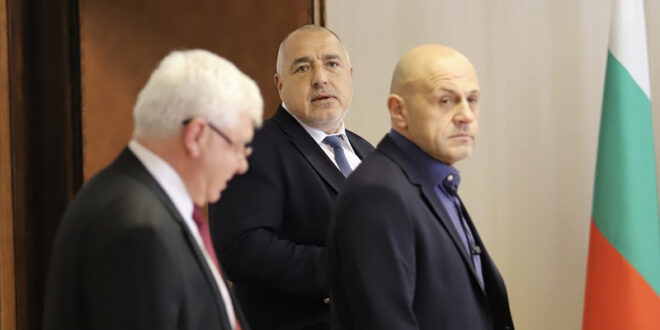
Photo: BGNES