 EKIP– Expert Club for Economics and Politics A Different Opinion
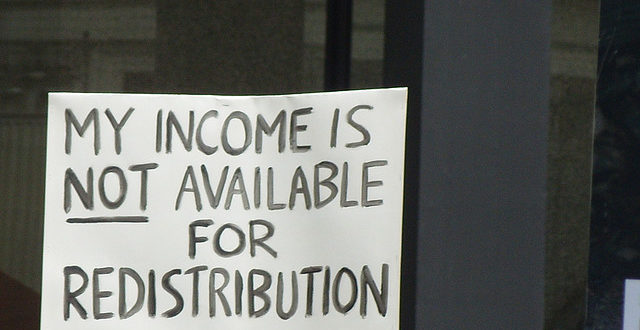
It is often argued that income inequality is bad for society and that the state should intervene and transfer income - supposedly from the rich to the poor - to restore a healthy balance. This is a topic that was also present at the recent public debate between Petar Volgin and Petar Ganev "For or Against the Social State", organized by the Bulgarian Libertarian Society. But despite the intensity of this argument, advocates of state redistribution of funds, and indeed individuals unfamiliar with economic principles, never or rarely pay attention to the consequences of introducing such a measure on society as a whole. Therefore, we will present the arguments against such a move, presented by economist Robert Higgs in his article "Nineteen Neglected Effects of Income Redistribution".
Nineteen overlooked effects of income redistribution
Robert Higgs
Virtually every government action changes the personal distribution of income. But some government programs that provide money, goods, or services to individuals for no return are redistribution in its purest form.
Until the 20th century, American governments had a clear position on such “transfer payments.” The national government provided pensions and land to veterans, and local governments provided food and shelter to the needy. But transfers to veterans can be viewed as deferred payments for military service, and local spending was never significant.
Since the creation of the Social Security system in 1935, and especially in the last 30 years, 1 the amount of money transferred by the government has grown significantly. In 1960, the government paid out $29 billion in pensions, or 7 percent of individuals’ incomes. By 1993, the total had reached $912 billion, or almost 17 percent of incomes. 2 In other words, one dollar out of every six dollars received by individuals now goes to old-age, disability, and health insurance benefits ($438 billion annually), unemployment benefits ($34 billion), veterans’ benefits ($20 billion), state employee benefits ($115 billion), benefits for families with disabled children ($24 billion), and various other government transfers ($280 billion), such as federal subsidies to farmers and state and local assistance to the poor.
Myths vs. reality
It is easy to be fooled into thinking of government transfers in this simplistic way: one person, the taxpayer T, loses a certain amount of money; another individual, the beneficiary R, receives the same amount, and everything else remains the same. When people view income redistribution in this way, they judge the desirability of the transfer simply by calculating whether T or R is more needy. Very often, especially when the issue is discussed in the news media or by socialist politicians, R is portrayed as representing the poor and needy, and T as a rich person or a large corporation. This makes opponents of transfer payments seem callous and apathetic to the suffering.
In fact, the vast majority of transfer payments—more than 85 percent—are not “targeted”; that is, they are not directed at low-income recipients. 3 The largest share goes to seniors and Medicare beneficiaries, and anyone over age 65—rich or poor—is eligible for these payments. Today, people over age 65 have the highest per capita income of any age group in the United States. Federal transfers to farmers are an even more extreme example of giving money to well-off individuals. In 1989, for example, the federal government paid them $15 billion in direct crop subsidies, with 67 percent of the money going to the owners of 17 percent of farms. In many cases, farm subsidies are literally welfare payments to millionaires. 4 It is a complete fallacy to assume that the government takes from the rich and gives to the poor. Even people who believe in Robin Hood-style redistribution should be concerned about the nature of the transfers being made by the U.S. government today.
But beyond the troubling moral side of redistribution, the problem is much more complex than one might think. In addition to the fact that T pays taxes to the government, which provides goods, services, or money to R, there are at least 19 other consequences that occur when the government redistributes income.
The neglected consequences
1. Taxes for redistribution discourage taxpayers from earning taxable income or increasing the value of their taxable property through investments. People who pay out of their own means adjust to the changed rates. As a result, they produce fewer goods, services, and wealth than they would otherwise. So society is poorer—now and in the future.
2. Transfer payments discourage recipients from earning income now and from investing in it to earn income in the future. People respond to the reduced cost of leisure by choosing to do nothing more often. When they can earn their current income without having to work for it, they put less effort into creating more. When they expect to earn future income without having worked for it, individuals invest less in education, training, work experience, personal health care, migration, and other forms of human capital that increase their chances of earning higher income from work in the future. Thus, society becomes even poorer—both now and in the future—than it would be if there were no taxes to discourage current production and investment by the taxpayers paying for government transfers.
3. Transfer recipients become less self-reliant and more dependent on government payments. When people can receive funds without resorting to their own skills in identifying and realizing income-generating opportunities, those opportunities atrophy. People forget—or never learn in the first place—how to help themselves, and eventually some simply accept their helplessness. It is no coincidence that both material deprivation and exhaustion are characteristic features of individuals accustomed to subsisting on government payments.
4. Recipients of transfer payments set a bad example for others, including their children, relatives, and friends, who see that someone can receive goods, services, or money from the government without having worked for it. Outsiders easily accept the idea that they too are entitled to such transfers. They have fewer examples of hardworking and responsible individuals in their families or neighborhoods. Thus, a culture of dependency on government payments can become pervasive when many people in a community depend on such transfers to obtain the necessities of life or, in cases where the recipients are better off, comforts.
5. Because some transfer payments are larger than others, some classes of recipients resist the “unfair” redistribution. This creates political conflicts. Representatives of disaffected groups exert political pressure to determine the size of government payments and engage in constant maneuvers to increase some particular transfers at the expense of others, if necessary. Note, for example, the constant efforts of the American Association of Retired Persons, perhaps the most powerful lobby in Washington, to increase old-age pensions and Medicare benefits, or the actions of the National Association for the Advancement of Colored People, which seeks to increase transfers to blacks in particular. Such political maneuvers create or reinforce conflicts between groups trying to obtain any particular government payments: old versus young; black versus white; rural versus urban; women versus men; North versus South; homeowner versus renter, and so on ad infinitum. Society is becoming more conflicted.
6. Just as recipients of government payments wage wars, so do taxpayers who are unwilling to bear the burden of transfers. For example, young people now realize that their welfare payments are going directly into the pockets of retirees, whose well-being as a group is increasing. Young taxpayers are also learning that they will probably never get back the money they have paid, unlike today’s elderly population, who are receiving very favorable rates of return on their contributions. 5 Black taxpayers see that, because their life expectancy is lower, they can hardly expect to receive as much money in pensions as whites. Taxpayers who feel that they are disproportionately taxed are beginning to exploit the tax and transfer system. Consequently, they are more likely to support politicians who promise to protect their money from legislative looters and try to avoid paying taxes.
7. As a result of the previous two consequences, society as a whole becomes more divided and hostile. It begins to resemble less and less a real community. Instead, society divides into aggressively minded groups, with some groups seeing others as oppressors. People lose their sense of belonging to a common political multitude with collective interests and shared responsibilities. On the contrary, they treat their fellow citizens as parasites or users and show hostility towards those who appear to be net beneficiaries of the system. Sometimes they even demonstrate genuine hostility towards the supposed users. Note the obvious hatred in consumers waiting in line at the grocery store to pay in cash while someone in front of them uses a food voucher. 6
1 The article was published in 1994 – translation note.
2 Data are from US Council of Economic Advisers, Annual Report 1994, p. 299.
3 James D. Gwartncy and Richard L. Stroup, Microeconomics: Private and Public Choice, 6th ed. (Fort Worth: Dryden Press, 1992), pp. 409–410.
4 Ibid., pp. 488–489.
5 Currently, the average married couple gets back everything they put in, with interest, in just 4 years. See Paulette Thomas, “BiPartisan Panel Outlines Evils of Entitlements, But Hint of Benefit Cuts Spurs Stiff Opposition,” Wall Street Journal, August 8, 1994.
6 The author is referring to the food vouchers that individuals with incomes below a certain threshold receive from the state in the US – note of translation.





The Ten Cannots
by the Rev. William J. H. Boetcker
Presbyterian Clergyman in 1916
You cannot bring about prosperity by discouraging thrift.
You cannot help small men by tearing down big men.
You cannot strengthen the weak by weakening the strong.
You cannot lift the wage earner by pulling down the wage payer.
You cannot help the poor man by destroying the rich.
You cannot keep out of trouble by spending more than your income.
You cannot further the brotherhood of man by inciting class hatred.
You cannot establish security on borrowed money.
You cannot build character and courage by taking away man's initiative and independence.
You cannot help men permanently by doing for them what they could and should do for themselves.
http://www.dkgoodman.com/cannot.html