 EKIP– Expert Club for Economics and Politics A Different Opinion

A few weeks ago, the parliament adopted a bill in first reading, which aims to limit the amount of all cash payments to 1,000 leva by 2019. The adoption of the bill in itself is a natural continuation of the worrying trend at the European level to limit cash payments. The imposition of this regulation is done primarily with the aim of brightening our economy, but the reduction in the amount of cash payments over the past 20 years empirically proves that such measures have a minimal economic effect, while at the same time imposing severe restrictions on people and businesses. Generally speaking, the negatives of the draft law can be systematized in the following main categories:
Moral aspect
The first and most important element is that this regulation restricts the natural rights of people and businesses. Households prefer to hold cash for various reasons. From not trusting the banking system to preferring to have their money available as soon as possible. The reasons can be many and the state should not restrict people's freedom to do whatever they want with their money.
If we really assume that the purpose of this regulation is to combat the shadow economy and money laundering, why should the rights of the entire society be restricted because of a small number of people who violate the laws? This practically means that the institutions that are supposed to combat these phenomena are simply not doing their job. A person may want to buy a car or an apartment in cash and have paid absolutely all taxes. Since when is holding cash a crime? It is the inherent right of every individual to choose whether to pay electronically or with cash, depending on their personal wishes.

The vicious practice of crude transposition of European directives
One of the main reasons put forward in favor of the bill is that the state is actually simply transposing a directive that is imposed on us by the EU and Bulgaria must implement it. An interesting point, however, is that the different European countries do not have a coherent vision regarding the limits of cash payments. While in countries such as Italy, Belgium and France there are similar limits, in some of the most developed economies in Europe such as Germany, Switzerland and Austria such limits do not exist at all. Even more interesting is that in the largest European economy, Germany, over 70% of payments are made in cash. In the unsuccessful attempt of the German government to propose a bill to limit cash payments, the leading German newspaper published a letter entitled "Hands off the cash" and urged its readers to send it to Finance Minister Wolfgang Schäuble.
Here, one can also look for a correlation between the differences in the degree of regulations in an economy and the gross domestic product per capita. Historically, it has been proven that the direct transposition of EU directives without their refinement to the specifics of the economy to which they are imposed does not always lead to the effects that are intended. The fact is that despite the high degree of economic integration of the EU countries, significant differences still exist between the different economies. This is especially true for a country like Bulgaria, which is not only the country with the lowest gross domestic product per capita, but also with the lowest labor productivity. These facts in themselves require a more delicate approach to the regulations of people and business.
Difficulties for small and medium-sized businesses
Small and medium-sized businesses are the engine of our economy. They not only generate a large part of employment in the private sector, but also create a significant part of the country's gross domestic product. This in itself means that any regulations aimed at this part of the economy must be undertaken extremely carefully and delicately. Unfortunately, this regulation on cash payments will create many problems for a large part of small and medium-sized enterprises operating in the processing sector.
If you own a dairy, you invariably buy milk from small dairy farms. It is common practice to pay for milk in cash because it simply makes it easier for the seller. That is, it saves him administrative time, because he himself has many cash payments. The same applies to the production of essential oils. The land on which roses are grown in Bulgaria is extremely fragmented, which means that a rose oil producer has to work with many, but small suppliers. The rule in the sector is that cash is paid. Businesses should have the freedom to choose how they approach payment, depending on the personal interests of each party in a business transaction.
The planned restriction of cash payments is a gross interference in the free market, because through it the state intervenes in purely market relations between seller and buyer, distorting the functioning of the market mechanism. Whenever this happens, the economic consequences are rather negative.
The effects on the banking sector
The only sure winner from the introduction of this regulation will be commercial banks. According to the income and expense reports of banks, their income from fees and commissions has been growing exponentially in recent years, thus at least partially compensating for the historically low interest rates at a global level. In net terms, this measure will directly increase the income from fees and commissions of the banking system.
Another effect of this regulation is that theoretically its introduction could increase liquidity in the banking system. This would be good news at first, because banks would have more financial resources with which to finance households and businesses. However, there is a real risk that high liquidity in the banking sector could lead to the formation of a bubble in our economy similar to the one in 2008. High liquidity would lead to an artificial reduction in interest rates. This, in turn, would force businesses to undertake investment projects that, all other things being equal, they would not undertake because they are unprofitable in the long term.
Everything about this regulation was said best by Frederic Bastiat back in the 19th century in the brilliant essay “The Visible and the Invisible”:
"In economics, every action, custom, institution, or law, produces not just one result, but a series of consequences. Of all of them, only one consequence is immediate; it appears simultaneously with the cause (and the action); it is visible. The other consequences appear later; they are invisible; we are lucky if we can foresee them."
There is only one difference between a good and a bad economist: a bad economist limits himself to the visible result; a good economist takes into account both those that are visible and those that are invisible but predictable.”
Източник на изображенията: Google


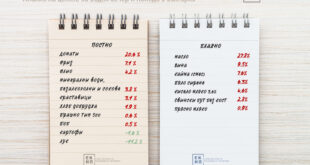



Another effect/defect that has not been described. Negative for business and positive for banks.
Every store that sells an item for over 1,000 BGN will be required to have a POS terminal, otherwise I wouldn't be able to buy it.
This is still valid for stores like Technopolis, but it is not for a modest electronics store in a small town.
How to counter the war on cash? Is it enough for just a group of people to gather in one place (a classic "mob" protest)?
Or do we need actions that affect the interests of those who vote on the laws?
Perhaps we should remind them of what will happen to them if a bank holiday occurs while a law restricting cash payments is in effect (grocery and drug stores, hospitals, kindergartens, etc. will be unable to pay suppliers).
Bank holidays are common in fractional reserve banking. They happen from time to time.
The ability to pay in cash mitigates the effects of bank holidays (periods when banks are closed due to panic withdrawals of deposits or for technical reasons - for example, a system failure due to a solar flare). But if cash payments are impossible (due to legal restrictions: most payments to merchants are in connection with contracts for over 5-10 thousand leva), trade will simply stop and shops and pharmacies will empty. Hospitals will stop scheduled surgeries. There may also be a shortage of supplies for emergency surgeries.
I remind you of the protest in Sofia on September 18, 2017 (Monday) 18:30 - 20:00 in front of the Ministry of Finance: https://www.facebook.com/events/118340112173170/
Officially, the motives for the bill are: "The measure will stimulate the current recording of cash flows through primary accounting documents and will contribute to minimizing cash payments in transactions between persons participating in economic turnover."
This is madness.
If there is a cash payment restriction and the buyer does not want to use a bank, this will encourage the seller NOT TO ACCOUNT FOR THE SALE, because if he does, he will admit that he is breaking the law!
This will have the opposite effect!