EKIP– Expert Club for Economics and Politics A Different Opinion
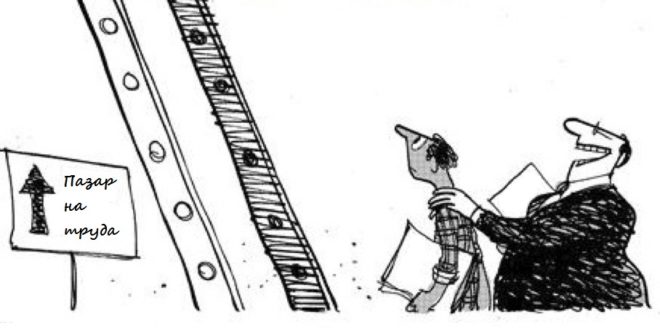
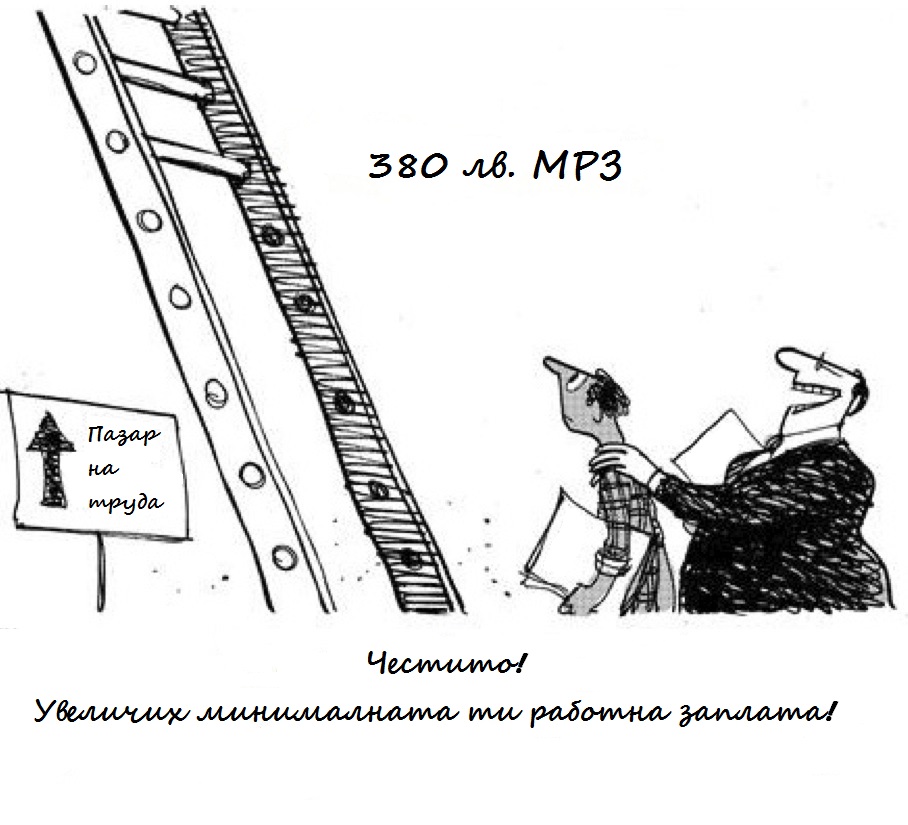 In the first part of this series, we looked at what economic theory can tell us about the potential effects of the minimum wage and its increases on employment in those sectors of the economy where the least skilled (or inexperienced) workers work; i.e. the sectors that are directly affected by it. As we have seen, if, in order to compensate for higher labor costs, entrepreneurs decide to lay off workers, this will have serious negative effects on employment in the relevant sectors and especially on inexperienced and low-skilled workers, who are predominantly young. In this article, we will look at what will happen if entrepreneurs decide to deal with higher labor costs through methods other than laying off employees, and what the effects will be on consumers and other economic sectors.
Indirect negative effects of the minimum wage
It is abundantly clear that if employers decide to absorb the additional labor costs (i.e., not lay off workers) after the introduction or increase of the minimum wage, then unemployment in the sector of the economy in question may not increase at all. Such cases have occurred and are well documented – defenders of the minimum wage often use such data to refute the claim that it increases unemployment. However, the fact that the minimum wage apparently does not lead to unemployment in one sector of the economy does not mean that the same applies to all others. However, to compensate for the higher labor costs, entrepreneurs must cut other types of costs.
For example, if the employer decides to cut costs related to the maintenance of the workplace and working conditions, this would actually directly harm the workers themselves, whom the minimum wage is supposed to help. Yes, their salary is already higher, but at the same time, working conditions are getting worse. Let's not forget that salary is not the only thing that interests a potential or current worker. Working conditions are also of great importance. Many people would agree to work for a lower salary, but under better conditions. However, when the minimum wage is increased, it is very likely that the opposite will happen - the salary increases, but working conditions proportionally worsen, thereby compensating for the higher labor costs. In addition to working conditions, other costs of the enterprise such as professional training for workers, additional rewards for excellent work and work outside working hours, etc. can also be reduced.
In this way, all employees in a company can be affected by the increase in the minimum wage – including those who were not affected by the increase in the minimum wage. That is, in order to increase the salary of some employees, working conditions are worsened and rewards for additional and excellent work are reduced for everyone. This, in turn, can worsen the productivity and quality of the services and/or goods that the company sells, which in turn has a negative effect on consumers.
The indirect negative effects of the minimum wage on other sectors of the economy
It is possible that other costs will be cut and both labor costs and the costs of maintaining the workplace and additional bonuses for workers will remain the same. However, this does not mean that the artificially inflated cost of labor will not lead to any negative effects - on the contrary, they are simply transferred to other sectors of the economy. For example, if the costs of capital goods (machines, tools, etc.) are cut, this automatically leads to lower demand for this type of goods on the market and, consequently, to lower revenues and lower profits in the sectors producing such goods - these are the sectors that indirectly suffer from the introduction or increase of the minimum wage threshold.
Some may argue that lower demand from a single company would hardly have such a significant effect, but in this case we are talking about entire sectors affected by the increase in the minimum wage, which must cut other costs if they do not intend to lay off their employees. The demand for a given good or service from an entire industry falls, and this will certainly have serious effects on the revenues of companies in the sectors offering the goods and services in question. Subsequently, due to lower revenues, companies in this sector will in turn have to cut their costs if they want to avoid financial difficulties or bankruptcy. This means either cutting labor costs or cutting other types of costs, as was the case in the sector directly affected by the increase in the minimum wage. If they choose the former, the negative effects of the increase in the minimum wage on employment will manifest themselves in this sector; if they choose the latter, they put third sectors in the same situation. What choice they will make depends on the specifics of the sector and the specific situation of each enterprise within it.
Constant increases in the minimum wage artificially raise the cost of living
The increase in the minimum wage can also lead to serious negative effects for consumers. When the price of a factor of production increases, in this case the price of labor, the increase also leads to an increase in the price of the final product. Thus, in reality, consumers pay for the increase in workers' wages. According to a study by Stanford University, published in April of this year, the increase in the minimum wage affects the prices of consumer goods as an additional value-added tax (VAT). In addition, another interesting conclusion of the study is that a large part of the additional income after the increase in the minimum wage, about 27%, actually goes to those 40% of families who actually have the highest incomes. That is, a large part of the additional income that the increase in the minimum wage provides does not even go to those to whom it is intended to go.
In fact, even without the data from this empirical study, economic logic itself suggests that an increase in income through a rise in the minimum wage would lead precisely to higher prices for consumer goods. Let us ignore all of the above for a moment and make the unrealistic assumption that an increase in the minimum wage somehow magically does not lead to higher labor costs, but only to higher incomes (at least that is what advocates of the minimum wage seem to believe).
What would be the effect of this increase in income, other things being equal (such as price inflation and individuals' time preferences [1] )? Some of this extra money would likely go towards additional consumption, meaning that overall consumption would increase. This additional consumption, in the absence of an increase in economic productivity, leads to higher prices for consumer goods. Thus, an administrative increase in the Wage Rate also increases the cost of living.
As a result, in the long run the additional purchasing power provided by the increase in the minimum wage will be subsequently neutralized. That is, those employees who receive the minimum wage will in the long run experience only a nominal increase in their income (other things being equal) and ultimately their real purchasing power will at best remain unchanged. We can expect that the various trade unions and workers' organizations will start to insist on a subsequent increase in the minimum wage to compensate for the price inflation caused by the previous increase. Thus, a vicious circle is closed of a constant increase in the minimum wage, which causes prices to rise, which subsequently justifies another increase. Ultimately, even in the most ideal possible situation (however unrealistic) in the long run the minimum wage is unable to achieve its objectives.
Real income and productivity
Thus, the minimum wage and its periodic increases achieve none of its desired positive effects, but lead to a variety of negative ones. If we really want to help people with low incomes, in the long run we must strive to increase their real wages, not their nominal ones; government regulations are also not able to make us richer. [2] The only way this can happen is through higher productivity of enterprises, which leads to lower prices of consumer goods. And it cannot be achieved through artificial increases in the cost of labor, which lead to higher costs and, consequently, to higher prices of final products.
When discussing a proposal to introduce some new regulation or another government intervention in the economy, we must not forget that prosperity is not built through laws and regulations. The state cannot magically make us richer no matter how much we want. As for the MRP, the potential negative effects of its increase are many, and in the long run even the “positive” ones are neutralized.
[1]“Time preference” reflects individuals’ desire to consume now versus their tendency to postpone consumption until the future (i.e., to save).
[2] On the escape from poverty through state regulations, see for example: Daniel Vassilev, Bangladesh, Poverty, Child Labor and the Path to Prosperity.