 EKIP– Expert Club for Economics and Politics A Different Opinion

Congratulations on your new (quasi-)state bank. At least 1/4 of it. As of yesterday, FIB is already practically 26% owned by the Republic of Bulgaria. In 2 weeks it will become official. The pornographic story has been played out, in which the former financial chief of FIB is appointed governor of the state-owned Bulgarian Development Bank in order to pour our money into his former employer.
Since the beginning of April, when Zhivko Todorov replaced Stoyan Mavrodiev as the governor of BDB, we knew it would happen. This, of course, does not make us, the taxpayers, shareholders. No, we will not receive a dividend. We will only cover the losses. What are the taxpayers for anyway?! And the profits? The profits remain for the private owners and the politicians who patronize them. As always. A classic example of "nationalization of losses" and "privatization of profits."
Of course, Minister Karanikolov will go around all the television stations explaining how this pouring of money from the pockets of the ordinary Bulgarian into FIB (and its owners) is inevitable. Because we are in a crisis. Because we have to enter ERM2. Because, because, because... Everything that will come out (and is already coming out) from his mouth (both Borisov and Goranov) is a lie. FIB could actually raise its capital completely on the market. But the price was low and if it had done so, the previous owners would have said goodbye to their majority stake. And this is clearly not politically convenient.
Why are the authorities protecting the owners of FIB?
Before this capital raising, the majority owners of FIB were two. Tseko Minev and Ivaylo Mutafchiev, each of whom had a 42.5% stake. From the very beginning of the capital raising saga, FIB has been doing all possible financial gymnastics to preserve the majority stake of these two individuals. The problem is that the market has a different opinion on the matter. On the stock exchange, FIB shares, according to the latest data, are traded for about 2.7 leva per share. At such a price, in order to raise enough capital to meet the European Central Bank's requirement, they must issue so many new shares that Minev and Mutafchiev will no longer have a majority stake and, accordingly, control over the bank.
Of course, they don't want to allow this. That's why they initially prepared a prospectus according to which they would issue shares at a price of 8 leva, three times above the market price! Of course, this absurdity could not be tolerated and therefore FIB adjusted the price down to 5 leva, which is only almost 2 times above the market price. At a price of 5 leva, Mutafchiev and Minev's shares become 31% each after the new share issue.
In the current market conditions of crisis and increased risk for the financial system, no sane investor would agree to buy shares of a bank like FIB at such a high premium (which would actually be absurd even if we were not in a crisis). First of all, because we are in a crisis, there is no prospect of FIB's profits improving anytime soon, the shares going up and the new shareholders having the opportunity to receive a dividend. In the next one or two years, at least, such a scenario is very unlikely.
FIB could have solved its problems...it just didn't want to
Secondly, this is FIB. This is a bank that has had basically the same problems since 2014 without resolving them to this day. Problems with capitalization, problems with the quality of the loan portfolio. These problems will not magically disappear, on the contrary, they will deepen. In a period of lower economic activity and increased risk of bankruptcy in a number of sectors, the loan portfolio and capitalization of all banks, without exception, are suffering.
Especially FIB, which according to the last ECB stress test from last year had a 56.2% share of non-performing loans in its corporate portfolio at the end of 2018. Over half of FIB's loans to enterprises were junk at the end of 2018. Imagine what the situation will be at the end of 2020. This is not a problem from yesterday. This has been a problem for 6 years, and previous asset quality reviews have shown it. Why then has nothing been done about it? Simply - because the majority owners of FIB know that if necessary, the state will eventually come and save it.
Notice what happens. FIB practically refuses to raise the necessary capital through the market, because this will lead to the loss of majority control by Mutafchiev and Minev. This is the only logical explanation for the decision to issue at a price of 5 leva. Subsequently, the state intervenes through the Bulgarian Bank for Reconstruction and Development to buy the necessary shares and ensure the success of the capital raising. The logical question arises – does the government have any interest in Minev and Mutafchiev remaining majority owners of the bank? In such a situation, suspicions of corruption are inevitable.
Does the end justify the means?
Of course, the government would object to such criticism with the argument that this is being done so that Bulgaria can enter the ERM-II exchange rate mechanism and subsequently the eurozone. But lies have short legs. In the same way that the government can decide to pour hundreds of millions of taxpayers' money into Fibank, it can also exert regulatory pressure on Mutafchiev and Minev so that they raise capital through the market. The fact that the government chose the first option is indicative.
If our membership in the ERM-II exchange rate mechanism comes with such a price, then this categorically vitiates our entire possible membership in the eurozone. If it allows it, the EU will categorically demonstrate that it really does not give a damn about corruption in Bulgaria. Not to mention that the price is definitely not worth the "reward". As we have been explaining for years, entering the ERM-II and possibly the eurozone is at best a meaningless Pyrrhic victory to polish the PR of a government haunted by incessant scandals. And besides, it is a very serious risk for the economic and fiscal stability of Bulgaria.
It is interesting to observe how the European institutions and specifically the ECB will react to what is happening with Fibank, especially in view of the reports on the implementation of the convergence requirements that have been published in recent weeks. First, it should be noted that with regard to joining the euro area, Bulgaria no longer meets not only the requirement for a minimum stay of 2 years in ERM-II, but also the requirement for price stability. Inflation in our country in 2019 is above the reference value of 1.8%. The legal framework in Bulgaria is also not yet fully compliant for the adoption of the euro. This is stated in plain text in the latest ECB report.
Don't fall for their lies.
Prime Minister Borisov will certainly continue to repeat to the point of pain that once we enter the banking union, there will be no problems with the banking system. They will magically disappear, just like all the others, especially the problems with the low quality of FIB assets! How will this happen, you ask? I don't know. Borisov doesn't know either. Somehow. Probably by virtue of the magic word "eurointegration", something like "abra-cadabra". These phantasmagoria, of course, have no connection with reality. In fact, as we have already written, joining the Banking Union, especially before joining the eurozone, carries many risks and absolutely no advantages for our banking system. Therefore, let us pray that the ECB will be strict with us and not turn a blind eye to the scandal with the capitalization of FIB.
Because the financing of FIB through BDB is truly a scandal of enormous proportions. The government, with taxpayers' money, is protecting the owners of a private bank. And not even from bankruptcy, but simply from losing their majority stake in the bank! In terms of scale, this is actually the biggest scandal in the current government mandate. The biggest scandal since CorpBank and very similar in nature. If the pouring of public money into FIB does not have this effect, it will only be because the public has already suffered from scandals related to the blatant corruption and shocking incompetence of the current government. The worst thing is that a new politically dependent bank has finally been created. It is now official. Congratulations on the new CorpBank.


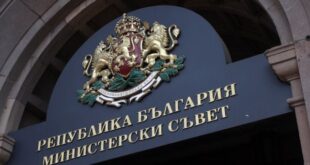



After the mandate of Stoyan Mavrodiev - the main goal of the BDB should be to stimulate and develop the potential of small and medium-sized enterprises in the country by facilitating their access to financing. In this regard, First Investment Bank is the largest bank with Bulgarian capital and with over 26 years of experience in servicing small and medium-sized enterprises. In recent years, it is precisely the FIB, together with the BDB and the National Guarantee Fund managed by it, that have participated in numerous programs that support small and medium-sized enterprises in Bulgaria. In this regard, it is logical for the two institutions to join forces in financing small and medium-sized enterprises. The increase in the capital of the FIB will help the private bank to invest these funds in lending to SMEs.
Martin,
Do you know how many small and medium-sized enterprises have been financed by BDB and FIB? These are banks that serve almost exclusively political and private interests. Ask the people around you how many of them work in companies that are serviced by FIB, let's say. You don't need to tell me the answer - you will hardly find even 1 in 50. There are very few "random" companies in this bank. The same goes for BACB and Investbank. Is that what we should be happy about? Is this the synergy you are talking about?