 EKIP– Expert Club for Economics and Politics A Different Opinion

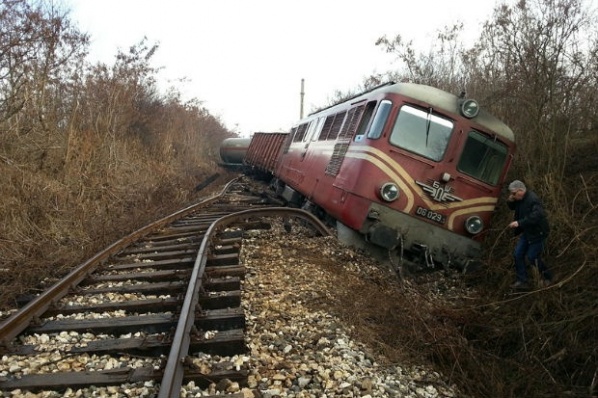
The topic of state railways has been a favorite political chewing gum since the very beginning of the transition. Especially considering the fact that the railway company (as a classic state enterprise) in its slow death has become a black hole for taxpayers' money. The annual state subsidy for the transportation of passengers with reduced tickets alone amounts to 180 million leva, with calculations showing that as much as 68% of the holding's passenger costs are covered by the state budget - not by passengers paying for their own travel. In fact, the bill is even bigger, because the state subsidizes not only a large part of the tickets, but also the construction and maintenance of the railway infrastructure. If we add this item, the total amount that we will take out of our pockets for BDZ in 2015 amounts to 472 million leva.
It is precisely because of the 180 million leva subsidy that the current uproar surrounding the state-owned enterprise has arisen. According to the 2015 plan, 40 million leva of these funds will be redirected to pay off the holding's debts, which currently amount to 560 million leva. Although this does not constitute a true reform – we can talk about such a reform in the event of a full privatization of the company – the step is sensible, because it simultaneously reduces the debt burden and closes/reduces the capacity of between 38 and 90 of the most loss-making lines in the country. This is not a bad idea, since despite the huge subsidies, BDZ continues to be at a loss – 3.8 million leva in 2014, and the forecast for this year is for a loss of a full 45 million leva.
And why these serious losses are accumulating can be clearly seen from the information coming directly from BDZ. On some of the lines designated for closure, only 7% of the capacity is filled, and some trains with 7,000 seats carry an average of 316 passengers per day. Specific examples are "the passenger train from Stara Zagora to Sliven at 4:25, which reports 4% efficiency and carries an average of 12 people at this hour. Also from Stara Zagora to Gorna Oryahovitsa on the train at 19:05, an average of 16 people travel (6% efficiency). The one from Gorna Oryahovitsa to Byala at 20:02 has a 2% occupancy rate in the railcars - an average of 7 passengers." Prime Minister Borisov himself said that looking at the trains in Bankya, he notices that there are only about 10-15 people in them all the time. It is evident that BDZ employs thousands of employees, a huge amount of electricity, and hours of labor to keep empty trains running around the country.
In fact, why would anyone want to ride these trains at all? BDZ's own statistics show that for 2013 (the latest period for which we have data) as many as 58% of international trains and 34% of fast trains with mandatory reservations were delayed by up to 60 minutes to their final station, and 15% of international trains registered delays of more than an hour. There is no need to use statistics for the condition of many of the trains or train stations where the delays occur. Each of us has seen them or at least known them at the Central Station to wait for a relative or friend from the countryside.
Defenders of the taxpayer-subsidized mastodon emphasize the importance of rail transport for passengers – in a sense, if there is no BDZ, traffic in the country stops. In this regard, NSI data show that only 6.67% of the national transport market for passengers falls on rail transport. Moreover – the subsidized company does not significantly outperform private bus transport in terms of service prices. For example, a train ticket on the Sofia – Svoge route is 2.30 leva, while for a bus it is 2.50 leva – a difference of 20 cents. For long-distance transport, we have even cheaper bus transport – the Sofia – Pleven line costs 13.50 leva by train, but 12.00 leva by bus. (The information is from the reports of the BDZ itself)
When we look at the data on the real state of transport in Bulgaria, we see a different picture than what the trade unionists and the BSP MPs tell us. The ones in greatest need of the state subsidy (from our money) are not so much the people in Gabrovo and other regions with ghost trains. The real beneficiaries are the special interests and lobbies that derive influence and power from the existence of the half-alive BDZ.
Because what will the unions do without the thousands of workers at BDZ to manipulate? What will the local mayors and feudal lords do without the ability to scare voters that they will be left without transportation? What will everyone along the chain do, waiting to collect their share of the subsidy - from the big directors to the oil thieves at the stations?




2 коментара
Pingback: The Quiet Rebellion Against the Expensive Ticket – EKIP – Expert Club for Economics and Politics
Pingback: When the state knocks on the door – EKIP – expert club for economics and politics