EKIP– Expert Club for Economics and Politics A Different Opinion
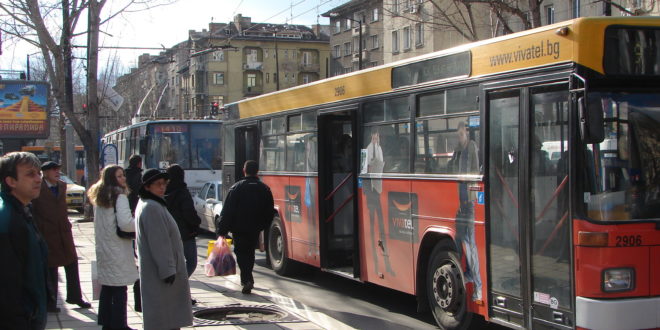
 There is hardly a citizen of Sofia who does not work at the Center for Urban Mobility and finds economic logic in the increase in the fare by 60% with constantly falling fuel prices. I did not succeed either. The good thing about being in a market economy is that the market, this set of economic decisions and actions of consumers, always manages to screw up those who think they can screw it up.
If you artificially (through a state decree) lower the prices of a good or service, as happened with bread in Bulgaria about 20 years ago, it simply disappears from the windows; if you artificially raise them, people choose alternatives or covertly start sabotaging you. We observe similar actions with public transport in Sofia. And I'm not talking about those classic opportunists and daredevils like this man, I'm talking about those people who, without noise, vote with their leva with their economic decisions and say "This is bullshit". In this article I try to collect several such economic decisions that put a stop to the CGM's plan for easy profits on the backs of the plebs.
Let's rediscover BDZ
Strange but true. The only lines in the EKIP from which you can read something positive about our native railways are probably ahead, but if you are currently a resident of Vladaya, it is more profitable for you to use BDZ to get to the city center than municipal transport. The train ride from Vladaya station to Central Station takes 20 minutes and costs 1.70 leva without additional discounts, while the same ride by public transport will cost you 4.80 leva in the direction if you punch a ticket in each of the three ground vehicles you need to get there. What a unique chance for the capital's residents from the outskirts to fill this budget hole called state railways.
Let's get on a minibus.
The routes of the minibuses are designed in such a way that it makes economic sense to pay 1.50 leva and get from point A to point B without additional transfers. For example, if you live in Studentski Grad and want to get to the Krasna Polyana market, you will need 3 tickets at 1.60 leva each – for 94, for the metro and for the tram, with a total price of 4.80 leva in each direction. The minibus provides you with the same service for 10 stotinki less than the ticket for just one transport. Moreover, at the moment it makes more economic sense to take a minibus even for just a section that is completely covered by one public transport line, simply because it is 10 stotinki cheaper.
The all-day ticket – the best option
I guess it has become clear to everyone that if the walk in one direction costs you 4.80 leva, it is much more logical to simply buy a day ticket, which costs 4 leva, and save a large part of the cost. What is noticeable is that the people of Sofia go even further in their attempts to sabotage the CGM. After you have done your work with public transport for only 4 leva, you can quite safely stand at the entrance to any metro station, wait for a passenger and sell him your day ticket for the price of a single trip ticket. So a day-long walk through the depths of Sofia would cost you 2.40 instead of those cosmic sums from above, and the screwing up for the CGM would be even double, because the next owner of the ticket will also not spend any more leva on transport until the end of the day. If he manages to resell the ticket after he no longer needs it, the hole in Fandakova's plans becomes even bigger. I fear that once this practice becomes widespread, and it certainly could, the CGMs may seek the expertise of Health Minister Moskov and be the first to introduce fingerprint systems.
Of course, there are a number of other options that suddenly made even more economic sense - taking a taxi, riding a bike, walking, using (give us back Uber!!!) ride-sharing apps, etc. There is one lesson in history - you are not a silent letter in what is happening, you are a unit in this economy and you have complete freedom to punish bad practices by choosing to spend your leva in a different way. You are not a pleb, you are a market participant, a customer, a consumer... and you do not need to raise protests and uprisings to win... you just need to realize your power and use it.