 EKIP– Expert Club for Economics and Politics A Different Opinion
At the end of August, the Association of Children's Goods Traders submitted a request to parliament to eliminate VAT on products for children up to 3 years of age - this article is a critique of the position of the Institute for Market Economics (IME) against the association's proposal.
Ivan Georgiev
IME economist Zornitsa Slavova writes that eliminating VAT on children's goods would violate the principle of neutral tax treatment. This principle states that the tax system should be such that it does not disrupt the functioning of the market, by not affecting its function of allocating limited resources according to the highest estimate of their value. Otherwise, one of which is a system with different VAT rates (characterized by Slavova as "preferential treatment"), taxation, according to the IME economist, "distorts market incentives and could lead to the redirection of investments and resources to less efficient production."
Economists who believe that taxation is neutral are those who recognize the primacy of the market in the supply of most goods and services, but believe that the state has a limited duty to create laws and to produce security and justice. To support itself and perform such functions, the state needs funds, which it obtains through taxes.
Although they are aware of the general negative effect of taxation (it discourages production), these economists are inclined to accept it only in order to create an environment in which the otherwise doomed market, in their opinion, will function. And so they embark on a search for a neutral tax system - the utopia that should provide state revenues in such a way as to allow the emergence and unhindered existence of a market.
The key to this utopia is seen as proportional taxation, with a single tax rate. This is a market-friendly system, say the aforementioned analysts, who sometimes even call it fair. They value proportionality so much that they are willing to accept a higher single tax rate over lower, different rates. The lack of tax proportionality, they argue, leads to "preferences" and harms competition.
However, a tax by definition violates proportionality in society, creating net winners and net losers from its imposition, since it is a gratuitous and involuntary payment. No matter the size of the rate and whether it is the same for everyone, first of all it does not correspond to the value assessments of consumers and redistributes utility from one to another. Therefore, any tax system creates inequality and disrupts competition.
Slavova’s claim that whoever pays a lower (or no) tax than another is privileged implies that the state is the original rightful owner of all income created in the economy. The author’s warning that if politicians “give in” to the traders’ demand to eliminate VAT on children’s goods – other groups would demand the same leads to the same conclusion. Slavova apparently perceives politicians as some kind of guardians whose task is to prevent people from trying to keep for themselves a larger part of the income that they themselves have created.
The result of Slavova’s prescriptions is more government revenue and, mind you, less market. Contrary to the original goal, the “neutral” tax system also distorts the market. This is because there is no such thing as an optimal tax. And since Slavova, or anyone else, does not know how much revenue the state needs to “protect the market,” the approach is – “more must be better.”
Misled by their totally wrong understanding of equality and market competition, other Bulgarian “free-market” economists point out as one of the advantages of the proportional tax that it leads to an increase in state revenues. Apparently, for them, only the uniformity of the tax rate has any relation to the market, and the size of the state is totally irrelevant. Should this mean that, for example, a fictitious North Korea with 100% state spending but a 10% flat tax is a market paradise?


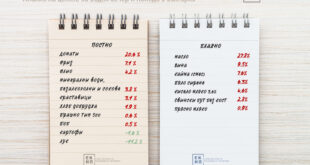



I agree with the author's view, but I would like to ask the following:
1. What system does the author believe is correct?
2. How do indirect taxes discourage production in general? It is clear that indirect taxes are an additional administrative burden on companies, and in this sense I agree, especially when they are poorly administered. However, indirect taxes simply shift demand from one place to another in general. In this way, they also change the structure of production, but generally do not harm it in any other way (in my opinion).
Apart from the administration costs (they harm), the only other negative impact I can think of at the moment is, for example, the following: Indirect taxes could potentially change citizens' savings, and hence total investments. For example, I receive a salary of 100 leva, giving (excluding VAT) 80 for expenses and saving 20. We are now introducing 20% VAT and my expenses jump from 80 leva to 96 leva. That is, I can save less. However, the latter is not very clear.
Every tax is a disincentive, whether it is indirect or not - it takes money from the owner of the resources and transfers it to the state. The burden of indirect taxes is not only administrative, in this sense.
Moreover, the state itself, in addition to spending inefficiently, its very "investment" in certain public spheres creates problems of a very different nature. For example, since road construction is almost entirely taken over by the state, we have a very inefficient, expensive and dangerous transport system, or at least a relatively less efficient, more expensive and more dangerous one.
@Stoyan Panchev
"Every tax is a disincentive, whether it is indirect or not – it takes money from the owner of the resources and transfers it to the state."
Quite generally speaking. Let's see what exactly happens with indirect taxes. Yes, they are also seized from the owner and transferred to the state. But what would the owner use them for? For consumption. But the state uses them for the same thing! That is, if we assume that only money that is for personal consumption is seized (this is not entirely clear), then there should be no problem with growth. Consumption remains the same (and hence production). The structure of production and consumption simply changes, but the amount of investments, and hence growth, is preserved. Am I wrong somewhere in my reasoning?
I assume that you share my belief that an economy grows only with investment, not consumption (a very common opinion these days).
Both the state and the individual from whom the taxes are taken can use them for consumption and some form of investment. There is simply a serious difference between the way the state consumes and the one who earns the money. We can get into this topic.
I don't think that government investment is preferable to private consumption, if that's the point of the question.
@Stoyan Panchev
I would describe the situation with indirect taxes with the following analogy:
A farmer produces, for example, 10 tons of grain per year. Before VAT was introduced, he used 9 tons per year for personal consumption (for bread, feed, production of alcoholic beverages, etc.). He used 1 ton per year for investments, for example, feeding a calf.
We introduce VAT on him and the following results: He now spends 8 tons per year for personal consumption, gives 1 ton to the state and invests 1 ton. The end result is that he lives worse (consumes less), but his investments are preserved. That is, his business will develop as before.
"There is simply a serious difference between the way the state consumes and the one who makes the money."
I agree here. When a private person spends their money, they try to get the most out of it (subjectively speaking). This is not the case with the state. I would describe the situation when the state takes your money, within the framework of the above analogy, as if you were to take this 1 ton of confiscated grain, burn 900 kilograms and keep 100 kilograms (the state benefits: police, court, military, and sometimes it thinks of investing somewhere, which also benefits, albeit belatedly and small, example: the highway to the sea). The private person would use these 900 kilograms to improve their life.
"I don't think government investment is preferable to private consumption, if that's the point of the question."
I don't agree with the popular Austrian view that state investments are 100% loss. I would agree with a figure of 90-95% loss.
I am not saying, however, that the state should invest at the expense of people's consumption. The goal of growth is for people to live better, but this should not be done by forcing people to live badly. This is how they explained to the people in the USSR when they robbed them: "We will live badly now, but so that we can live well in the future." We know how far they have come.
Anyway, my claim is not that indirect taxes are not harmful, but that they are the least harmful taxes possible. And if the question is what taxes to choose, then indirect taxes should always be preferred. That is, to tax consumption, not production.
The question that is not very clear to me is whether, when you start taxing consumption with indirect taxes, you don't also start indirectly taxing production (when you don't have money to eat, you won't save). At the moment, I don't have an answer to this question for myself, and I'm not sure there is one. It probably depends on the situation.
Oh, I'm just now seeing this article by Ivan.
Ivan, you played with the principle of indirect taxation, while my article commented on the preferential taxation of a specific sector. I am not implying that “the state is the original and true owner of all income created in the economy,” as you have mocked me 🙂
My article comes to say that the state should not determine priority sectors and influence producers, traders and consumers through its policies to support these sectors. In this spirit, I try to refute the argument that this does not reduce the prices of goods, which is the populist idea in this case.
In an article from four years ago, I wrote about differentiated VAT rates again, and since the article is a slightly more general overview of the effects of preferential treatment, perhaps it is clearer what I am implying and has more to do with your article. See the conclusions:
***
http://ime.bg/bg/articles/diferenciranite-stawki-ne-oznachawat-zadylvitelno-po-niski-ceni/
What needs to be done is:
- Reduce the flat VAT rate for all
- Take measures to stop VAT fraud
- To reduce abnormally and illogically excessive state expenditures, which are also financed by VAT revenues.
***
On a general level, we can talk a lot, but my specific article may not be the best option for finding opposing views to yours so you can have your say about VAT 🙂