 EKIP– Expert Club for Economics and Politics A Different Opinion
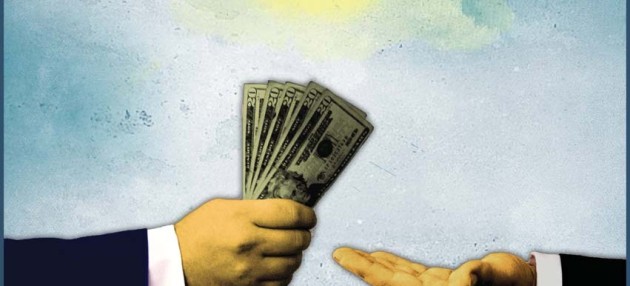
"Economic growth" has become one of the most overused mantras these days and serves as a justification for almost every inefficient government spending, government intervention in market relations, or favoritism of businesses close to power.
All parties — except one — comment at length in their programs on the recipes for how to achieve “economic growth,” how to make it sustainable, what is the role of the state in generating and maintaining it, and restoring it after the recession. Journalists, public figures, and business — everyone has their own opinion on what should be invested in to “grow the economy”: technology, education, tourism, agriculture, healthcare, infrastructure, sports. Priorities vary according to subjective preferences.
One thing, however, seems indisputable: economic growth "must" be there - there are no two opinions on this. (Except perhaps some factions of the "greens").
In fact, the claim that economic growth is necessarily a good thing is ethical and utilitarian. Utilitarian because it assumes that the "greatest good" for the greatest number of people is the ideal by which the effects of one or another action of the private and public sectors should be evaluated.
When economists advocate a particular government policy or a particular measure to increase social “utility” and benefits for all, for example, they should know that they are stepping outside the realm of economic science. Economic science itself is “positive” — it does not prescribe goals and outcomes, does not say what is right or wrong, but only explains economic processes, that is, “ what is”.
Despite their apparent attempt to appear neutral and very "expert" — sometimes consciously, sometimes not — quite a few economists enter the realm of ethics, commenting on "right and wrong," useful and harmful, that is, " what should be," since "ethics" is a "normative" science.
Whether they advocate income “equality” as an ideal, achieved through the redistribution of income by the state, or “economic growth” as an end in itself — this departure from the economic field is clearly slippery and dangerous.
The question is, can these same economists defend their proposals and assessments in the field of ethics? For example, "equality" as a higher standard justifying the redistribution of income by the state, or "economic growth" as a higher good and an end in itself?
If they cannot, they should not make such claims, and that is not why they are given credit for their credibility in the final analysis. Such value and moral judgments are outside the field of economics as a science and require a different type of argumentation, not just an ad hoc value judgment and a claim to absolute self-evidence.
How is economic growth generated?
The treatment of economic growth by the “Austrian School of Economics” is not based on the ethics of utilitarianism, like practically all other schools, but on that of “natural” rights, that is, libertarianism. Everyone owns himself and his income, his private property. Only when these rights are respected is there a market. The act of buying and selling, without regard to the respect for the right to life and the private property of both parties in the exchange, has no connection with the market, defined by libertarians as a network of persons/individuals voluntarily exchanging private property.
If individuals have their own bodies and their own income, they can decide what to do with them. Objectively and economically, there are three options:
One — consumption. This is the ultimate goal of all saving and investment, no one produces just like that (although they have the right to do so). The choice to consume part or all of your income is a matter of time preferences. If you want to live only here and now — which is your right, — that is, you have extremely high “time preferences”, no one should interfere with this moral choice of yours. As long as the basic principle of “non-aggression” towards the life and property of others is not violated, the only way someone can prevent you from consuming your income is to convince you not to do so. Not by force, but by argument.
Two — to save/invest (relatively lower time preferences), postponing your consumption by buying a financial instrument like a stock, for example, or by presenting your money to the banking system, which is an intermediary between saver and investor. The price of the shares of the company you bought rises, and when the company decides to raise capital from the capital market, it does so more easily and cheaply. You have directed your savings to companies that can use this resource, investing in a production base, hiring new people, producing and generating economic growth. This is the only way economic growth is generated — with saving and investment, not with prayers or good intentions. The question is: who decides whether to consume their income or save/invest, respectively, to cause growth, and the answer: free people, with their property! Not caring politicians.
Third and lastly, “withdraw” your income or part of it from circulation by increasing your cash holdings. The reasons: it may be fear that a crisis is coming and you are “insuring” yourself with more cash against the upcoming uncertainty. Despite the “fear neurosis” of Keynesians about deflation, the only thing that would a priori happen in this situation (if there is no counter-increase in the money supply) is that prices will fall, that is, the purchasing power of money will increase. There is no reason to believe that the real, “natural”, market interest rate will change in any direction, nor that the “aggregate” return on investments will fall.
In conclusion: it is not the job of politicians to cause economic growth, and so-called "public investments" are spending for political expediency, not investment, and the very act of seizing this resource from the one who earned it is a violation of "natural rights."
It is not the job of politicians to do it — neither through fiscal policy (taxes and government spending) nor with monetary policy (interest rate policy, liquidity).
In this sense, their calls and promises for "growth" measures are ridiculous. Income and the choice of how to use it should remain with free people, and if those in power really wanted economic growth so much, they would not interfere in any way to prevent entrepreneurs from investing and savers from accumulating capital to provide them.
Whether there will be economic growth or not - the choice remains with the owners of private property, namely those who have earned their income honestly and economically. Not with those who seize this income by force and coercion, affectionately called "political elites."
*The original can be found on the author's personal blog: HERE






In 2011, an interesting book by Richard Heinberg, The End of Growth: Adapting to Our New Economic Reality, was published. The author makes a startling diagnosis: humanity has reached a fundamental turning point in its economic history. The trajectory of the expansion of industrial civilization is facing indisputable natural limits. Further growth will be blocked by three factors: resource depletion, environmental constraints, and the crushing volume of debt. These interacting constraints, Heinberg writes, will force us to reassess cherished economic theories and rethink money and trade. If we set goals that enhance human and environmental well-being, we must learn to save, rather than continue to pursue the impossible – endless growth in GDP.
I have summarized things as 3 planetary catastrophes and have described the main points in comment #1 and especially #8 - http://darikfinance.bg/novini/112887?&order=asc#comments