EKIP– Expert Club for Economics and Politics A Different Opinion
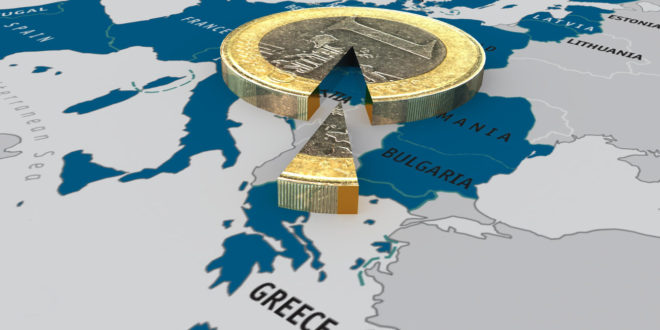
Amidst the huge volume of news surrounding the negotiations between Greece and its EU and IMF creditors this week, a more curious one crept in - the central bank stated in its report on the country's monetary policy that if an agreement is not reached, Athens will embark on a course towards bankruptcy and leaving the eurozone.
It is worth noting, as this is a rare admission, that although external analysts have long warned about the risks posed by the dangerous game played by Prime Minister Alexis Tsipras and his SYRIZA colleagues, until recently the Greek state unanimously claimed that bankruptcy and Grexit would be avoided at all costs.
Since the likelihood of this happening now seems increasingly high, and some bookmakers have started accepting bets (at various odds, usually between 2 and 5) on whether the country will leave the eurozone, it would be useful to consider what the consequences of this would be.
What happened already?
The immediate risk, which could have serious consequences in the next few days, is for the banking system. Following the principle that the easiest way to kill a bank is with a newspaper, Greeks have started withdrawing their deposits from banks en masse over the past week – deposit withdrawals have risen from 0.4 billion euros on Monday to almost 1 billion on Thursday. Doubts have also arisen that banks will open at all on Monday.
The tool that is currently keeping Greek banks afloat is the ECB’s emergency liquidity assistance (ELA), which increased the ELA ceiling by 1.8 billion euros on Friday and by 1.1 billion on Wednesday. However, banks need to provide collateral to receive the assistance, which they are increasingly lacking. It is not known when the ECB will stop providing ELA, which, if the trend of deposit outflows continues, will paralyze the banking system. The authorities have tried to plug the leak by offering an amnesty for funds held in foreign banks that would be taxed. However, it is unlikely that much money will flow back to Greece.
At the end of last year, the country's economy seemed to be at least partially recovering. Then, for the first time in five years, GDP returned to positive growth, reaching 0.7% in the last quarter of 2014. Since the beginning of the year, however, GDP has started to contract again, with -0.2% in the second quarter.
None of the other indicators would be a reason for the position of strength from which the Greek government is apparently negotiating. Unemployment has “entrenched” at just over a quarter of the active population, but with some exceptions in 2014, the total number of employed people has been decreasing since the beginning of the crisis. The country’s huge debt, which reaches 177% of GDP [1]– and is among the main topics of the negotiations – is just another sign of an economy that will not function normally in the near future. Indicative of the markets’ attitude towards the country are the interest rates on government bonds, which have been rising since Tsipras took power and have now reached 12.5%.
What's next?
The two general scenarios that could unfold over the next 10 days depend on the success or failure of the negotiations. In the event that a financial aid agreement is ultimately concluded and the government gives in to creditors' demands for tax increases and pension cuts, the two sides return to their previous relationship - granting funds in exchange for reforms that are implemented to one degree or another.
The Greeks have repeatedly indicated that the other scenario could be much more disastrous. If Athens does not secure financing to pay its IMF debt by June 30, the expected consequence is a declaration of bankruptcy and eventual exit from the eurozone. The threat is that a Greek exit would lead to further instability and, ultimately, the collapse of the common currency.
And indeed, if the year were 2012, this threat would have sounded serious. Three years later, however, when Grexit is again considered a realistic threat, all players are much better prepared. During this period, banks and companies that have relations with Greece conducted a series of stress tests to prepare them and check their readiness for the country's secession and the introduction of a new currency, which would be followed by its significant devaluation.
The biggest loss in such a scenario would be borne by creditors, who have lent a total of €240 billion to keep the eurozone intact and bail out Greece. The ECB estimates that it would lose 95% of its outstanding debt if it were to default.
The political and economic consequences for the EU and the eurozone are practically unpredictable - on the one hand, because the case is historically unique and has no parallel in the past of the monetary union, and on the other - because the manner of implementation of Grexit is not known with certainty, since there is no procedure.
Many analysts rightly point out that the economic consequences for the rest of Europe are likely to be greatly overestimated, mainly because of the relatively small size of the Greek economy compared to most others and to the entire EU economy (Greece accounts for about 2% of EU GDP), and the smaller exposure of many companies and banks compared to the years at the height of the crisis. It is also important to note that the economies of most countries have already recovered from the consequences of the economic crisis and are much less vulnerable to new shocks than they were in 2012.
The political consequences are multifaceted – initially, this scenario would lead to the rise of radical left and nationalist parties calling for their countries to restore their sovereignty and abandon the EU. Brussels, in turn, would have to make significant efforts to convince member states that behavior like Greece’s threatens the union and should therefore be avoided.
A “domino effect” for the rest of the eurozone seems unlikely – none of them has experienced an economic shock comparable to Greece’s, and most of them lack the critical mass of voters that could put a party at the helm with goals and promises similar to those of the far-left SYRIZA. The only visible “candidate” who could leave the EU is Britain, and its problems with the political bloc are fundamentally different from those of Athens.
As for Greece itself, bringing back the drachma seems like a daunting task. To prevent a flight of deposits, the government would be forced to introduce capital controls, and the new currency itself would depreciate sharply, causing the value of all Greek assets to fall. Banks would also lose support from the ECB, which would create additional problems for them. Bringing back the drachma also means that the central bank would regain its ability to print its own currency, which would likely lead to a spike in inflation.
The experience of countries that have experienced bankruptcy in the recent past (Argentina, for example) shows that their economies contract sharply afterwards – undoubtedly a heavy blow for Greece, which has not yet dealt with the consequences of the crisis. The exact proportions in this case are difficult to calculate, but it is certain that social tensions will increase at first and that the country's politics and leadership will most likely be in chaos for a long time to come.
[1] Without including here the so-called "unfunded liabilities" - social payments (pensions, for example) that the state has promised to make, but for which there is currently no money.