EKIP– Expert Club for Economics and Politics A Different Opinion
Last Monday it became clear that the Ministry of Health (MoH) has serious intentions to strengthen control over “public health” by introducing sanctions for not going for preventive check-ups: higher health contributions for “offenders”. A week before that, Minister Dr. Moskov said that he wants to impose a 10% excise tax on harmful foods and ingredients such as salt, sugar, coffee and trans-fatty acids. These measures seem reasonable at first glance and, according to some people, would improve our health indicators. But let's look at the case in more detail.
The unknowns surrounding the Ministry of Health's statements in question are puzzling. No one has mentioned anywhere who and how will pay for the preventive examinations in question. The deficit in the NHIF, the shortage of money, has been on the agenda for years, there has even been talk of reducing the prices of some clinical pathways . The question arises - how will the entire population be preventively treated, since there is no money? Or does the ministry intend to make GPs perform the examinations for free? Aren't they aware that only the cheese in the mousetrap is free? But here other questions arise:
- If it is not free, who will monitor the implementation of this plan and prevent possible abuses?
- How much will a possible body aimed at controlling how citizens and GPs comply with the minister's prescriptions cost taxpayers?
- How will people who do not pay social security contributions be sanctioned – children, pupils, students, 550,000 civil servants and about 2 million pensioners? Will there be fines for them or something else?
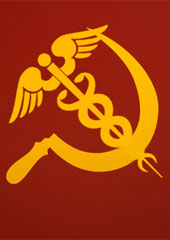
A completely different question is what the quality of the discussed mandatory preventive examinations will be. As we well know, the state has no mechanism through which to control the quality of healthcare. This means only one thing – the authorities will once again rely on the old Marxist principle that quantitative accumulations lead to qualitative improvements. But we know very well that this is not the case. You cannot expect that a large number of preventive examinations “in bulk” will somehow spontaneously lead to an improvement in the health status of society. Especially in a state-monopolized system like ours.
Therefore, we can make the reasonable assumption that even if it were to come into force, such a measure would not have any serious positive effect on people's health. Preventive examinations would either not be carried out (if doctors are not paid), or they would be carried out on a quantitative basis for counting numbers, counting numbers and absorbing money from the relevant path.
Meanwhile, the chairman of the Association of General Practitioners, Assoc. Prof. Lyubomir Kirov, stated that the NHIF budget will be enough for prophylaxis for only half of the insured citizens. This once again shows the helpless situation in which the Ministry of Health finds itself. If the plan for the introduction of mandatory prophylaxis is adopted and individuals begin to conscientiously comply with the requirements, we can only expect one thing: even more serious deficits in the NHIF budget.
But the most worrying thing is not the lack of money, but the very idea of the rulers that they can make people take care of themselves with a law. Health and care for it are the individual responsibility of each person, not of society. The idea that the state with a series of administrative measures, fines and regulations will cure (or prevent) citizens is deceptive, even dangerous. It leads those who believe it into dramatic error and endangers their lives, making them irresponsible towards its preservation.
There is no point in forced prevention if there is no personal motivation. People who take care of themselves, go for regular check-ups, exercise, and are careful about what they put in their mouths. Those who don't will not start because of an administrative sanction. They will only start when the state stops "taking care" of them using foreign money; in other words, when they know that their treatment is their responsibility and will be paid for out of their own pockets, that is, when the socialist health system is replaced by health services provided on the free market.
The issue of excise duty on harmful foods is even more untenable.
First, imposing an excise tax on food and beverages will be an unpleasant blow to producers and, by the way, to consumers, because it is the latter who are the real payers of any “corporate” rate. And although some people in Bulgaria feel satisfaction when business suffers, this is an economically unjustified move that will lead to an increase in prices and/or an increase in the percentage of the shadow economy in the sector.
Secondly, the minister, as a doctor, should know that most harmful substances are harmful in a certain dose. Salt, for example, has a recommended daily dose of 4 grams to 10 grams depending on the individual characteristics of people. Moreover, salt in small quantities is necessary for the normal functioning of the body. Adding to this the fact that salt balance is tied to water intake, let's hope that the minister will not decide to fine people who do not drink enough water... In other words, the idea of taxing salt with an excise tax contradicts normal human logic.
Third, but most importantly – what is harmful to what extent can be the subject of scientific discussion. But the right to personal choice is inviolable and there should be no conditions under which it can be violated. Everyone is (or should be) the master of their own body and makes the final decision about what to do with it. Paying a tax for the choice to eat sweet or salty, to drink coffee or cola, is an unprecedented violation of people's personal freedoms.
The Ministry of Health is doing exactly the opposite of what is necessary - instead of withdrawing from the lives of citizens, instead of freeing medicine from its administrative grip and leaving it to the free market (where it undoubtedly belongs), it is encroaching even further into the personal space of the individual, going so far as to determine what should or should not be on their table, in the process threatening society with accumulating more deficits in healthcare, which will be paid for by taxpayers.