 EKIP– Expert Club for Economics and Politics A Different Opinion
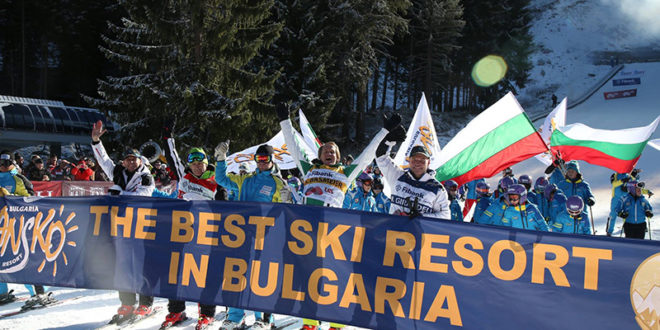
Another winter ended with the end of another episode of the Punic War between the concessionaire of the Bansko ski area and the strange couple DSB-Greens. This year, the bacchanalia erupted around the adoption of the new management plan for Pirin Park. Before the eyes of the Bulgarians, the two sides again clashed over the now legendary cable car - supposedly, Yulen AD really wanted to build it on the one hand, and on the other hand, DSB-Greens are lying on the pavement for every endangered bush in the mountain.
For too long, however, we observers of this conflict have assumed that the swords are made of sharp steel. What would happen if we checked to see if they were made of wood?
In this situation, a priori there are three theses, namely:
- Tourists want a second gondola lift in Bansko
- Yulen AD wants to build a second gondola lift
- DSB-Greens are preventing them from building the second cable car
The first and third hypotheses are obviously true. Every skier visiting the Bansko ski area wants a second gondola lift, which would allow them to reach the ski area faster and more conveniently. The DSB-Greens are apparently investing significant financial and media resources to block politically, media-wise and even legally the possibility of building a second lift in the Bansko ski area.
And here we come to the really interesting moment in the second hypothesis – are we sure that Yulen AD wants to build the second gondola lift?
As a commercial company, Yulen AD pursues profit and accordingly the interest in investments should be determined by their potential and expected return. In this particular case, the operator of the Bansko ski area earns from the sale of ski passes and from the revenues of various types of services in the ski area itself. For Yulen AD to want a large-scale new investment, it should increase its revenues, that is, bring more people to the ski area or reduce its costs.
At first glance, the second gondola lift is such an investment – a larger capacity from Bansko to the ski area should bring more skiers. Yes, but the assumption is hasty, as it does not take into account the capacity of the ski area. The Bansko ski area has already been proven to operate close to its maximum capacity. The maximum load of the area is reached at around 10,000 skiers, and in recent years this number has been “hit” more than once, and at times seriously exceeded. That is, even if there were five gondola lifts in Bansko, the current ski area would not be able to serve 20,000 skiers.
The above is largely confirmed by the financial statements of Yulen AD, which show that between 2012 and 2014 the company's revenues remained at the same level – around 24 million leva. Profit varied – between 1.8 million leva and -5.8 million leva.
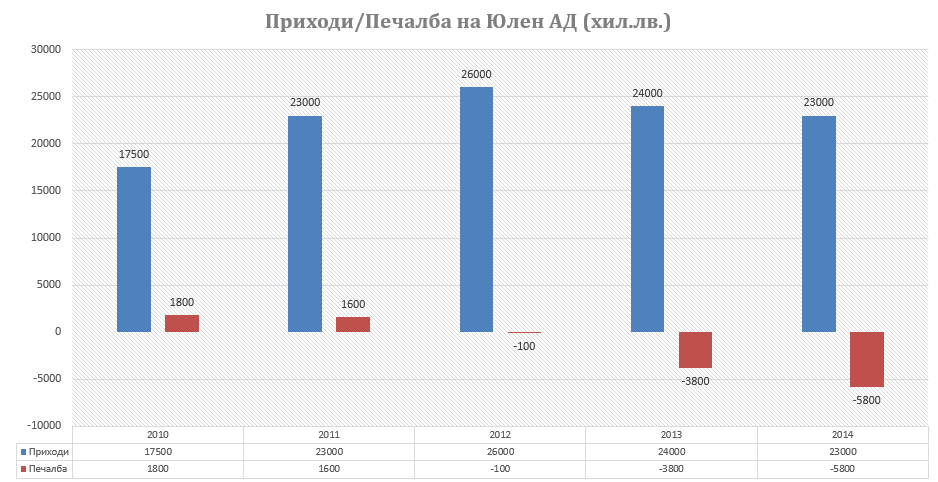
If Yulen AD implements the investment project for a second gondola lift, the company will undoubtedly increase the convenience and comfort of its customers, but in reality it is difficult to expect a significant jump in revenues and, accordingly, profits. Yes, many commentators are right who say that without a second gondola lift and with such queues, the Bansko ski area cannot begin to enjoy the high level of tourists – those who order at the restaurant without looking at the prices. But we must also bear in mind that the investment in a second lift is significant – in the order of 30 million leva. Even if attracting higher class tourists manages to slightly increase the company's revenues, the repayment of the investment will put its capital under particular stress.
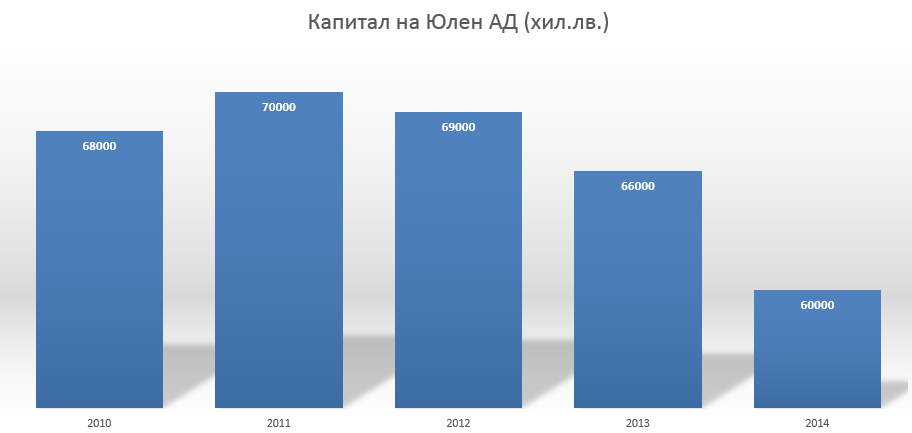
We see that even without the investment in a second lift, the capital of Yulen AD has been under slight pressure in recent years – between 2011 and 2014 it has fallen by 10 million leva. Of course, here we must take into account the specifics of the company's assets and depreciation – lifts are depreciated much faster in accounting terms than in reality, but this does not change the purely financial picture.
Now imagine that Yulen realizes the investment in a second lift worth about 30 million leva through a bank loan at about 4% interest for a 10-year period. The company will have to pay about 3.5 million leva per year, which will be reflected as financial expenses. Even with a slight increase in revenue, this will probably mean an annual loss of over 5-6 million leva. At the end of the period, Yulen AD will be dangerously close to decapitalization.
It is more than obvious that Yulen AD has no financial interest in investing in a second gondola lift, even though the ski area operator’s clients demand one. The role of DSB-Greens in this scenario is curious – by blocking the project, they serve as an all-too-convenient excuse for Yulen AD not to serve the interests of its clients. The question is to what extent are the members of both parties aware that their leaders serve the financial interests of the Bansko ski area operator?




Okay. So the revenue generated from 1 gondola and 5-10 lifts and tows cannot cover the cost of a new gondola and Bansko will be at a loss for years if it builds one.
How then are the amounts for the existing facilities covered?! Have they already been paid for? I've lost count.
This statement - "Tourists want a second gondola lift in Bansko", where did you dig it up?! You simply wrote "hypothesis obviously true". As someone who has been skiing since the age of 4, I can say that in ski/snowboard circles in Bulgaria, such a hypothesis is not at all popular.
The cable car in Bansko moves ungodly slowly. In some second-rate resort in Austria there is no lift or cable car that takes you more than 4-5 minutes. Everything flies. And in Bansko for years tourists have been complaining about a slow lift.