 EKIP– Expert Club for Economics and Politics A Different Opinion
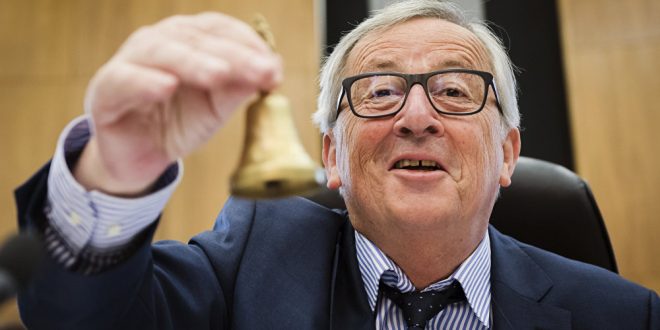
A huge change is happening before our eyes, while we keep our eyes peeled. At the end of December 2018, official talks began in Brussels on changing the decision-making procedure for tax policy issues. EU officials and certain forces in the Union are seeking to replace the current system of unanimity (by the 28 member states) with one that would require only a qualified majority (QM) – i.e., the votes of 55% of the countries with 65% of the population would be needed for change. The European Commission calls QM voting an opportunity for “more efficient and democratic decision-making” and a prerequisite for “a Union that gets its job done.”
In fact, however, this is among the biggest threats to Bulgaria's sovereignty and economic prosperity in the last 20 years. The reform will harm not only our economy, but also threaten the functioning of the EU as a single market. Here are briefly the reasons to oppose such a radical change.
1. Significant loss of sovereignty
The Juncker Commission proposal represents a significant transfer of sovereignty from all member states to the center in Brussels. Tax policy is a key instrument of any independent state, which the EC is trying to wrest from the Bulgarian government. This key element of economic policy will be placed under the control of Eurobureaucrats and the big countries in the Commission.
Representatives of other countries will decide in Belgium how much tax Bulgarian citizens in Petrich, Vidin and Burgas should pay. Would we, the same Bulgarian citizens, allow such a thing? Have we been asked? Isn't this closer to colonial relations than to an equal union of independent countries?
2. Single market against competition
The main hidden argument for demanding such a change in the established procedure is the unwillingness of some members (such as Macron's France, for example) to compete with their other EU colleagues for better economic policy. Bulgaria, Ireland and Estonia have competitive tax systems, liked by investors, and accordingly put indirect pressure on the budgets of other EU countries, which are tangled with social spending and corporate subsidies.
Why should the Belgians, Italians and French carry out heavy reforms when they can simply impose worse conditions on their competitors with a single vote? In practice, we are seeing tax harmonization through the back door and with it another step towards an even more senile and slowing European economy, which will be less and less able to compete with the US and the tigers from the Far East.
3. The EU is going in the wrong direction
Britain's exit from the EU catalyzed dangerous utopian sentiments among the elites along the Berlin-Paris-Brussels axis. Instead of a reassessment of the state of the Union or an analysis of the reasons that led to Cameron's referendum and the departure of such a key member of the European family, negative trends in legislation have intensified.
With the publication of the Commission's white paper and the subsequent initiatives of key leaders, it is clear that the direction is now to create (and quickly) a European superstate. The independence of the member states will be swiftly taken away or bought, while those who decide to leave will be treated not as friendly or even allied countries, but as traitors and enemies. Just look at what Brussels diplomacy is doing with the British and the approach becomes crystal clear.
Such a situation requires not only a sharp and categorical reaction from the Bulgarian government on the issue of unanimous decisions on tax policy, which, by the way, Ireland had immediately. It requires 1) rethinking the "yes, sir" strategy for everything coming from the EU, and 2) skillful maneuvering in the diplomatic environment so that we preserve the advantages of membership without turning into a colony ruled by a drunkard in Brussels.
The forgotten case with the drivers is just a warning shot, the uncritical kneeling for the crisis-causing Euro is yet another mistake. In the upcoming European Parliament elections, the entire continent is preparing to send a strong message to the Eurocrats – only the native politicians will wait until the last minute to pour it into their pockets. As long as there is money to be made, we will be for European integration, and we will leave independence for national holidays.
(For the key importance of Brexit for the future of Bulgaria, see HERE.)





BOYKO BORISOV HIMSELF HAS PROPOSED FOR BULGARIA TO INCREASE ITS CONTRIBUTION TO THE EUROPEAN UNION, WHICH WILL ESSENTIALLY BE AT THE EXPENSE OF OUR TAXES. IS THERE SUCH A REJECTION OF THE GOVERNMENT AND PARLIAMENT OR IS THIS HIS INDEPENDENT INITIATIVE AND ON WHAT BASIS IS HE DOING IT??????/ WILL HE NOT UNDERSTAND AFTER ALL THAT THE STATE IS NOT HIS FATHER TO RULE SUCH INDEPENDENTLY. ????????????