 EKIP– Expert Club for Economics and Politics A Different Opinion
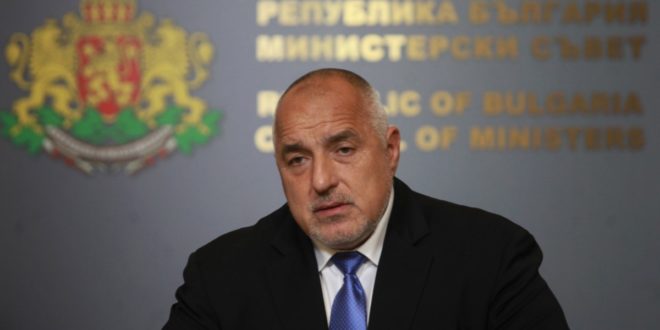
In the last few weeks, the positions of the government, especially in the quasi-single-man rule of Prime Minister Borisov, have been more changeable than the weather. After in February he wisely gave up the rush to join the so-called "waiting room" of the eurozone - the ERM-II exchange rate mechanism - Borisov turned 180 degrees and a few days ago announced that these attempts were being renewed, with the original deadline until the end of this April. Borisov said that in the next two or three weeks Bulgaria will fulfill the conditions and will join ERM-II before St. George's Day.
Where did you see these "trillions" in ERM-II and the eurozone?
You may be wondering why this hysterical rush, which has appeared almost out of nowhere? As usual, it is about money, according to the Prime Minister. Or rather, about the hope that by joining ERM-II we will see more money. Borisov presented our joining ERM-II as almost the only way to save Bulgaria's economy in the current crisis. According to him, if we join ERM-II we will have access to huge financing, mainly through the European Central Bank. Here were his exact words:
"The European Central Bank is lending trillions to rebuild the countries in the Waiting Room and the Eurozone. "This crisis has shown us that countries that are not in the Waiting Room and the Eurozone will incur debts, and at huge interest rates."
I'll be direct. What the Prime Minister said is completely false.
First, the European Central Bank is categorically NOT "giving away" trillions. The extraordinary program of so-called "quantitative easing", i.e. buying bonds of Eurozone member states, which was announced on March 18 by the ECB, is worth a total of 750 billion euros.
Secondly, this is debt financing, not money that the ECB provides for free. The financing is carried out in the following way - the Eurozone member states issue government debt, which is bought by the banks, because it is then bought by the ECB through this extraordinary program of quantitative easing for the financial system of the monetary union. This lowers the costs of the government debt of the Eurozone member states, but does not change the fact that they still have to borrow debt.
Third, the countries that are in the so-called "waiting room" of the eurozone, i.e. the ERM-II exchange rate mechanism, do not have access to this quantitative easing program because they have not yet adopted the euro as their official currency. Denmark, which is in ERM-II but not in the eurozone, does not have access to these 750 billion quantitative easing. Only countries whose currency is the euro and whose debt is denominated in euros can benefit from this program. In the case of Bulgaria, this means that if we enter ERM-II this year, we will not be affected by this ECB program for at least 2 years. We recall that according to the EU treaties, this is the minimum stay in ERM-II for each candidate member for the eurozone. In other words, until the time comes when we will be able to benefit from this program, it is not clear whether it will be active at all.
What crisis programs have been introduced in the EU so far?
In addition to the ECB’s quantitative easing, last week EU finance ministers reached a consensus on alternative sources of pan-European crisis financing. So far, three programs have been formed – two that can benefit all EU member states and one only for those that are part of the eurozone and, accordingly, the European Monetary Union’s European Stability Mechanism. The total value of these three programs is 540 billion euros. Again – no trillions.
The first program is called SURE and we can benefit from it even now, without being in either the eurozone or the ERM-II exchange rate mechanism. It is worth 100 billion euros. Its goal is to provide liquidity support to EU economies that have suffered financially from the pandemic. The money will be allocated to each EU member state under certain conditions and guarantees in relation to the general budget of the union.
The second program is a targeted support for small and medium-sized enterprises within the EU through the European Investment Bank and is worth 200 billion euros. The EIB will distribute this financing through national banks. In practice, this scheme aims to be a form of "safety net" for businesses in the European Union. Like SURE, this program can benefit absolutely all member states of the European Union, not just those in the eurozone. That is, Bulgaria has access to it now.
The third program, worth 240 billion, is the only one that applies only to eurozone member states. This is due to the fact that it represents a crisis financing through the European Monetary Union's European Stability Mechanism. This mechanism was created during the debt crisis in the form of a common pool financed by the state budgets of the member states, which can be used to potentially save Eurozone member states that are threatened with bankruptcy, as was the case with Greece at the time. The financing that will now be granted through this mechanism is in the form of a special loan that can be used solely and exclusively for the purpose of compensating for the economic damage caused by the pandemic.
Is there funding that we can only access if we are in ERM-II ?
Absolutely not, there is no financing instrument that we would have access to solely by virtue of being in ERM-II . One theory could be that the BNB and the financial system in Bulgaria would have more access to liquidity in euros through currency swaps (in practice a free currency exchange agreement) from the ECB to the BNB. An example is Denmark, which is a member of ERM-II, but not of the euro area, and it benefits from such a line. Its financing was increased to 24 billion euros from 12 billion before. The aim is to guarantee that the Danish financial system will not start to experience a deficit of euros due to the crisis.
However, the existence of such a currency swap line is not tied to membership in ERM-II . This is usually a crisis instrument that is introduced during a financial crisis. Denmark has been in ERM-II since 1999, and for the first time such a swap line was opened in 2008, during the global financial crisis. Earlier in 2007, such a line was created with the central bank of Sweden, and a few years later with that of Hungary. Neither of the two countries is in the eurozone and ERM-II. The large central banks themselves, such as the ECB, are interested in these liquidity lines, because if there is a serious shortage of euros in economies like Bulgaria, this could lead to a default on euro-denominated obligations. Therefore, banks in such countries stop holding euros, which would weaken the euro, especially if it concerns other countries in Europe and especially if this happens during a crisis.
For Bulgaria specifically, at the moment, providing euro liquidity through such swap lines is useless. First, this is not targeted financing to prevent bankruptcies or preserve jobs, but simply to ensure euro liquidity in the banking system. Second, in the words of the BNB Governor Dimitar Radev himself, the lev has 156% coverage in euros. That is, there is no euro deficit in our financial system at this time and, accordingly, we do not need such liquidity assistance from the ECB.
Finally, let's summarize how the facts stand in relation to Prime Minister Borisov's claims:
- There are no "trillions" in any crisis program, neither for the eurozone, nor for the ERM-II "waiting room", nor for the European Union as a whole.
- Even if we enter ERM-II this year, it will be at least 2 years before we can adopt the euro. This means that it will be 2 years before we can use crisis financing through the European Stability Mechanism or the ECB's quantitative easing, which only applies to eurozone member states.
- Currently, we have access to most of the crisis financing - totaling 300 billion euros - introduced by the European institutions, as a result of being a full member of the EU.
- By joining the ERM-II currency mechanism , we will not gain access to ANY financing that we do not currently have access to. The ECB's currency swap lines are not something that only exists for members of the currency mechanism, they can be opened with any central bank in the world.




2 коментара
Pingback: The "unrecognized" risk for banks from joining ERM-II
Pingback: Credit Score - Does It Show Anything Useful at All?