EKIP– Expert Club for Economics and Politics A Different Opinion
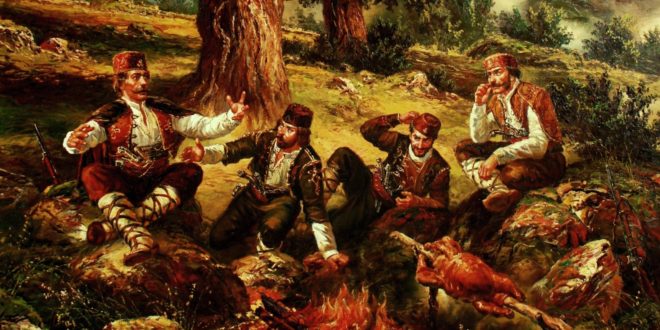
The carrying of weapons among the Bulgarian population has deep traditions even during the Ottoman rule. Contrary to popular belief, the Bulgarians were not at all defenseless. In fact, on the contrary, they often found themselves with weapons in their hands despite the suspicion and prohibitions of the authorities, and during the period of the Kardzhali unrest (late 17th - early 18th centuries) and with its blessing.
I have already presented the Bulgarians who participated in some form in the Ottoman armed forces. These were the Christian spahis, the voinuks, the martolos and other categories. All of them were, at certain times, active soldiers and we can classify them as part of the class of “askers” ( askeri ) – those who rule, fight, defend and do not pay taxes. They often led rebellions against the Porte. Such was the case with the martolos Karposh, who raised a major uprising in Macedonia at the end of the 17th century.
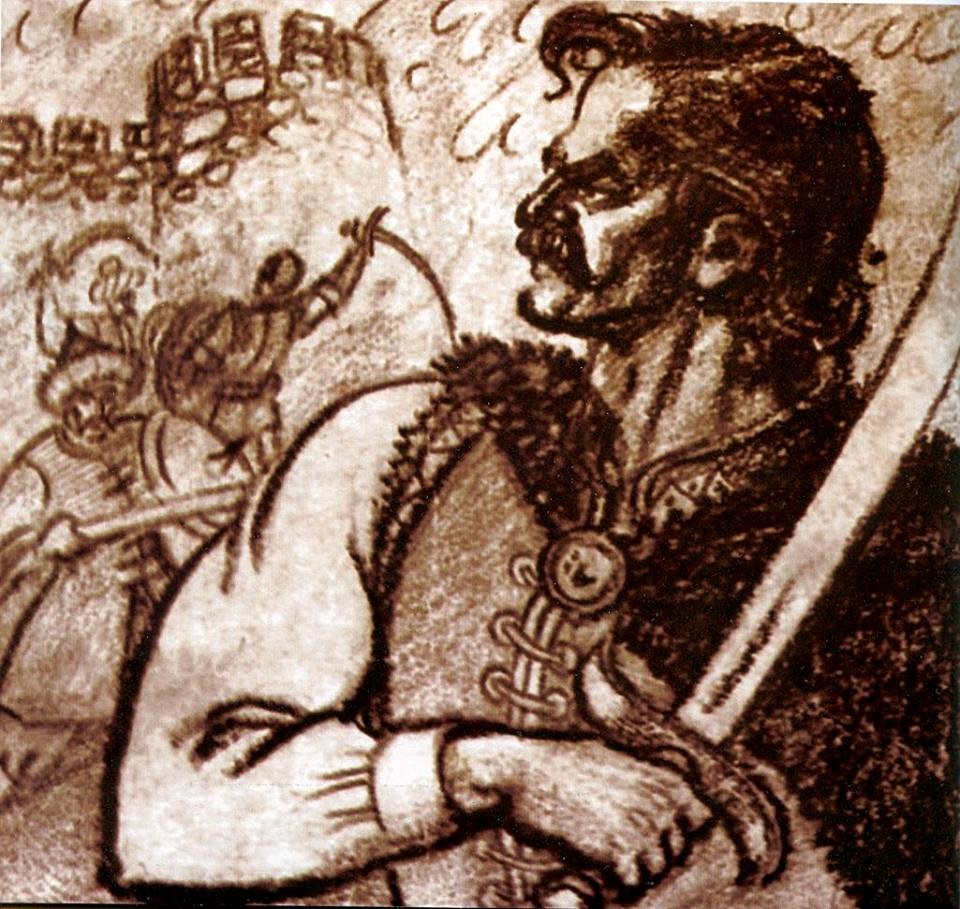
Digital object 1. Drawing depicting the Karposh martolosa. Source: Internet.
Other residents, by status, were something between the military and the raya ( i.e. producers and taxpayers). Such were, for example, the derbenci ( a type of local militia), whose purpose was to guard the mountain passes. They could carry weapons and enjoyed tax breaks. Such derbenci settlements were Kalofer, Adzhar (today Svezhen), Shipka, Gabrovo, Kotel, and so on, which later turned out to be among the most active centers of the Bulgarian awakening in the 18th and 19th centuries. Without going into any in-depth psychological analyses, I can certainly assume that the legal carrying of weapons reflected the more freedom-loving spirit of the residents of these towns.
It is known that the derbendzhii very often entered into open battles with representatives of the Ottoman authorities on one occasion or another. For example, when the famous Ottoman traveler Evliya Çelebi passed (1662) through the Shipka Pass, he participated in a real battle with the inhabitants of Gabrovo. In his travelogue it is recorded: Around noon, when we were descending the middle of the slope of this mountain, to a narrow wild rocky place for haidush ambushes, we were surrounded on two sides by enemies. In this narrow gorge we fired several volleys of bullets, they at us and we at them, and when we came face to face, a battle began. Later, in the middle of the 19th century, the institution of the derbendzhii would be centralized in the Zapti service, which I presented in Part I.
Apart from this more specific group of subjects, the carrying of weapons was also widespread in general, as throughout the Ottoman rule there are continuous reports of actions by other armed groups of Christians (the so-called haiduts), with whom the Ottoman troops often engaged in fierce battles.
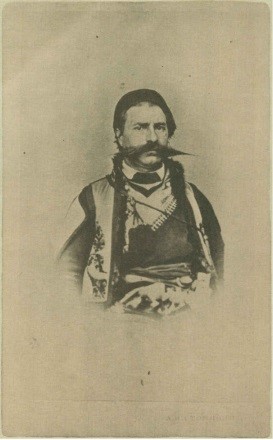
Digital Object 2. Panayot Hitov in 1867, Belgrade. Source: Wikipedia .
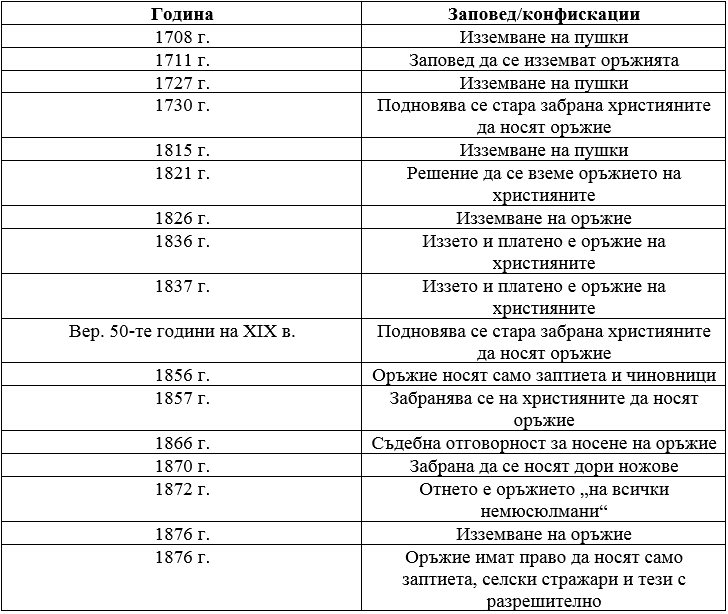
In this regard, there are known repeated attempts by the authorities in the 18th and 19th centuries to restrict the carrying of weapons by Christians. In the table below I have presented, in a more generalized form, the known initiatives in this direction. They are not few at all and show both the desire of the authorities to disarm the Christian population and the obvious failure to do so in reality. If the initiatives had been successful, they would not have been repeated so often over time.
Table 1. Orders and seizures of weapons from the "paradise" in the Bulgarian lands in the 17th – 19th centuries. Source: Dimitrov, K. Firearms in the Bulgarian lands from the end of the 17th century to the Liberation (1878), Military History, issue 17, 2016, 86-91.
At the end of the 18th century, the so-called "Kardzhali times" began, which are very well described and analyzed by Vera Mutafchieva. At that time, the sultan's administration practically lost significant territories in the Balkans, which fell under the rule of rioters. A process of decentralization of the state began and it was no longer able to ensure the security of the population, which was left alone to deal with the Kardzhali detachments.
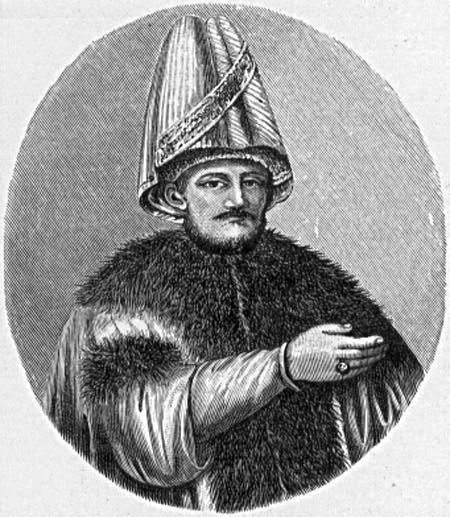
Digital object 3. Portrait of Mustafa Pasha Bayraktar. One of the Kardzhali chieftains, and later a supporter of the reforms of Sultan Selim III. Source: Internet.
In this regard, the Ottoman Sultan Selim III (1789 – 1807) issued several regulations allowing the population of the empire, regardless of religion and nationality, to bear arms in order to protect their lives and property. In 1793, an order was issued ordering that “ all worthy men” be armed in places, and in a 1797 firman (order) for Sofia we read: In order to prevent the passage of the robbers, it is necessary, first of all, for the population of the Sofia kaza [ i.e. district ] , without distinction of religion, to arm themselves collectively and, together with the necessary number of seimens [ i.e. local Muslim fighters ] , to bravely defend the positions and defiles….
Here I will allow myself a more extensive remark about this Ottoman sultan, who is also a rather interesting person.
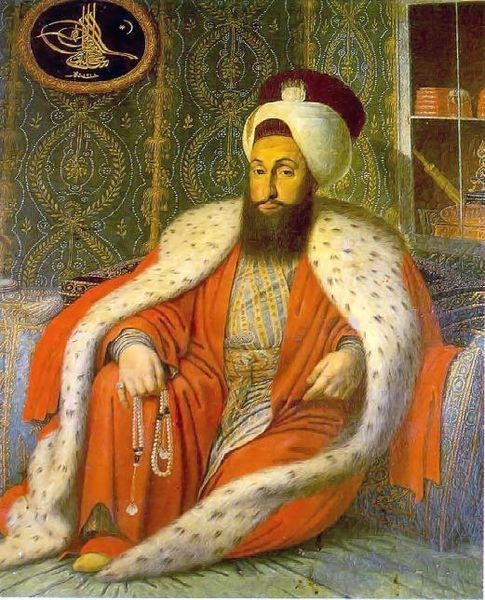
Digital Object 4. Portrait of the Ottoman Sultan Selim III . Constantinople. Source: Internet.
According to the Turkish historian Koca Türk, Selim was born in 1761 in Constantinople. On the occasion of the birth of the young prince, the palace astrologer announced – “A peerless ruler of the world is born!”, and the entourage of his father, Sultan Mustafa, reported that the boy would be a ruler similar to Alexander the Great. Mustafa III, who attached great importance to the words of astrologers, was convinced that his son would become a great sultan. Even until his death, he liked to mention to those around him – “ My son Selim will become a great padishah”.
These words naturally reached the ears of the young prince, and also of all the inhabitants of the palace, where they began to see in him the future great statesman and conqueror. According to the American historian Stanford Shaw, the prince enjoyed relative freedom, not inherent in the inhabitants of the "cage" (the place where the princes lived in isolation), entered into correspondence with Louis XVI, etc. In 1789 he ascended the throne, but later ended up like his French counterpart and in 1807 was dethroned by the Janissaries, and a year later was killed.
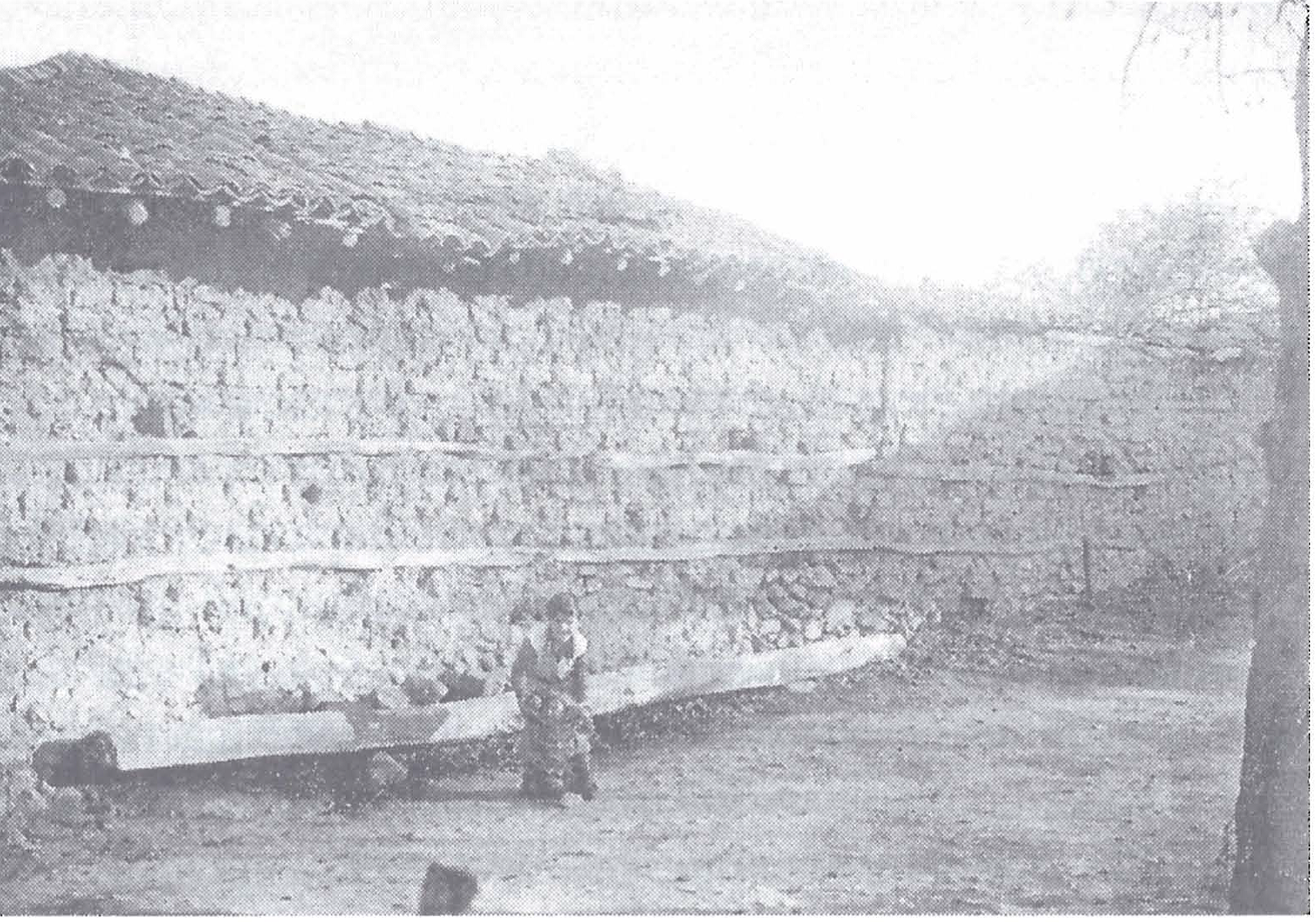
Digital object 5. Part of the wall (stockade) surrounding Kazanlak during the Kardzhali riots. Source: Penchev, P. The Kazanlak Region during the Revival. S., 2005, p. 24.
In any case, Selim III from the very beginning acted with the self-confidence of a reformer and made real attempts to renew the state, which, however, failed. His orders regarding weapons and the Bulgarians undoubtedly had a great psychological effect on the subject Bulgarian population. Regarding the mass armament at that time and its effect, the famous Bulgarian revolutionary G.S. Rakovski wrote: “In those Kardzhali times, almost everyone in Bulgaria was armed and many towns and large villages were surrounded by walls and trenches to protect themselves from the Kardzhali attack… The greatest resistance against the Kardzhali devastation, one might say, was put up by the Bulgarians.”
Conclusion
It is clear that carrying weapons had a huge impact on the Bulgarian population during the Kardzhali period. This was noticed by both contemporaries and later researchers. Thus, in the “period of anarchy” those positives were born that would prove decisive in the long term. The Bulgarians defended themselves and coped with the robber attacks. From here on, the decision to begin to determine their own political destiny came by itself.
In general, the Ottoman government was extremely reserved and tried to disarm its subjects. This is inherent in almost every government in the world. I will recall the words of James Madison (1751-1836), according to whom the government is generally "afraid to trust men with arms ". In this sense, the permission and arming of the population at the end of the 18th century, in my opinion, will prove to be key, among other factors of course, such as decentralization, for example, for the emancipation of the Christian inhabitants subject to the Sultan.