Macroeconomic Monitor
Home / Christian Atanasov

Christian Atanasov

Hristiyan Atanasov graduated in history from Sofia University "St. Kliment Ohridski" and economics from the UNWE. He deals with information, archives, financial and credit history. He has been a consultant to private companies and state institutions. Initiator and manager of projects for the opening and popularization of Bulgarian historical archives. He was a lecturer in economic history at the UNWE, currently he is an associate professor at UniBIT.

The Bulgarians, the Ottoman Empire and Weapons: Part II
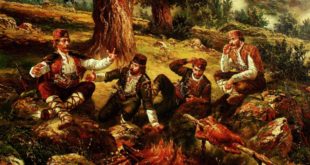
The carrying of weapons among the Bulgarian population has deep traditions even during the Ottoman rule. Contrary to popular belief, the Bulgarians were not at all defenseless. In fact, on the contrary, they were quite often found with weapons in their hands despite the suspicion and prohibitions of the authorities, and during the period of the Kardzhali unrest (the end of the 17th century …

More »

The Bulgarians, the Ottoman Empire and Weapons: Part I

Author: Assoc. Prof. Dr. Hristiyan Atanasov The possession of weapons by Bulgarians during the Ottoman rule is not an unexplored or neglected problem by historians. However, it hardly figures in the mass consciousness, with the exception of the image of the outlaws, who in most cases are presented as rebels against the authorities and "people's champions". In fact ...

More »

The State vs. "Tsar" Pencho: Monetary History Before the Liberation

Author: Hristiyan Atanasov Money has always attracted attention. Everyone wants to own it, control it, and especially have the right to produce it. Having arisen spontaneously to facilitate market exchange, it quickly becomes the darling of the political authorities, which try to monopolize it. The reason is more than clear…

More »

Ottoman paper money as an Italian mini-VOT. A historical parallel.

Author: Hristiyan Atanasov About a month ago, The Wall Street Journal published an article explaining the intentions of the Eurosceptic parts of the Italian political sector to issue mini-bonds (mini-BOT from Buoni Ordinari del Tesoro – i.e. lit. “small ordinary treasury bonds”) with a face value of €50[1], according to other sources €100. The idea of …

More »

Freedom during “slavery” – some reflections on the status of Bulgarian settlements during Ottoman rule

Author: Assoc. Prof. Dr. Hristiyan Atanasov Elementary economic logic suggests that a lower tax rate is an opportunity for the accumulation of greater wealth by the individuals of society. It is clear that an enterprising person has the opportunity to earn more and, accordingly, the smaller part of what he earns he transfers for the “common good” (for example, to the state, …

More »

Without government regulations - greater initiative and wealth

(EXAMPLE FROM THE BULGARIAN EIGHTEENTH CENTURY) Author: Assoc. Prof. Dr. Hristiyan Atanasov A few words in advance Bulgarian historical science has long proven that the beginning of the Bulgarian Revival should be attributed to the period between the end of the 17th and the first decade of the 18th century. This is the moment of the initial awakening of already new …

More »

The Ottoman State's policy of non-interference in agriculture in the 19th century

Author: Assoc. Prof. Dr. Hristiyan Atanasov How the state's departure from its priority can have a positive impact Let's start with the fact that agriculture was the main priority of the Ottoman state throughout its existence. It can be said that the reasons for this are mainly fiscal, but also social. So …

More »