EKIP– Expert Club for Economics and Politics A Different Opinion
Author: Assoc. Prof. Dr. Hristian Atanasov
Elementary economic logic suggests that a lower tax rate is an opportunity for the accumulation of greater wealth by individuals in society. It is clear that an enterprising person has the opportunity to earn more and, accordingly, the smaller part of what he earns he transfers to the “common good” (for example, to the state, which is likely to spend it inappropriately) and keeps for himself (it is assumed that he is able to decide for himself the most expedient way to spend or save it), the greater the opportunity to generate something useful. In history, we have many examples of places and periods in which the tax burden and regulations were reduced to a minimum, or completely absent, and accordingly this led to economic, demographic, cultural and educational upsurge.
Here we will focus on a case that seems almost unknown to the Bulgarian reader - even a professional historian or a lover of the Bulgarian past. It is about the tax and other "privileges" that the inhabitants of two neighboring settlements - Kalofer and Adjar (today's Svezhen) enjoyed during the Ottoman rule. Bulgarian historical science has probably written thousands of pages that have impressed upon us how negative the role of the Ottoman state was for the historical development of the Bulgarians, who would have developed in a completely different way if they had their own. A statement that is probably true, but in this case we are talking about something completely different. There are areas in the Bulgarian lands that were actually not subject to direct intervention by the Ottoman state for long periods of time. In practice, they lack any state and are left more or less to solve their own problems - even those related to the court and security, which are in principle the prerogative of the state.
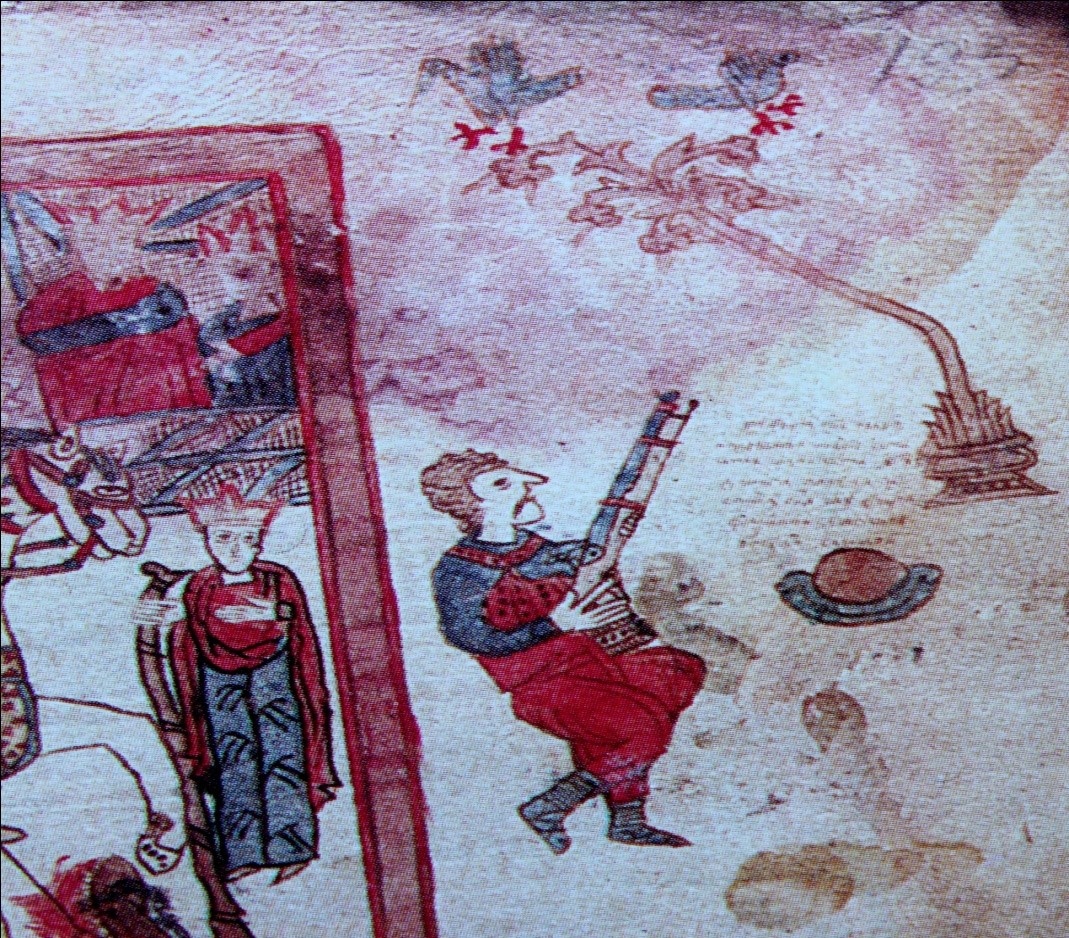
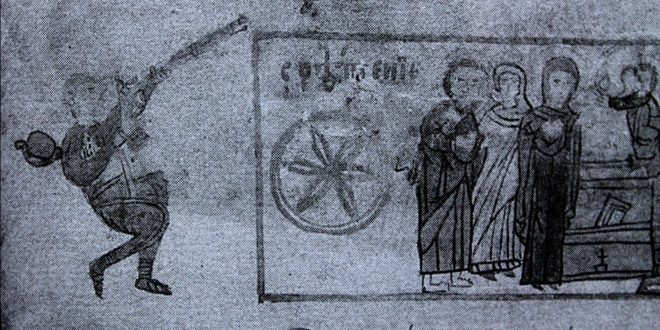
Armed man from Adjara. Illustration from the 17th century. (Thanks to Ivo Tavityan from the village of Svezhen, who drew my attention to these miniatures. See also: Doncheva-Panayotova, N. Adjarian writers-illustrators from the 17th century. S., 2015).
Such are the later revival centers of Kalofer and Adjar, which during the period of the imposition of the classical Ottoman military-economic system on the Bulgarian lands remained essentially aloof from it. Thus, the inhabitants of these settlements turned out to have the status of guardians of the mountain passes (the so-called derbendzhii) and were subordinate to a waqf (foundation) with the obligation to maintain the mosque (Islamic religious temple) built by the Ottoman Sultan Suleiman the Magnificent in Constantinople (today's Istanbul). These tasks of theirs led to large tax breaks. Sultan orders from the 1530s and 1540s are known, which decreed that the inhabitants of Kalofer and Adjar were exempt from all taxes, with the exception of the "aid" for the mosque, which amounted to about 700 akchets (a type of silver coin). In addition, they were given the right to go armed (perhaps in order to guard the passes of the Stara Planina Mountains) and no one was allowed to interfere in their affairs and they were not allowed to perform duties for the Ottoman army. There is even information that in these settlements it was forbidden for "Muslims to settle and move around with a forged horse and weapons" (which, in my opinion, is a legend, also popular with regard to Panagyurishte, the inhabitants of which served as assistants in the Ottoman army - the so-called voynyutsi ).
Here I will make a brief remark about the main groups that formed Ottoman society. First of all, these are the leaders – the so-called askeri (military), who were Muslims, but also Christians (e.g. Christian spahis, Bulgarian voinyuts for a certain period of time, etc.), people of religion and education. These are the people who lead the state and do not pay taxes. Second, this is the rayata– mainly Christians, but also Muslims. They are actually the people who produce material goods – farmers and craftsmen, who pay the taxes that support the askeri. There are also slaves – the so-called esir– mainly prisoners of war, with the status of property, who do not pay taxes. As strange as it may sound, we can also include the janissaries, who are legally slaves and are the property of the sultan – they also do not pay taxes and are included in the management of the state.
Based on this, we can argue that the residents of Kalofer and Svezhen turned out to have a rather intermediate status – they were both producers, but paid low taxes, and were somewhat military (guarding the passes), but without being obliged to go on a campaign with the Ottoman army. Here we should add the fact that the silver coin – the akcheto was constantly devalued in the 16th, 17th and 18th centuries and so the tax burden became symbolic over time, also that their residents could go around armed and “no one interfered with them”. This accumulation of circumstances allowed them to concentrate on economic initiatives, to create an entire culture – the famous Adjarian literary school, to build larger churches (the size of at least one of them – “St. George” seems not to have been regulated by the state and according to oral information from local residents and archaeological data it was quite impressive, although not preserved to this day). This economic and cultural rise of the settlements was carried out entirely without a state. The locals organized themselves and, based on their material capabilities, built a church, wrote and copied old religious texts. Carrying weapons probably also had a psychological effect and gave them greater self-confidence and made them more initiative and independent.
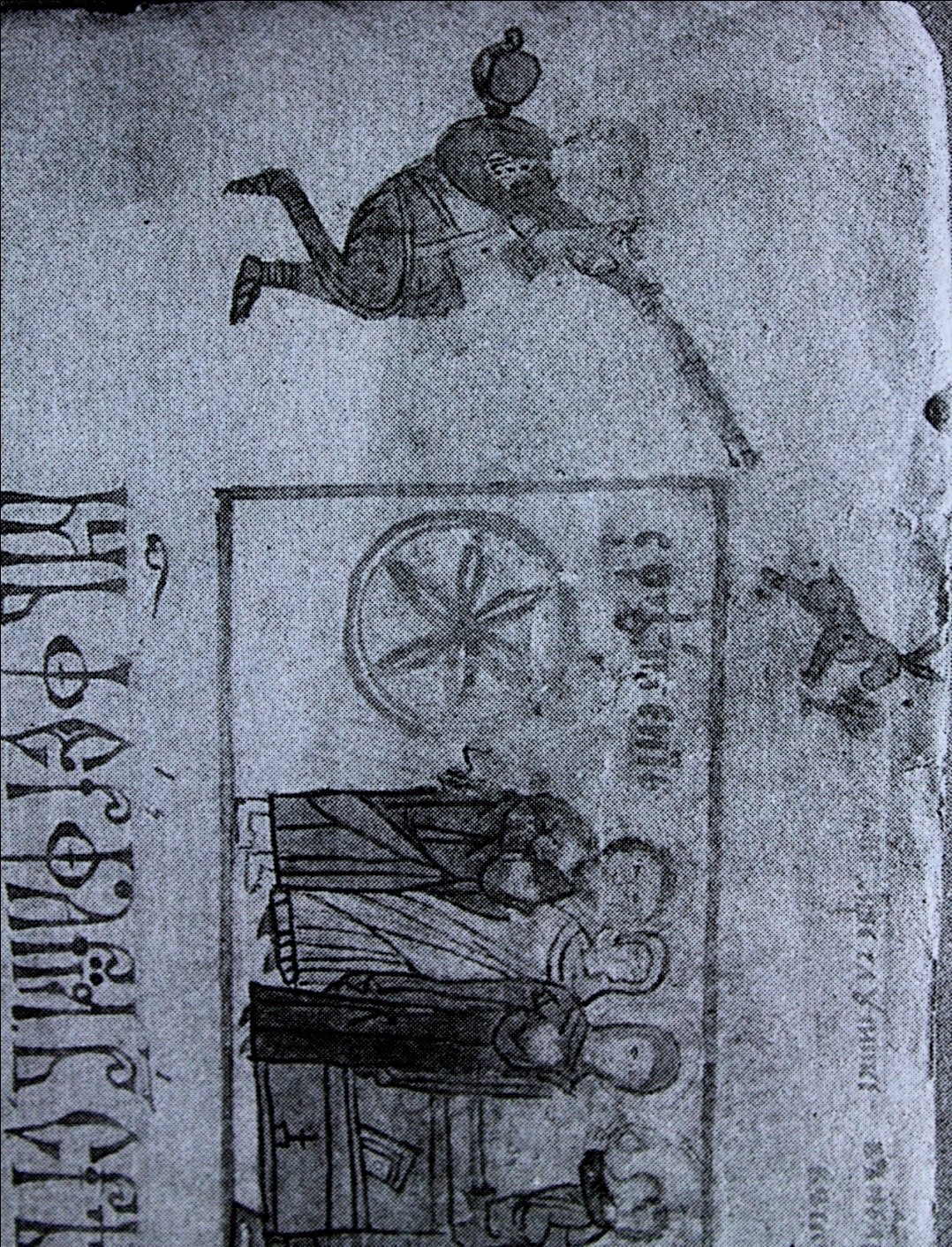
Armed man from Adjara. Illustration from the 17th century. (Thanks to Ivo Tavityan from the village of Svezhen, who drew my attention to these miniatures. See also: Doncheva-Panayotova, N. Adjarian writers-illustrators from the 17th century. S., 2015)
In the 17th and 18th centuries, the “privileges” of the inhabitants of Kalofer and Adjara were preserved, and in the Ottoman archives in Istanbul there are preserved documents that support such a claim. For example, an order of July 18, 1775 is known, which prohibits interference in the affairs of the inhabitants of the village of Kalofer, which belonged to the waqf of Sultan Suleiman. Already in the 19th century, their status was equated with other parts of the empire and even an Ottoman administrator was stationed in Adjara, but the long period of tax breaks and other “freedoms” had their effects. Immediately before the Liberation, both Kalofer and Adjara were economically very well developed, bustling with life (a high-mountainous settlement like Adjara had a population of about 5,000 people) and “gave birth” to alert and freedom-loving individuals – I will remind you that Hristo Botev was originally from Kalofer. Unfortunately, at the end of the Russo-Turkish War of 1877-1878, both villages were burned by the retreating Ottoman troops, probably in retaliation. Many people died, and during the fires the archives and church buildings were also destroyed, so we can only write about them based on written testimonies from other archival repositories and preserved remains.
What has been written so far probably raises many questions to which Bulgarian historical science owes answers. Is it a coincidence that precisely in settlements with a similar status – not only Kalofer, Adzhar, but also Kotel, Panagyurishte and so on – the processes characteristic of the Bulgarian Revival are taking place most vividly? Isn’t it precisely the weak state there that is the main reason why Bulgarians are more enterprising – a greater part of what has been won can remain for them, they can go around with weapons in hand, build churches and study ancient books. A question to which the logical answer is yes, but we should also support it in the future with empirical data from the archives – Bulgarian, Ottoman and others.