Pencho Penchev January 17, 2021 Culture and History, Society
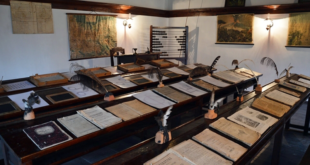
The market process played an important role in the development of Bulgarian society before the Liberation. It steadily penetrated even into spheres and areas that were perceived as isolated from it. Its spontaneous manifestations left an imprint on educational work, cultural institutions and social life. Read through the prism of voluntary exchange, supply and demand …
More » Christian Atanasov April 14, 2020 Culture and History, Society
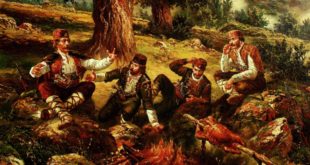
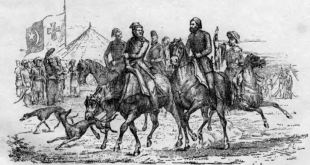
The carrying of weapons among the Bulgarian population has deep traditions even during the Ottoman rule. Contrary to popular belief, the Bulgarians were not at all defenseless. In fact, on the contrary, they were quite often found with weapons in their hands despite the suspicion and prohibitions of the authorities, and during the period of the Kardzhali unrest (the end of the 17th century …
More » Christian Atanasov April 06, 2020 Culture and History, Society
Author: Assoc. Prof. Dr. Hristiyan Atanasov The possession of weapons by Bulgarians during the Ottoman rule is not an unexplored or neglected problem by historians. However, it hardly figures in the mass consciousness, with the exception of the image of the outlaws, who in most cases are presented as rebels against the authorities and "people's champions". In fact ...
More » Christian Atanasov October 26, 2019 Culture and History, Society
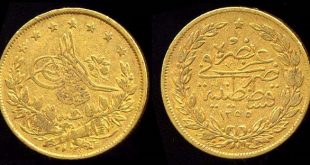
Author: Hristiyan Atanasov Money has always attracted attention. Everyone wants to own it, control it, and especially have the right to produce it. Having arisen spontaneously to facilitate market exchange, it quickly becomes the darling of the political authorities, which try to monopolize it. The reason is more than clear…
More » Christian Atanasov July 26, 2019 Economic and Fiscal Policy, Culture and History
Author: Hristiyan Atanasov About a month ago, The Wall Street Journal published an article explaining the intentions of the Eurosceptic parts of the Italian political sector to issue mini-bonds (mini-BOT from Buoni Ordinari del Tesoro – i.e. lit. “small ordinary treasury bonds”) with a face value of €50[1], according to other sources €100. The idea of …
More » Georgi Vuldjev July 18, 2018 Editor's Choice, Culture & History, Politics
Today (18.07) is a significant date in the Bulgarian calendar. On this day, in 1837, the greatest Bulgarian hero and revolutionary was born – Vasil Ivanov Kunchev, better known by the famous nickname Vasil "Levski". Also known as the Apostle of Freedom, Levski is the most important Bulgarian revolutionary. His merits as an organizer of the revolutionary movement …
More » Christian Atanasov May 09, 2018 Economic and Fiscal Policy, Culture and History
(EXAMPLE FROM THE BULGARIAN EIGHTEENTH CENTURY) Author: Assoc. Prof. Dr. Hristiyan Atanasov A few words in advance Bulgarian historical science has long proven that the beginning of the Bulgarian Revival should be attributed to the period between the end of the 17th and the first decade of the 18th century. This is the moment of the initial awakening of already new …
More » Christian Atanasov March 20, 2018 Economic and Fiscal Policy, Culture and History
Author: Assoc. Prof. Dr. Hristiyan Atanasov How the state's departure from its priority can have a positive impact Let's start with the fact that agriculture was the main priority of the Ottoman state throughout its existence. It can be said that the reasons for this are mainly fiscal, but also social. So …
More » Стоян Панчев 19 октомври 2017 Култура и история, Общество
Capitalism in Bulgaria emerged during the Ottoman rule and as a natural effect of the widespread losses of the Ottoman Empire in the various wars and uprisings against it during this period. After several key losses such as the Serbian Uprising and the Greek Revolution, the empire had to implement reforms concerning the army...
More »  EKIP– Expert Club for Economics and Politics A Different Opinion