EKIP– Expert Club for Economics and Politics A Different Opinion
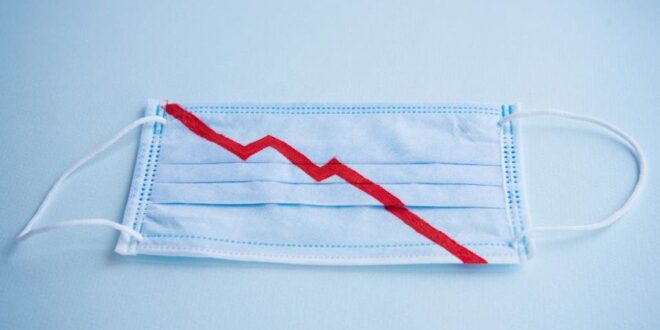
Do you remember when "smart heads" were roaming the television studios six months ago to comfort us? They were talking about how the crisis may be deep, but it will be short? How we will already be in recovery by the fall? How in 2021 we will fully recover to the levels of economic activity from 2019? How the recovery trajectory will be "V"-shaped?
It turns out that all this was nonsense. The crisis only deepened in the fall, the horizon of a possible recovery remains unclear, but if one thing is now 100% certain, it is that it will not be “V”-shaped. In Europe, the second wave of the pandemic itself surprised many governments – ours especially. But in the last month, a new threat has emerged – the various mutations of Covid-19 are leading to a third escalation of the pandemic in a number of European countries, right in the middle of the peak of the second wave in November.
Covid-19 refuses to go away
In recent weeks, due to the spread of the more contagious British strain of Covid-19, some EU countries have set new records for the incidence and mortality rates of the virus. In Portugal and Spain, they are openly talking about a “third wave” and are imposing a third lockdown, this time even harsher than those imposed in November. A third “lockdown” is also being talked about in France, and Germany has extended the lockdown imposed in November until mid-February.
In our country, as we know, the closure is noticeably lighter (non-food stores can operate, unlike in Germany, for example) and it seems that for now the scale of the pandemic continues to weaken. The government announced that it intends to begin a phased reopening of closed businesses and institutions from the beginning of February, but recent statements show that it certainly has no intention of rushing.
It is precisely the indications that restaurants, for example, will not be open for a long time that have caused tension between the government and representatives of the restaurant industry, who are threatening to open in protest. According to representatives of the crisis headquarters, due to the fact that the British strain of the virus has already been discovered in Bulgaria, restaurants may not open until April. All these problems are further exacerbated by the delay in the vaccination process due to the sluggish work of both the European institutions and national governments.
The recession will continue for the foreseeable future
All this means that the recession continues in full force into early 2021. In the first quarter of this year, we will not see an improvement in economic activity. It will most likely be at the level of the fourth quarter of 2020 (in some countries, perhaps even lower), which in turn was close to the level of the spring. Due to the fact that in the first quarter of 2020, economic activity in some countries was already slowing down due to the effects of the pandemic, the decline may now be slightly more moderate on an annual basis. But it will still be significant. If we have to talk in concrete numbers, at this point it seems reasonable to expect a GDP decline of at least 5% in the first quarter of 2021 and more likely around 10%, in some countries perhaps even more, depending on the severity of the pandemic and restrictive measures.
It already seems that the current recession is about to surpass the one of 2009 not only in depth, but also in duration. From now on, any talk of a “quick recovery” is not just ridiculous, but a direct contradiction of reality. Institutions have already started to revise their GDP forecasts for 2021 significantly downwards. For some countries, such as Portugal, for example, the forecasts are already that GDP will fall on an annual basis this year as well! Thus, the horizon of recovery from the recession for many countries is shifting to 2023 and even 2024.
For those whose economies are heavily dependent on tourism (Greece, Portugal, Spain) it is of utmost importance that this year's season proceeds under normal circumstances, but given the slow pace of vaccination, this also seems uncertain. Hoteliers in Greece say that customers have already started canceling reservations for the spring months, due to concerns that the pandemic will not be under control by then.
At best, the recovery will be “W” shaped.
As things stand, Europe appears to be heading for a double-dip recession. The definition of a recession is two consecutive quarters of a decline in GDP (economic activity) compared to the previous quarter. We already saw one in the January-June 2020 period. There was a recovery in the third quarter (June-September) compared to the previous one, but the last quarter of 2020 will certainly see another decline. Now, due to the return or extension of quarantines, the first quarter of 2021 looks set to see another decline in GDP compared to the last quarter of 2020 in many places.
At best, the recovery will be “W”-shaped, but even that is not certain. To compensate for the decline in economic activity, the European Central Bank has embarked on record-breaking money printing, and local governments have embarked on record-breaking deficit spending (largely supported by the printing). This is leading to a huge surge in government debt, the levels of which will reach frightening proportions in some countries. In Greece, the government debt-to-GDP ratio will exceed 200%, in Italy 150%, in Portugal 130%, in Spain it will approach 120%.
Deficit spending poses pitfalls for future growth
Accumulating so much new debt will create additional economic problems in the longer term. It is not at all clear that the record deficit spending undertaken in response to the pandemic will be justified in the long term. What if the accumulation of even higher debt leads to the maintenance of chronically unproductive activities (in both the public and private sectors) that are unable to generate the desired growth? What if the burden of new debt on public finances turns out to be greater than the revenues that the “stimulated” economic activity can bring to the treasury?
These are key questions to which we do not have answers. We can only hope that this will not happen. Alas, the experience of the previous crisis in the Eurozone indicates that this risk is very likely to materialize, especially in countries with high levels of corruption, rentierism and a bloated public sector like Italy. Incidentally, Bulgaria suffers from similar problems. The great danger is that the monetary and fiscal policies that are currently being followed in Europe could lead to stagnation or recession in a few years. This is exactly what happened after the crisis in 2009. Alas, the European Union does not seem to have learned from its mistakes.