EKIP– Expert Club for Economics and Politics A Different Opinion
Evgeni Dainov, one of the most famous public intellectuals in Bulgaria, published an article a few days ago about "economists". A text in which he criticizes at length what he describes as the "economic" way of thinking. As someone who considers himself an economist, I was of course intrigued, but unfortunately I was left extremely disappointed by the article in question. It represents a criticism of something that I would rather categorize as a parody of economics as a science and economists as scientists.
I recommend that you take a look at the article in question before continuing to read this one. If I had to summarize, Mr. Dainov presents economists as materialistic people, for whom the most important value is material and nothing else matters. For them, value can only be material, they think only about money and in money, and their "economic logic" makes them always seek and recommend the maximization of "material" goods at the expense of everything else. In other words, according to Mr. Dainov, economists are materialistic profane people.
No, economists are not crude materialists
What Mr. Dainov describes as "economic" logic, however, is not really such at all . This is some kind of misunderstood materialism, and of a very vulgar type. I myself, if I saw an economist who actually reasoned in the way described in Mr. Dainov's article, would be shocked by his ignorance.
Economics is a science that studies human action and seeks to understand the logical laws that guide this action. For example, laws such as the laws of supply and demand (which, I hope, Mr. Dainov is familiar with). Economics is a science that does not give life recommendations in itself. In other words, it is value-free. If it were not, it would be ethics. Economics does not prescribe human actions, it explains and describes them.
According to Mr. Dainov, however, economists do something completely different. According to him, economists are practically saying that money is the most important thing in the world and everything else is irrelevant. Nature, art – irrelevant. This is categorically false. I don't know what these "economists" are that Mr. Dainov knows or imagines, but they clearly have nothing to do with real economists. Such as Adam Smith, Ludwig von Mises or Friedrich Hayek.
A little more in-depth explanation is needed here. In reality, there are not that many differences between my point of view as an economist and that of Mr. Dainov. It even seems to me that we want the same thing, but the communication is clearly lame. Therefore, this article aims to clarify what the real perspective of economists like me is on those cases on which we so often argue with Mr. Dainov. Let's start from the most basic - what is "economic value"?
1. "Economic value" is subjective
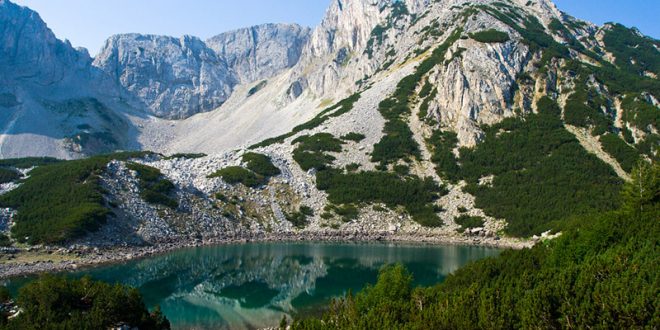
Let's take as an example the classic "contradiction" between "economic" interest and nature conservation, which has been so much talked about in our country, especially recently. From an economic point of view, there is actually no contradiction between the two. This supposed contradiction (which Mr. Dainov also talks about) is a sham and anyone who tries to convince you that it is real is most likely trying to steal something from you.
In the mind of a (real) economist , there is no contradiction, from an economic point of view, that a green space is more valuable as a green space than as a construction site for a mall. Not at all. Because the economist knows that economic value is something subjective, predetermined by the subjective preferences of each market agent.
If you think that a green space is more valuable as a green space than as a mall, there is nothing economically wrong with that - from your subjective point of view, the green space is more valuable than the mall. This is completely consistent with economic logic. Again, economics as a science is something completely different from ethics.
2. "Economic value" is not something tangible
Here someone would probably object "but from an economic point of view, isn't it most important to maximize material value?". Absolutely not. Again, value is something subjective, it is ultimately the human judgment of how valuable a given good is, be it material like a slice of bread or immaterial like a Beethoven symphony. This value can be practically expressed in a material way through the money we pay to acquire it, but in itself it is not material. It is no coincidence that very often given intangible goods turn out to have a far higher economic value than other material goods. "Economic value" does not necessarily mean "material value" or "usefulness".
Take, for example, great works of art. They have no material utility, but are valued by people extremely highly – at millions of leva. Why? Simply because they bring aesthetic pleasure. The case with natural landmarks is similar – a piece of land may have a higher subjective economic value as a beautiful meadow than as a place on which a five-star hotel has been built. There is no contradiction in this from an economic point of view.
So far, it seems that Mr. Dainov and I are in complete agreement. Okay, but where do the differences come from? Disagreements arise when people like Mr. Dainov begin to absolutize their personal subjective preferences and claim that the suburbs are, in principle, preferable to malls, lifts, hotels, etc. And accordingly, the state must prevent their construction in order to protect the suburbs.
3. "The market is democracy," says Mises
Here, economists say "no" - what and how is produced in the economy should not be decided by the state. Whether a mall or a hotel will be built on a given square is best decided by the market mechanism, which is simply a complicated way of saying that it is best decided by all people, all consumers - if they want a square, they will vote with their market actions whether there should be a square or a mall. Every time we buy a good or service from someone, we are practically participating in an election - we vote for the respective good or service and for its merchant. The money we pay is our vote.
The great Austrian School economist Ludwig von Mises explained it best:
The market is a democracy in which every penny gives the right to vote.
And more:
The capitalist social order is an economic democracy in the strictest sense of the word. Ultimately, all decisions (in the market) depend on the desires of people as consumers. Accordingly, when there is a conflict between the desires of consumers and those of business managers, the mechanism of the market ensures that the preferences of consumers prevail in the long run.
Economists like me (and Mises) say - let the people decide through market voting and don't impose anyone's preferences on everyone else. Because preferences are subjective and everyone should have a vote. Everyone should have the right through the market mechanism to vote for their preferences.
4. The alternative to market democracy is state oligarchy
When the state intervenes and bans a business or subsidizes a business, it effectively hinders the process of market democracy. It limits consumer voting rights. It imposes central planning of the economy controlled by a limited group of politicians and bureaucrats. In other words, socialism, like the one before 1989. Remember that?
In the context of such central planning, the subjective preferences of politicians and bureaucrats take precedence over all others. That is, a small group of rich and powerful people will make the decisions about what happens in the economy instead of consumers. I think there was a term for this type of government that was very often used by the native "democratic" community. Something with an "O" I think it was. Ah, yes - "oligarchy".
As an economist, I do not support this type of economic management at all. Quite the opposite. As I have already mentioned, I believe that it is most economically optimal and in the common interest of all of us for the direction of economic development to be set by consumers through the market mechanism of supply, demand, and competition. That is, by "market democracy" according to Mises. In other words, as an economist, I recommend free elections in which everyone has the right to vote.
As far as I understand, Mr. Dainov's interests should be the same. After all, as a public intellectual, he quite often talks about how important democracy and freedom are. I agree, and I would like to see exactly that in the economic sphere. It is strange, however, why while talking about democracy and freedom, people like Mr. Dainov so often prescribe state intervention in market processes? That is, central planning and an oligarchic form of economic management? Perhaps he could answer this question himself (if he wishes).
Let consumers determine the direction of economic development
Ultimately, if, through the electoral mechanism of the market, the people collectively decide that this or that area should not be built on – then it will not be built. And I will have nothing against that, even if my personal preferences are different. From the point of view of an economist, the case is solved for me.
People, through market voting, have decided that preserving this piece of nature is more important than building a mall or hotel on it. Great, this means that people have collectively decided that this piece of land has a higher economic value undeveloped than developed. And there is no contradiction in that.
However, if the people decide otherwise and vote through the market mechanism to build a hotel, a lift or whatever, on this or that hill, then we still have to comply with this decision, even if our subjective preferences are different. And let's not accustom the state to violating the decisions of the market (the people) and limiting their right to vote through central planning just because our subjective preferences did not prevail over the others.
As Mises would probably say, the opposite would not be democratic.