EKIP– Expert Club for Economics and Politics A Different Opinion
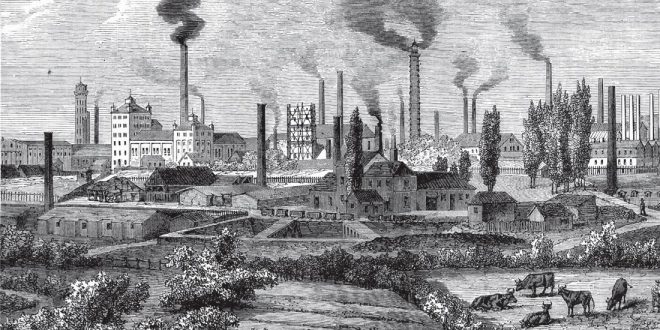
The first Bulgarian capitalism roughly covers the period from the Liberation in 1878 to the September 9th coup in 1944. The economic, social, and cultural achievements of these decades are the subject of numerous assessments. Even the most optimistic among them do not show particularly impressive results.
Results of the first Bulgarian capitalism
From 1878 to 1944, Bulgaria remained a predominantly agrarian country, with a predominantly rural population, engaged in primitive, low-productivity, and poorly connected small-scale agriculture. The gap between living standards in the country and those in Central and Western European countries did not change significantly. Well-educated representatives of the intelligentsia appeared, who could hold a conversation on an equal footing with their colleagues around the world. However, this was overshadowed by the enormous influence of a parasitic semi-intelligentsia, which sought, and usually found, ways to exploit the state machine for its own benefit. The Tarnovo Constitution (1879) contained some classical liberal principles, but the subsequent political and economic practice resembled more an oriental despotism. The noble impulse to unite all Bulgarians quickly degenerated into militant militarism. It overloads the expenditure side of the budget, severely corrupts public life, leads to numerous human casualties and refugee flows of Bulgarians fleeing to the motherland. By the way, the attitude towards them by the Bulgarians in Bulgaria is not much different from the attitude towards refugees today. The first Bulgarian capitalism crashed severely in September 1944, when Stalinist socialism settled in the country. And this is a real national catastrophe.
Reasons
Socialism in Bulgaria came with the tanks of the Red Army, but the ground for its establishment was prepared for decades. Among the underestimated factors that have long-term effects in this direction is the fact that Bulgarian capitalism is born with the help and targeted intervention of the state. Industrial enterprises, to the extent that they exist, usually arise as a result of state encouragement, the adopted customs protectionism creates greenhouse conditions for industry, the infrastructure is built by the state, credit is increasingly controlled and directed by the state, etc. Already at the beginning of the 20th century, one of the liberal economists in the country wrote that among the great misfortunes of Bulgaria is that due to economic backwardness, the state budget emerges as the only possible collective source of savings. In order for economic prosperity to occur in this situation, the people who govern the Bulgarian state and distribute public funds should be noble, altruistic, omniscient, infallible, without personal interests, without relatives, neighbors, political friends, biases, and connections. And they are not like that.
A look at some of the features of Bulgarian economic history can solidify the statements made. How the “birth” of the first Bulgarian capitalism occurs can be seen in the policy of encouraging industry. Its beginning was laid at the end of the 19th century during the rule of St. Stambolov. It was subsequently improved by subsequent governments.
The practice of state promotion of industry
In August 1891, the 6th Ordinary National Assembly voted a special law, which gave Petko Hr. Tapchileshtov the monopoly right for 25 years to export frozen food products through the ports of Southern Bulgaria - meat, fish, vegetables, etc. Additionally, the monopolist received tax and customs relief. In return, Tapchileshtov undertook to build the necessary facilities and to export a certain minimum of processed products. The same year, the parliament granted similar monopoly privileges to Hr. Manafov for the construction of a paper factory. The term of the monopoly was shorter, but the state was obliged to buy the production of the built factory.
There are many examples of this type of policy. They fall under the common denominator of encouraging local industry. This sounds good, patriotic and promising. Ultimately, everyone agrees that Bulgaria needs the emergence of industry. The political authorities are tasked with creating conditions for its creation. Data on Stambolov's economic policy from 1888 to 1894 show that a total of 29 industrialists were encouraged under a similar scheme through interest-free loans. The total value of the loans they received was 269,000 leva. In the years after Stambolov's fall from power until the outbreak of the Balkan War (1912-1913), industry was encouraged through special laws - from 1894, 1905 and 1909. Then, in the period between the two world wars, another similar law was adopted. They differ in some details, but in general they guarantee tax and customs relief and other privileges for a certain period to newly established industrial enterprises. Separately, a mild customs protectionism is also introduced, which is believed to be able to protect local producers.
What has been achieved?
The extent to which this encouraged industrial development is debatable, because industrialization hardly occurred during Stambolov's time and in the years following his rule. By 1912, 386 state-sponsored industrial enterprises had been established and were operating in Bulgaria, most of them relatively small, primitive, and with few workers. But that is not the most important thing.
In fact, it is not possible to establish at all whether these enterprises appeared thanks to the laws for the promotion of industry. There are no statistical data on the number of industrial enterprises that are not promoted by the state. Not all enterprises promoted by the state arose thanks to the laws for their promotion. For example, by 1900, there were nine distilleries promoted by law in Bulgaria, which almost entirely satisfied domestic consumption. However, only three of them were founded after the adoption of the law, i.e. it can be assumed that they were a direct result of its implementation. The remaining six were created before it. And finally, according to contemporaries of these laws, they gave rise to speculative fever and gesheftism, but not true industrialization.
The assessment of interest-free loans and personal privileges from the time of Stambolov is easier. By 1901, only 149,000 leva of these loans to the state treasury had been repaid. The rest, in the words of a contemporary, “went bankrupt along with the establishments themselves”. In addition to the waste of public funds, state encouragement had other lasting negative consequences. Petko Hr. Tapchileshtov, who was mentioned above, was the son of one of the most influential and wealthy Bulgarian entrepreneurs from the era before the Liberation - Hristo Tapchileshtov. However, the son did not act as a classic entrepreneur, but sought and received state privilege and protection. The same applies to Hr. Manafov, who was from the industrially developing city of Gabrovo.
Even during the discussion of their privileges in the National Assembly, opinions were expressed that such measures would have a detrimental effect on other Bulgarian entrepreneurs. First of all, the privileges for a well-placed political industrialist are not fair to others who have invested funds at their own risk and without state aid. Second, entrepreneurs are learning that the surest way to insure themselves against possible losses is to turn to the party that is in power and from which the benefits come. Clearly, the importance for economic success and profitable activity is not better consumer satisfaction, not technical improvement and the search for new domestic and foreign markets, but political power. One member of parliament stated that during the discussion of the budget, efforts are made to reduce a number of small expenses, but at the expense of this, millions are generously distributed to selected industrialists and candidate industrialists. His words can hardly be refuted.
What is the connection?
The connection between the catastrophe of the first Bulgarian capitalism and the described industrial policy can be summarized as follows:
- Privilegeizing certain individuals or groups creates a sense of injustice in the rest of society;
- The entrepreneurial activity of industrialists is directed towards establishing good relations with the authorities, rather than working for the market;
- The view that the state is the main instrument for solving all kinds of problems is legitimized;
- Active state encouragement did not lead to industrialization and therefore the first Bulgarian capitalism suffered a modernization failure.
Certainly, other factors such as geographical location, lack of sufficient historical time for the development of capitalism, cultural specifics, etc. contributed to the catastrophe of the first Bulgarian capitalism. However, the contribution of the adopted industrial policy to the catastrophe cannot be ignored. And its principles are still considered correct today.