EKIP– Expert Club for Economics and Politics A Different Opinion
It is often observed that bad economists are better at spreading their errors to the public than good economists are at spreading the truth. The reason for this is that bad economists are actually spreading half-truths. They are only talking about the short-term effects that a given policy would have on a particular group of people. To solve this problem of half-truths, the other part of the truth must be presented.
But the lesson will not be learned and the fallacies will continue to pass unnoticed in the public sphere until they are explained through examples. Let us begin with the simplest possible illustration – let us, imitating Bastiat, talk about the famous example of the broken window.
A small hooligan decides to throw a brick at a bakery window. The owner immediately leaves in anger, but the robber is no longer there. A group of people gather to watch with quiet satisfaction the hole in the window and the small pieces of glass that have fallen into the bakery's goods. Of course, the gathered crowd is not late in commenting philosophically on the spectacle. Some people believe that even if it is a disaster for the owner of the shop, there is still a bright side to the incident. The broken window of the bakery means that there will be work for the glazier to repair it. People start making feverish assumptions about how much the glass will cost. $50? That's a serious amount. After all, if windows never broke, what would happen to the glazier's business? This generates the rest of the movement along the chain - the $50 from repairing the window can then be spent by the glazier and will be a profit for other merchants, and so on ad infinitum. With the broken window, it will continue to provide money and employment. As a logical conclusion from everything said by the crowd, the following could be said:
In fact, the hooligan who throws the brick is not a public threat at all. On the contrary, he is a public benefactor.
Now, let's look at this example from another angle. The crowd is actually right about its first conclusion. This act of vandalism will create more work for the glazier in the first place. The glazier will be happy to hear about this misfortune for the same reason that the undertaker is happy to hear about someone's death. But the owner of the bakery will spend $50 on the repair, which he had planned to spend on a new suit, for example. Just because he has to repair the window, he will lose the suit or some other desirable item that he could have bought for the same money. Instead of having a good window AND $50, he now has only a window. Or, if he had planned to buy a suit that afternoon, instead of having both a new suit and a good window, he will have to make do with just a good window (after the repair) and no suit at all. If we consider the baker as part of society, society is actually one suit poorer as a result of the broken window.
The glazier's profit on the repair is the suit tailor's loss. In fact, no additional employment is added. The crowd, according to the first positive scenario, pays attention to only two of the parties - the baker and the glazier. Thus, they completely miss the potential third party who could be involved - the tailor. They forget him because he is simply not part of the main action that they see unfolding before their eyes. His role is not obvious, it is invisible. They will see the repaired window in a day or two. However, they will never see the new suit, because it was never made, because the baker could not afford it. They only think about what is visible at the moment.
Thus ends this story of the broken window. An elementary fallacy that anyone can overcome if they think about the subject a little more deeply. The "broken window fallacy" appears disguised in thousands of variations and is one of the most common in the history of economics. Today, it is more widespread than ever before.
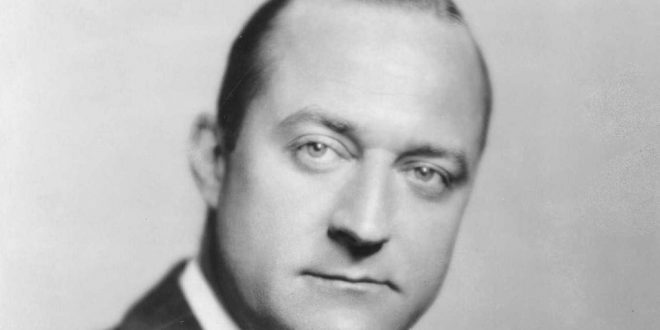
Henry Hazlitt (1894-1993) was a prominent journalist who wrote on economic issues for the New York Times, the Wall Street Journal, and Newsweek. He is perhaps best known as the author of the classic Economics in One Lesson (1946).
Photo: Henry Hazlitt