EKIP– Expert Club for Economics and Politics A Different Opinion
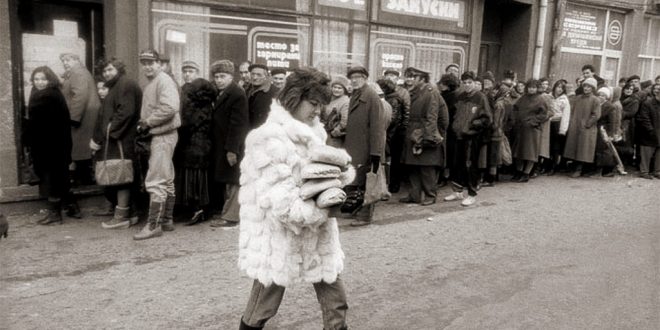
Direct state intervention in pricing is a traditional tool for resolving economic or social problems caused by a sharp increase or decrease in prices. The economic history of Bulgaria during the period between the First and Second World Wars (1919-1939) reveals some typical practices of state pricing and their consequences. It has already been shown that the poorest segments of the population suffer from the rationing of bread prices ( see here ). However, the negative effects are not limited to this. Some of them may answer the important question - who pays for state price regulation?
Politicization, administrative confusion and powerlessness
Among the important consequences of state price regulation is the possibility of using it as a tool for electioneering. In February 1926, local elections were held in Bulgaria. On election day, the newspaper "Utro", which was the most popular during those years, published an announcement that the price of bread had been fixed at 7.80 leva per kilogram. More curious, from the point of view of the consequences of state intervention in pricing, is the subtitle of the announcement - " Today there are elections ... the price of bread is falling ". It is clear to contemporaries that there is a connection between the reduction in the price of bread and the results of the elections. By manipulating the price, those in power clearly show voters who to vote for. In this particular case, the ruling Democratic Alliance won the elections in Sofia.
Elections in Bulgaria, even before the imposition of the communist regime, were not particularly fair. All sorts of more or less brutal and dishonest tricks were used to win them. However, social policy turned out to be particularly susceptible to politicization - before elections, the price of bread was reduced, benefits were distributed to gypsies, etc. Thus, it became one of the established ways of corrupting and compromising the democratic political model.
State intervention in pricing easily gets bogged down in bureaucracy and legislative ambiguities. Under the Food Supply Relief and Cost Reduction Act, the main body for price regulation is the Chief Commissariat for Food Supply under the Council of Ministers. In 1931, however, political enthusiasm for more state intervention in the economy led to the adoption of the Act on Control of Cartels and Monopoly Prices. Under the second regulatory act under the Ministry of Trade, Industry and Labor, a Cartel Commission was formed, which also had the right to regulate prices. Very soon, conflicts arose between the Chief Commissariat for Food Supply and the Cartel Commission over which of the two organizations regulated which prices. For example, the price of oil and its derivatives was regulated by the Chief Commissariat, but the Cartel Commission believed that this was its prerogative, etc.
The result of such confusion is that local authorities refuse to comply with any orders from the central government regarding prices. In November 1934, the Chief Commissariat for Food Supply found that many municipalities were not implementing the law on easing food supply and reducing prices. The existence of two laws, which should specify the methods of regulating prices, leads to the neglect of both normative acts.
Deteriorated quality of goods and services with regulated prices
In 1931, the General Commissariat for Food Supply declared salt an essential commodity and rationed its price. In Bulgaria, the salt producers were the Salt Production Cooperative in Anhialo (today Pomorie) and the Glarus Joint-Stock Company. They reached an agreement and sold salt at rationed prices only if wholesale buyers took 70% high-quality and 30% “impure salt”. Salt of poor overall quality reached consumers. In February 1933, in order to keep the price of bread low, the General Commissariat for Food Supply allowed millers and bakers to add up to 10% corn to standard flour. It reduced the quality and nutritional value of bread products. Controlling the exact percentage of corn admixture proved difficult. Flour and bread manufacturers mixed standard flour with corn, but the percentage of the admixture was much higher than permitted. Thus, consumers of these products receive them at a low, "social" price, but their quality drops significantly.
It is more difficult to detect the consequences of the rationing of prices for services important to the population. Nevertheless, interesting observations can be made. In August 1934, the Minister of the Interior P. Midilev issued regulations that rationed the prices of dental services, as well as the fees for midwives and paramedics. The minister reduced prices administratively, which should have been in the interest of consumers. P. Midilev's actions concern an area in which Bulgaria had serious problems. In the 1930s, only between 15 and 20% of births in the country were carried out with specialized obstetric care. The remaining 80-85% of children were born in primitive conditions, with the help of ignorant grandmothers and neighbors. This led to a very high infant mortality rate.
The available statistical data on registered midwives in the country show that from 1931 (before price regulation) to 1934, the number of privately practicing midwives increased. The total number of midwives (private practitioners, plus state and municipal) also increased. After the regulation of the price of their labor, the number of midwives in the country decreased. This was mainly due to the decrease in private practitioners, which was not compensated by an increase in state and municipal midwives. Only in 1941 did the total number of midwives in the country exceed that before price regulation. After price regulation, the number of registered paramedics also decreased. It is likely that some midwives and paramedics went into the gray sector and are not registered by statistics. It is also entirely possible that the decrease in the number of midwives and paramedics is not due solely to state intervention in the prices of their services. The fact is that after the state reduces the prices of these services, cheap access to them is limited.
Deficits, speculation and smuggling
A classic result of the rationing of prices below market prices is the emergence of deficits. Their appearance is found in a number of essential goods. One of the major problems in the country during the 1920s and 1930s was the price of sugar. Sugar in Bulgaria is produced by the factories of the so-called Sugar Cartel, created with the help of the state and maintained with high protectionist duties that do not allow the import of cheap sugar. The state tries to ratio the selling price of sugar, but this leads to the emergence of sugar shortages in various regions of the country. The authorities conveniently explain the shortage with greedy trade intermediaries and overlook their own merits.
In the summer of 1931, the Main Commissariat for Food Supply decided to regulate the retail trade in vegetables in Sofia. Out of a total of about 3,000 people engaged in such trade, 500 were allowed to remain, and the rest were doomed to unemployment. The greengrocers in the capital responded with a “strike”. Sofia remained without vegetables for several days, while at the same time more than 20 wagons of vegetables rotted at the city station. This led to losses for producers, traders and consumers.
According to various sources, the rationing of the prices of salt, nails and coffee also leads to the disappearance of these products from the market. At the same time, information penetrates the periodical press that coffee is on the market, but at prices higher than those set. At the same time, in the border areas of the country, an increase in the smuggling of coffee is observed. Fraud also affects the bakery industry. Some millers declare that they grind flour for export, but sell it to bakers for the domestic market. The flour for export has a market price that is lower than the rationed one…
Who pays for government price regulation?
In the early 1930s, the price of milk sold in Sofia was reduced administratively. No shortages occurred, and there was no evidence of a decline in quality. Milk for Sofia was supplied by numerous small producers from the surrounding villages. Their cash income was extremely low, they could not easily divert it to other more profitable activities, and therefore they continued to supply milk. The price of cheap milk for Sofia was ultimately paid by the poor producers from the surrounding villages. In the early 1930s, the price of cotton yarn and fabric was reduced, which resulted in a decrease in the wages of workers in cotton textile factories. This caused protests and the state introduced a minimum wage, which led to an increase in unemployment among the lowest-skilled workers, i.e. the poorest were affected.
State-regulated prices undermine democracy, degrade the quality of goods, and create a breeding ground for corruption and crime. Its negative effects are felt most acutely by the poorest. All of this calls into question its purpose.