 EKIP– Expert Club for Economics and Politics A Different Opinion
One of the most frequently applied economic regulations is state intervention in pricing. This is easily explained. The increase in prices of essential goods gives rise to social tension. The authorities try to bring calm by subjecting prices to administrative control. It is believed that this helps the poor and the disadvantaged. Elementary economic theory shows that depending on what price is fixed by the state, a deficit or surplus of the relevant product may appear on the market. "Practically" oriented politicians and public activists often ignore theoretical concepts as too abstract and not responding to specific conditions. This is where the role of economic history comes in. It has the property of putting theory into concrete dimensions and showing the effect of price regulation.
Bulgaria after World War I: the state in battle with expensiveness
Bulgaria lost World War I and fell into a difficult economic, political and social situation. In view of state intervention in price formation, it is important to pay attention to two details of the post-war reality. After the end of the war, hundreds of thousands of refugees headed to Bulgaria. Some of them concentrated in Sofia, where new slums emerged. During and after the end of World War I, governments partly financed their actions by printing money. This led to an increase in prices, which hit the poorest hardest. The rates of inflation are not clear, but there is information that the purchasing power of one pre-war gold leva was equal to 27 paper levas in 1927.
The government's reaction to the price increase was to introduce price regulation. The idea was the first government of the Democratic Alliance, headed by Professor Alexander Tsankov (1923-1926). The Prime Minister was a former socialist and future fascist, an economist who had studied in Germany, a former rector of Sofia University, with experience in regulating the Bulgarian economy during the First World War.
At the initiative of the executive branch, in 1924, the parliament passed the Food Supply and Cost Reduction Act. According to the law, a Food Commissioner was appointed to the municipalities, who studied issues related to the fight against cost increases and speculation on a local level and implemented the measures of the central government to limit them. A Chief Food Commissioner was appointed to the Council of Ministers. His function was to study the general measures that should be taken to facilitate food supply and to limit cost increases and speculation. Among the possible measures was the regulation of prices. Penal measures were provided for against individuals, companies and associations that concealed or destroyed essential products in order to cause an increase in their prices. Criminal liability was incurred for the formation of cartels. Officials who abused their power in the implementation of this law were subject to various penalties.
First round: 1927
In the 1920s, the prices of basic food products increased. Against this background, in accordance with the Law for Easing Food Supply and Reducing Expenses, a food commissioner was appointed in the capital and a food commission was formed. The commissioner in 1927 was the assistant mayor Zdravev. The price of bread was fixed at 9.80 leva per kilogram of white bread, 8.50 leva for the so-called black bread and 8 leva per kilogram of the popular bread type.
At the beginning of June 1927, Sofia bakers stopped producing enough bread. They explained that they were unable to sell bread at the previous prices because the price of flour had risen. Therefore, they insisted to the control authorities that the price of bread be increased. The food commissioner of the capital stated that he was aware of the bakers' request - "However, we object to them that they cannot ask for this increase, because they are now taking bread from the old stocks [of flour] that they had purchased at cheap prices." Only after these stocks were exhausted and after examining the state of the grain exchanges in Varna and Burgas could they talk about price adjustments.
The self-confidence of the food commissar that he knew the market situation better than the producers did not last long. On June 10, 1927, a conference was held in the capital under his leadership, attended by bakers, millers, flour merchants and representatives of interested cooperatives. It was decided to allow a minimal increase in the price of bread: for white from 9.80 to 10 leva per kilogram, for black from 8.50 to 9 leva, and the price of the so-called national bread remained the same – 8 leva per kilogram. The increase did not satisfy the bakers, who again refused to produce bread. On June 12, it was decided to allow another increase in the price to 10.40 for white, 9.50 leva for black, and the price of national bread was kept at 8 leva. Bakers were obliged to produce 10% of the cheapest national bread.
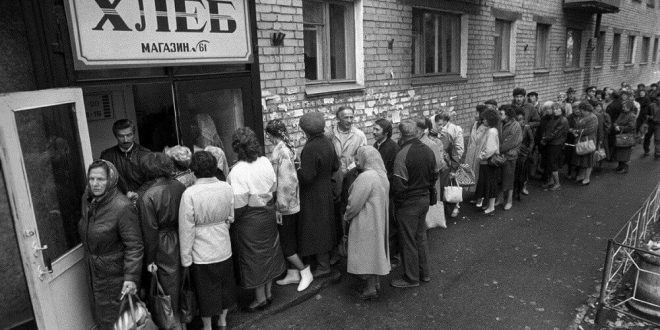
Apparently, the government's aim is to allow the price of certain types of bread to increase, while maintaining low bread prices for the poorest. This price regulation seems to be oriented towards meeting the needs of the most vulnerable social groups. However, it turns out that a few days later, the citizens of the capital began to complain that they could not find the cheapest bread in bakeries (8 leva per kilogram). This forced them to buy bread for 9.50 leva per kilogram. The officially regulated low price of "people's" bread means that demand for it exceeds supply and a deficit logically appears. The fixed price was intended to alleviate the situation of the poorest, but it is precisely they who are actually left without cheap bread.
Second round: 1932
In the early 1930s, the Great Depression severely affected the Bulgarian economy. The price of grain products decreased, which meant that the income of agricultural producers decreased, and hence the reduction of revenues in the treasury. In this situation, through the instruments of price control, the authorities tried to do the impossible – to provide cheap bread for the urban population and high purchase prices for grain, which would relieve the farmers.
In July 1932, the Sofia Food Commissariat, headed by K. Batolov, set the price of standard bread at 5 leva per kilogram. This price also included the payment of an indirect tax on bread. It was introduced to label it with bread stamps – something similar to modern tax stamps – with the idea of providing revenue for the treasury, which could be used to purchase wheat from producers at prices higher than market prices. Bakers in Sofia agreed to this price, provided that they were guaranteed a price of ordinary standard flour of 3.40 leva per kilogram. The Food Commissariat guaranteed the requested price for flour. However, the guarantee was not met, because millers gradually raised prices, which reached 4.30 leva per kilogram. Bakers reduced their production, which limited consumption for the poorest. Bakery owners entered into difficult negotiations with the Commissariat of Food, demanding that they be provided with flour at the previously promised price.
The millers, for their part, claim that they can afford to sell cheap flour at 3.40 leva if they buy the wheat at a price no higher than 2.70 per kilogram. The problem with this demand is that the Minister of Agriculture insists that the price of wheat be raised in order to increase the income of its producers.
The bakers of Sofia held several stormy meetings, in which they demanded that the Commissariat for Food and the Council of Ministers provide cheap flour. They threatened to stop “producing bread” entirely and to “hand over the keys to the bakeries to the Commissariat [for Food], which would dispose of them as it saw fit.” Due to the disputes in August, bread production was greatly reduced. The lack of bread was felt most acutely in the outer, i.e. poorer, neighborhoods of Sofia, where the bakeries were small and could not stock up on large quantities of flour before it began to rise in price. The poor citizens of the capital were forced to buy bread from neighboring villages or to stock up on flour and make their own bread.
Did price controls help the poor?
Based on the two rounds of the state's battle with the market, the answer to the question is no, it didn't help. The price fixing, which was supposed to provide cheap bread to the capital's poor, caused bread to disappear from the market.
The problems with the shortage of bread in 1927 and 1932 were only partially solved. In both cases, after the most acute stage of the crisis passed, disputes between producers, traders and regulatory authorities continued, which negatively affected both producers and consumers. For society, the connection between state fixing of the price of a certain product and its disappearance from the market remained incomprehensible. Despite the unsuccessful experiments with the price of bread, in the 1930s various professional and social groups persistently insisted on reducing prices by administrative means. And the responsible factors usually did what the majority of people wanted from them.






One comment
Pingback: Consequences of government price regulation