EKIP– Expert Club for Economics and Politics A Different Opinion
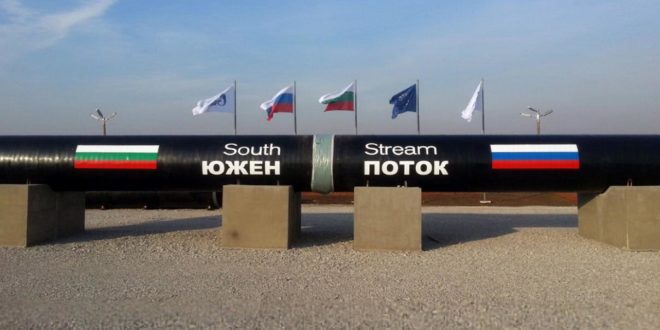
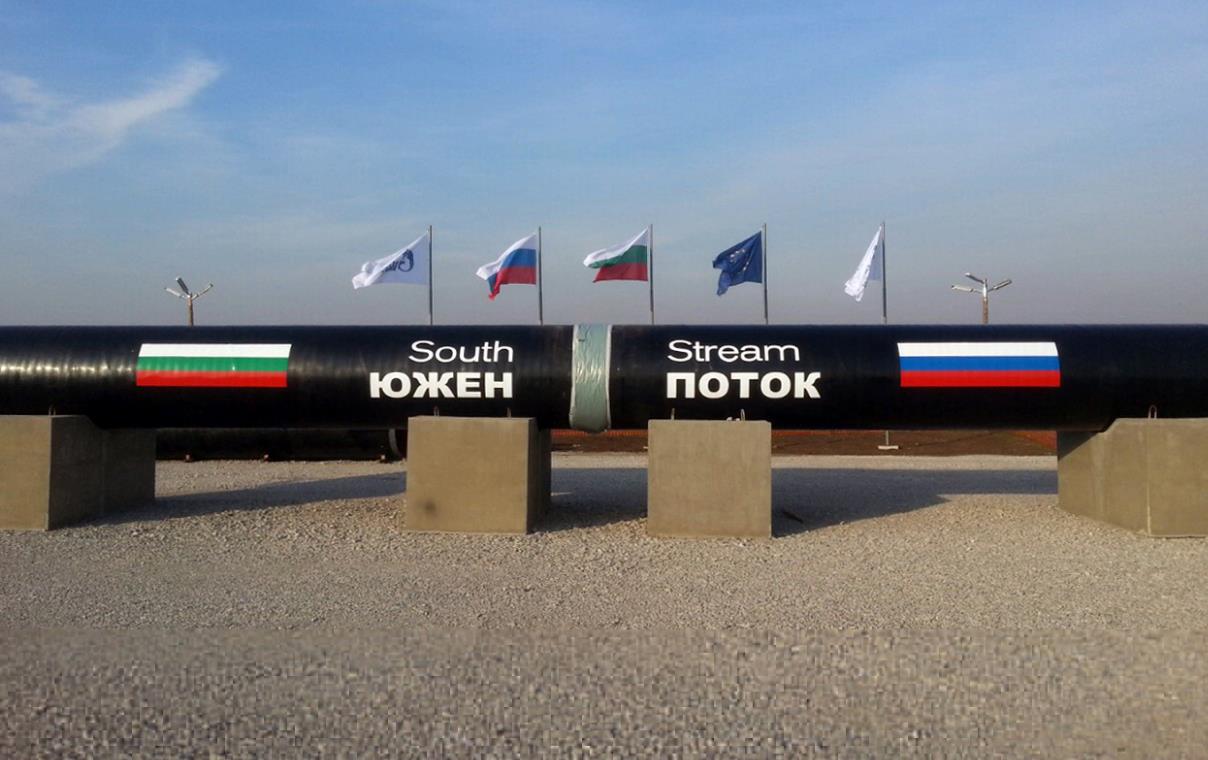 With its decision on April 4 to adopt amendments to the Energy Law in the first reading in parliament, Bulgaria has proven in practice that it is trying to be Russia's "Trojan horse" in the European Union. The changes to the energy legislation effectively remove Bulgaria's obligations to comply with Directive 2009/73/EC of the European Parliament and of the Council of 13 July 2009 concerning common rules for the internal market in natural gas. This makes it possible to build and operate South Stream on the territory of Bulgaria without an effective separation between the owner of the fuel and the owner of the pipeline system, as well as without guaranteeing access to the capacity of the pipeline for third-party gas suppliers.
To achieve its objective, the new bill creates a new legal framework for offshore gas pipelines, defining them as a gas pipeline that passes through the territorial waters of the country, but also enters the land to ''... the point of connection with other gas infrastructure within the land borders of the country''. The latter also expands the scope of the concept of an interconnector, including offshore gas pipelines that enter the territory of an EU member state, but ''are intended solely to connect the national gas transmission systems of those member states''.
Thus, in practice, South Stream ceases to be treated as an international gas pipeline between EU member states and a third country, but as a sea pipeline that passes through a number of interconnections (interconnectors) on EU territory. Since, according to the new legislation, South Stream will not be part of the country's internal gas transmission network, there will be no violation of European internal market legislation. In their reasoning, MPs Yavor Kuyumdzhiev and Tasko Ermenkov refer to the European Commission's decision of May 2013 to exempt the Trans Adriatic Pipeline (TAP) from the third liberalization package, arguing that gas pipelines initially located outside the territory of the European Union may end at the border with the transmission network of a European Union member state, but not be part of its gas transportation system.
The case of ''South Stream'' is different, because here we are not talking about a gas pipeline that ends when it enters the territory of an EU member state. In fact, the giant Russian gas pipeline will continue its journey for another 1,455 km. and will pass, in addition to the territory of Bulgaria, through 5 more EU member states. The restriction of access for third countries to the gas pipeline will mean that the possibility of access to strategic quantities of Caspian and Middle Eastern gas in the direction of Central Europe, which remains highly dependent on one source, Russia, is effectively eliminated.
Important interconnectors
Instead of the government focusing on accelerating projects with dubious financial, and even less political, benefits for Bulgaria, it could work more effectively on other areas to improve our energy security. Bulgaria satisfies about 90% of its consumption of blue fuel from imports from Russia through a single gas pipeline, the so-called Trans-Balkan Gas Pipeline, with a capacity to transit up to 17 billion cubic meters of gas to Macedonia, Greece and Turkey. South Stream will only strengthen our dependence on Gazprom. The existence of physical infrastructure with a majority Russian share on the territory of Bulgaria will mean that the Russian government can use a change in our energy policy or failure to fulfill our gas supply agreements as a pretext for interference in our domestic politics (not that such a thing is not already present).
The construction of regional, reversible interconnectors with Romania, Greece, Serbia and Turkey is part of the solution to the problem of our overdependence. The gas connection with Greece (Stara Zagora-Komotini) with a capacity of 3 billion m3 is the most important source of alternative gas resource, as it allows Bulgaria to import Azerbaijani gas from the Trans-Adriatic Pipeline from 2019. Bulgaria already has a contract signed in September 2013 with the Shah Deniz consortium, developing the Shah Deniz field, for supplies of up to 1 billion m3 from the same year. The Greek interconnector is also key to the strategic diversification of the entire region through supplies of liquefied gas from Qatar. The Greek national gas company, DEPA, is discussing the construction of a liquefied gas terminal at the port of Kavala, as well as the increase in the capacity of the existing terminal in Revitousa on the Aegean Sea. The Greece-Bulgaria gas pipeline is planned to be completed in 2016. Gas supplies from Qatar will be competitive in the long term with those offered by Gazprom, especially given the pan-European trends of natural gas glut due to lower consumption, higher prices offered by Gazprom, and the replacement of blue fuel with renewables and coal.
The construction of the Romanian gas connection, on the other hand, will allow new quantities of Caspian and Middle Eastern gas to feed the market in Central Europe, where there are already operational interconnections between Romania and Hungary and between the Visegrad Group countries (Slovakia, the Czech Republic, Hungary and Poland). The latter is conducting active diplomacy to create a North-South gas corridor as an alternative to the now frozen Nabucco. The search for alternative energy routes is not accidental, given the expectations in the Central and Eastern European (CEE) countries of a large increase in gas consumption by 2030. Although the connection between Bulgaria and Romania was supposed to be launched in early 2014, its completion has been constantly delayed, not least because of the slow modernization of the Romanian infrastructure and the construction of a gas compressor station.
Relations with Turkey and Serbia remain at the negotiation level despite the exaggerated statements of a number of energy ministers and experts. For Serbia, such an interconnector remains pointless given that South Stream will be built. Turkey, on the other hand, is not convinced that it will be able to complete the Trans-Anatolian Pipeline (TANAP) due to the withdrawal of investors from the project, which aims to transport new quantities of Azerbaijani gas. At this stage, the pipeline remains too expensive, and its economic benefits, given current levels of consumption in the EU, are disappointing.
Liberalization to the point of collapse
Regional interconnectors are key to the liberalization of the gas market and ensuring Bulgaria's energy security. Interconnections will provide access to alternative gas supplies to the country and the region, thus increasing market liquidity. Under the current conditions of the third EU liberalization package, this will mean that Bulgarian consumers will have a real choice of gas source. The expansion of gas liquidity will create conditions for competitiveness in the domestic market and will lead to a reduction in prices for end customers. Last but not least, the presence of an alternative source will enable Bulgarian gas companies to have a stronger position in supply negotiations with the main partner, Gazprom. Diversification, in turn, will increase our energy security in crisis conditions when gas supplies are interrupted. The effect will be felt not only in our country, but also at the European Union level, as it will give new impetus to an alternative energy route following the example of Nabucco.
The alternative is to continue to prioritize projects that are illogical from an economic and strategic point of view. Thus, we remain victims of the capture of the state by special economic interests that do not correspond to public ones. This is especially worrying in conditions of geostrategic confrontation, in which the need for diversification becomes a priority of our national security.