Silvia Yonkova March 22, 2014 Economic and Fiscal Policy, Translation
Gregory Brasiger Over the past 80 years, governments have been expected to provide more and more social services. This means ever-increasing costs to taxpayers, both ours and future generations yet to be born. Since governments have been almost constantly running in the red, they have become like cocaine addicts desperately looking for their next …
More » Martin Vladimirov March 20, 2014 Energy
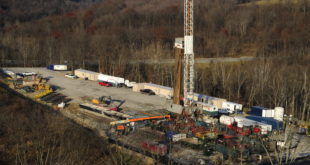
As the world watches with rapture the unconventional oil and gas revolution in the United States, the largest crude oil producer, Russia, is looking for ways to increase its energy production capacity and maintain its leading position in the market. After more than 6 years of refusing to accept that unconventional …
More » TEAM March 14, 2014 Economy
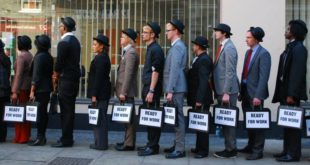
In the middle of this week, the parliament adopted on second reading the amendments to the Labor Code regulating internships and legal relations between employers and interns studying with them. The amendments to the law aim to increase youth employment and improve the labor market. According to the new regulations, interns up to 29 years of age, …
More » Ivan Georgiev March 13, 2014 Economics, Economic theory, Short comment
Today, the National Statistical Institute (NSI) published data on the level of the consumer price index in February, according to which deflation in Bulgaria deepened to 2.6% on an annual basis from 2.2% in January, reaching a seven-month high. Maria Ivanova from Capital commented on the data as follows: From an economic point of view, deflation is a problem, …
More » Martin Vladimirov March 3, 2014 Energy, Economy, Economic and Fiscal Policy, Politics
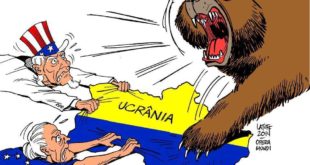
For the past ten days, all eyes have been on Ukraine. And while the media has been discussing various political issues at length – the claims to power of the president who fled the country, the various moves of the opposition that took power, and the very real possibility that Crimea could secede from Kiev and (possibly) return to …
More » Silvia Yanakieva February 19, 2014 Economy, Translation
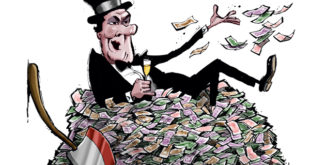
Frank Hollenbeck The gap between rich and poor continues to widen. In 1975, the richest 1% of the population held 8% of the economic pie; now they own over 20%. This is a striking change from the 1950s and 1960s, when the richest owned just over 10%. Research by Emmanuel Saez has shown that between …
More » Stoyan Panchev February 12, 2014 Economic and fiscal policy, Pension system
The effects of the disastrous monetary and housing policies pursued by the American government in the early years of the new century became visible around 2008 with the so-called beginning of the financial (later economic) crisis. In law, the economic distortions had long been present, and what we observed after the bursting of the bubble was actually the experience …
More » TEAM February 05, 2014 Economy
This year is shaping up to be a very interesting one for global financial markets, but unlike the previous five, which focused on developed economies and their debt problems, attention is now shifting to the East. It's not that the West has managed to overcome its problems and is now confidently...
More » Silvia Yanakieva January 30, 2014 Economy, Translation
Ludwig von Mises 200 years ago, before the advance of capitalism, a person's social status was the same from the beginning to the end of his life; he inherited it from his ancestors and never changed it. If a person was born poor, he always remained poor, and if …
More » Daniel Vassilev January 23, 2014 Economy
Very soon, the NSI released the inflation data for 2013, which were interpreted on the same day on BNT in the following way: "We have recorded the lowest annual inflation in 23 years. According to the National Statistics Office, this is a deflation of 1.6 percent." [1] It turns out that the data is for December...
More »
 EKIP– Expert Club for Economics and Politics A Different Opinion