 EKIP– Expert Club for Economics and Politics A Different Opinion
 Ludwig von Mises
200 years ago, before the rise of capitalism, a person's social status was the same from the beginning to the end of his life; he inherited it from his ancestors and never changed it. If a person was born poor, he always remained poor, and if he was born rich - a lord or a duke - he retained his title and the property that came with it for the rest of his life.
As for production, the primitive manufacturing industries of those times existed almost entirely in the service of the wealthy. The majority of the people (ninety percent or more of the population of Europe) worked the land and had no contact with city-based industry. The unchanging system of feudal society dominated the most developed parts of Europe for many centuries.
As the rural population grew, there was a surplus of people on the land. Those who had no inherited land or property had nothing to do, nor was it possible for them to work in industry - the city governors blocked their access to it. The number of these "exiles" continued to increase, and no one knew what to do with them. They were "proletarians" in the full sense of the word; paupers whom the government could only place in reformatories or poorhouses. In some parts of Europe, especially in the Netherlands and England, they became so numerous that by the 18th century they had become a real threat to the preservation of the established social order.
Today, when we discuss similar conditions in places like India or other developing countries, we should not forget that in the eighteenth century conditions in England were considerably more dire. At that time, England had a population of six or seven million, of whom more than a million, perhaps even two million, were outcast paupers for whom the existing social system did not provide a livelihood. What to do with them was one of the greatest problems for England in the eighteenth century.
Another major problem was the lack of raw materials. The British had to ask themselves very seriously: what will we do in the future, when the forests will no longer be able to provide the necessary timber for our industry and for heating? For the authorities, this was a desperate situation. Statesmen did not know what to do and the ruling monarchs had absolutely no ideas on how to improve the situation.
Amid this harsh reality, the beginnings of modern capitalism emerged. Some of the outcasts tried to organize the rest into small shops, producing something. This was an innovation. These pioneers were not producing goods available only to the upper classes; they were producing cheap products for everyone's needs. Thus was born today's capitalism. This was the beginning of mass production, the fundamental principle of capitalist industry. While the old artisans, who served the wealthy in the cities, existed mainly for the needs of the upper class, the new capitalists began to produce cheaper goods that were available to ordinary people. This was mass production for the needs of the masses.
Here we see the basic principle of capitalism, which exists today in all those rich countries where there is a well-developed system of mass production. Big business, the target of the most fanatical attacks of the so-called "leftists," produces mainly to satisfy the desires of the masses. Enterprises that produce luxury goods only for the rich can never achieve the scale of big business. And today it is the people working in large factories who are the main consumers of the products produced in these factories. This is the fundamental difference between the capitalist principles of production and the feudal system of the past.
The development of capitalism consists in the right of everyone to satisfy the consumer better and/or cheaper. And this method, this principle, managed, in a relatively short time, to transform the entire world. It made possible the unprecedented growth of the world's population.
In the 18th century, the land in England could support only six million people at a very low standard of living. Today, more than 50 million enjoy a higher standard of living than even the wealthy did in the 18th century. The standard of living in England today would be even higher if a huge part of the British people's energy were not wasted on (according to various opinions) avoidable political and military "adventures."
These are the facts of capitalism. So if an Englishman - or any other person in any country in the world - tells his friends today that he is against capitalism, he has a wonderful way of retorting: "You know that the population of the earth today is ten times greater than it was in the centuries before capitalism; you know that all people today enjoy a better standard of living than your ancestors who lived before capitalism. But how do you know that you would be one of the ten who would have lived in the absence of capitalism? The very fact that you are alive today is proof that capitalism has succeeded, whether you find your life worthwhile or not."
Despite all its advantages, capitalism is attacked and criticized harshly. It is necessary to understand the reasons for this antipathy. The fact is that hatred of capitalism originates not among the masses, not among the workers themselves, but from the landed aristocracy - the courtiers, the nobles of England and other countries on the European continent. They blame capitalism for something that is not particularly pleasant for them: in the 19th century, the higher wages paid by industrialists to their workers forced landowners to pay their farmers more. The aristocracy attacks the industrialists, criticizing them for the standard of living of the mass workers.
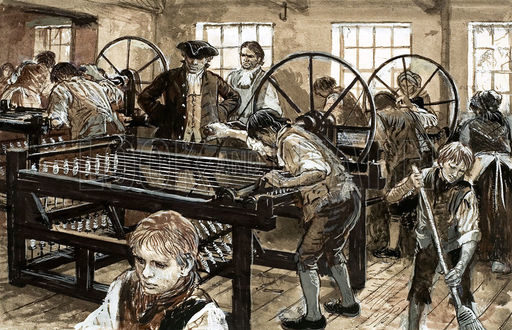
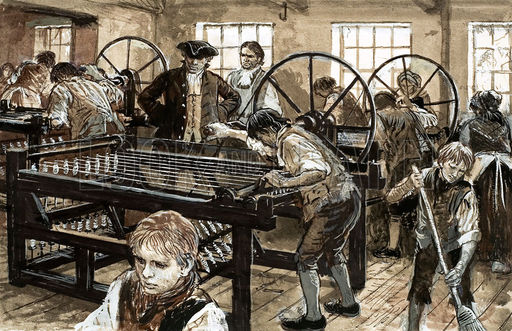
Of course, from our perspective, the standard of living of workers is extremely low; working conditions during early capitalism were absolutely shocking, but not because the newly developed capitalist industries harmed workers. The people employed in the factories had previously lived in literally inhuman conditions.
The old story, repeated hundreds of times, that factories employed women and children, and that these women and children lived in satisfactory conditions before they were employed in the factories, is one of the greatest falsifications of history. The mothers who worked in the factories had nothing to cook; they did not leave their homes and kitchens to work in the factories - they went to work there because they had no kitchens, and if they had, they had no food to cook in them. And the children did not come from comfortable nurseries. They were starving and dying. And all the fuss about the so-called The unspeakable horrors of early capitalism can be refuted with simple statistics: it was precisely in these years that British capitalism was developing, precisely during the Industrial Revolution in England, in the period from 1760 to 1830, precisely during these times that the population of England doubled, which meant that hundreds of thousands of children who would have been dead in the past survived and became men and women.
It cannot be disputed that living conditions in the past were unsatisfactory. Capitalist business improves them. It was these early factories that provided the means to satisfy the needs of their workers—either directly or indirectly, by exporting their products and importing food and raw materials from other countries. Again and again the early historians of capitalism have—one cannot use a milder word—falsified history.






A good article by Mises with which I completely agree. However, I still have to add that no matter how right the person is, it doesn't matter at all. What matters is what is written in the economics and history textbooks. And it says there that the situation was horrific back then (avoiding the problem of "Compared to what?") and that if the state hadn't intervened, the situation would have been even worse. And that's why capitalism shouldn't have been allowed to operate without control (i.e., it should have been pure capitalism). Since this is written in the textbooks, people will believe it too. And it doesn't matter at all whether it's true or not. They've learned this and they know this. And accordingly, this knowledge shapes their worldview, and from there their expectations for the society they live in and the structures it needs. The things that a person learns in school remain forever and are generally not questioned. For a child or even a student, their teacher/professor is a capacity/luminary/person you can trust without reservation. Whatever he says, that's it.