 EKIP– Expert Club for Economics and Politics A Different Opinion
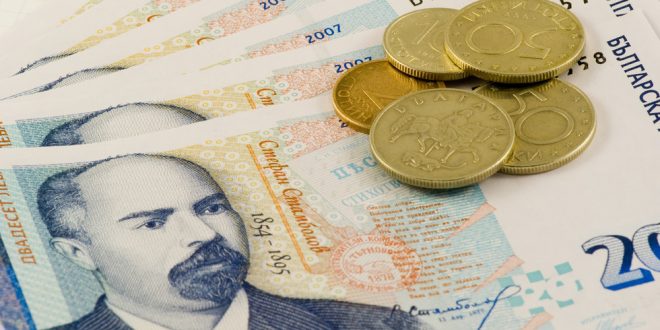
Without even waiting for three months to pass since the last rejection of this bill, the Ministry of Finance this week again submitted a proposal to tighten the limit on the maximum amount of cash payments from 10,000 to 5,000 leva.
And of course, the same song is sung again – this regulation must be tightened, because this will limit the size of the shadow economy, fight crime, etc. Unfortunately, however, the justification for this bold thesis still remains completely hollow. And at the same time, this is a regulation that seriously damages the financial rights and freedoms of all citizens and in practice automatically treats them as criminals, simply by presumption. This is not only offensive, but also a dangerous attitude on the part of the state towards its citizens.
Even if we leave the violation of civil rights and freedoms aside and focus entirely on the rest of the debate, namely - the potential effects of such a measure on the Bulgarian economy, and specifically the gray sector - it will become clear to us that this regulation is completely unnecessary and dangerous. For three main reasons. Let's start with the most fundamental one.
1. The evidence suggests that this measure will not achieve its objective
Imposing additional restrictions on cash payments will not reduce the size of the shadow economy, or at least not to such an extent that it would justify harming the rights and freedoms of citizens. There is no clearly established relationship between the level of cash payments and the size of the shadow economy.
All serious studies on the subject of the shadow economy indicate that the level of corruption is the most determining factor for its size. In one of its main studies on the subject, the IMF (International Monetary Fund) claims that shadow economies are growing as a result of an increase in the tax and social security burden, combined with the imposition of heavier regulations by state authorities.
The IMF also claims that another key factor is the level of corruption. The more corrupt the government in a country and the more serious its interference in the economy, the more abuses there are and, accordingly, the more the shadow economy grows. But instead of taking serious measures to combat corruption and reduce the tax and regulatory burden, what is our government doing? It is restricting the freedoms of ordinary citizens!
The IMF is not the only institution that believes that the level of corruption and state intervention in the economy is a determining factor in the size of the shadow economy. Especially in recent years, since the beginning of the 21st century, a number of studies have been published on the shadow economy and the factors that lead to its growth in different countries around the world. The Institute for Economic Affairs in London last year published a review of the relevant literature in the field and, based on it, concluded that the most important factors that lead to the growth of the shadow economy are the tax and social security burden.
2. Regulation is likely to backfire
Tightening restrictions on cash payments will create unnecessary hardship for small and medium-sized businesses. It is common practice for small and medium-sized businesses to pay in cash for bulk purchases because it is the most practical and cheapest solution. If small and medium-sized businesses are now forced to use banking services for these payments, this would artificially increase their administrative and financial costs, which in turn would unnecessarily complicate their operations.
What is even more problematic, however, is that tightening this regulation may actually force a number of businesses to become part of the shadow economy. Yes, that's right. However, in order to comply with the regulation, businesses must use more banking services, which, as we said, creates an additional difficulty for their operations. Some of them may even go bankrupt as a result. But most, most likely, instead of starting to use banking services for all these larger payments, will simply stop accounting for them altogether, precisely to avoid the higher costs.
And we are not talking about criminal businesses here, quite the opposite. We are talking about businesses that, before this new, more stringent regulation, operated completely "in the open", accounting for their activities in full and paying all taxes due. Now, however, after the state repays them for this conscientious activity by completely unnecessarily complicating their operations, they have no choice but to become part of the shadow economy. And so, instead of reducing the size of the shadow economy, the government will increase it. And instead of improving tax collection, it will worsen it.
So, not only is this regulation unnecessary for combating the shadow economy, as we have already established, but it is more likely to actually lead to its expansion. So why is it being undertaken at all?
3. Banks are artificially subsidized, which creates economic risks
It’s time to be blunt – the ones who benefit from this regulation (perhaps the only ones) are the banks. The imposition of ever stricter restrictions on cash payments is a subsidy to the banking system. These regulations force all businesses and ordinary citizens to use more banking services than before. This is perhaps the only certain effect of them. This is an obvious plus for the banks, because it increases their fee income and their liquidity.
It is precisely because of this fact that doubts cannot but arise as to whether lobbying interests are hidden behind the government's attempts to tighten restrictions on cash payments. This may not be the case, but given that, as we have already seen, the main argument that this is how the shadow economy will be fought does not withstand more serious analysis, it is impossible not to raise doubts that the goal is simply to benefit the banking system. Especially considering how high the level of corruption is in our country. And we all still remember Corpbank and know how this bank has seriously benefited for years thanks to the political connections of its owner.
But these doubts (founded or not) aside, this subsidization of the banking system carries with it serious macroeconomic risks. We have already talked about this in a previous article, but let us recall: the artificial influx of liquidity caused by the stricter restrictions on payments in brohey can lead to the formation of bubbles in the economy, similar to the one that led to the crisis in 2008/2009. The artificial influx of liquidity will lead to an artificial decline in credit interest rates, which in turn stimulates businesses to undertake investment projects that are unprofitable in the long run, and which they would not undertake if interest rates were not artificially low. This will lead to the formation of imbalances in the economy, and in the long run - a crisis.
Conclusion
For the reasons listed above, it should be abundantly clear that the government's planned restriction on cash payments is completely unnecessary and harmful to the citizens of Bulgaria. If the government's goal is to limit the size of the shadow economy and improve tax collection, it should focus on fighting corruption and reducing the regulatory and tax-social security burden.
Image source: Nova.bg





Cash payments are an important fallback payment method used during bank holidays, thus mitigating the consequences of the inability to pay through the banking system.
When economic entities can pay in cash (when banks are closed), this enables bank customers to make their loan payments on time and has the potential to reduce the duration of the banking crisis.
A bank holiday can occur not only as a result of a liquidity crisis, bank panic (panic withdrawal of deposits), but there are also other possible reasons: a terrorist act, a solar flare, technical problems, other natural disasters.
Dear Sirs,
I read: "Three reasons why cash payments should not be limited." I completely agree with everything. The first comment is mine. Please see it. In it I emphasize that banks in Bulgaria must issue checks/checkbooks to holders of current deposits.
In 2016, I was looking for a bank in Bulgaria that would issue me checks/checkbook for my current account, which I could use for payments and transfers. I did not find one and did not open a current account.
PLEASE, consider what the non-existent problem of limiting cash payments would look like if Bulgarians had checkbooks, as is the case around the world?
The ability for businesses and citizens to pay with checks has made unnecessary legislation to limit cash payments, because all concerns about stimulating the shadow economy, money laundering, terrorism, ... will disappear. The benefits for businesses, citizens, the State, the Economy will be enormous. Well, banks will not accumulate huge profits for an unnecessary and expensive service, and the money that citizens will save for the unnecessary banking service by filling out a check from their checking account will go to the Economy. FOR THE GOOD OF EVERYONE!!!
THANK YOU.
PP I would be grateful if you could answer me.