 EKIP– Expert Club for Economics and Politics A Different Opinion
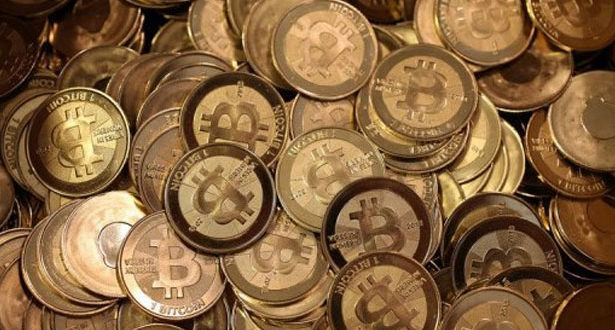
Investors, libertarians and computer enthusiasts have a new topic to discuss, and it is Bitcoin. The popularity of the online currency is growing in direct proportion to its price, which has quadrupled in two months. It is difficult to remain indifferent to what is happening, and that is why some with undisguised optimism see Bitcoin as the money of the future, while others point anxiously to the prospect of a new financial bubble.
The questions multiply with each new discussion around virtual currency. The following lines will attempt to show that most of the difficult questions surrounding virtual currency can be resolved if we distinguish between two types of arguments used in every debate, namely those of economics and those of business. A clear distinction between them should shed light on part of the problem.
The most popular question is - is Bitcoin money? The fact is that goods have value in two ways - as a means of directly satisfying needs or as a medium of exchange. Another fact is that their marginal value depends on the specific situation. For example, the exchange value of bread is higher for the baker than for the buyer who consumes it. The concept of a medium of exchange is constructive for understanding the market economy. But what makes a medium of exchange generally accepted or money? In theory, money can be any private property that is exchanged - from bread, meat and gold to Coca-Cola bonds or Greek government securities. Who and how understands when a good is money?
The main argument here is that if we do not betray the methodological individualism and subjectivism of the Austrian school, the decision is individual. Everything further is a step beyond the theory of human action. That is, we enter the psychology of man, the motives behind his decisions, we reason as investors, entrepreneurs or simply put - normal people who take risks. The fate of Bitcoin is unknown, praxeology is not a crystal ball. What we know is that in the economy there are entrepreneurs who take risks every day, and that this risk is sanctioned with losses or rewarded with profits, and Bitcoin is not outside this process.
The Austrian School does not specify what money should be, and it does not need to be. The task of economics is to infer causal relationships and draw correct conclusions, not to set norms. Abstraction is the clear difference between the Austrian and other schools. The thesis that Bitcoin does not have the function of a store of value and a unit of account is an example of this difference. Those using such an argument think like investors who look for certain characteristics in an asset, but not like economists. Depending on the specific situation, different entrepreneurs will look for different characteristics in money, which makes the above two functions completely arbitrarily chosen.
The two functions mentioned are attributed to money and have caused enormous damage to the development of economic theory. It is strange that they are being brought out of the closet at this very moment. Value cannot be objectively measured, money is not a unit of measurement or accounting, but an asset that changes its price relative to each individual commodity in the economy. For the same reason, the store of value function must be irretrievably forgotten. But value relative to what? Human action is speculation, it develops over time. This means that processes lead to continuous change. There is no asset that isolates any objective "value" in itself, the same applies to money. In whatever monetary system we find ourselves, the appreciation or depreciation of money relative to certain commodities is inevitable, this is happening now, it has also happened with the existence of a gold and silver standard.
Bitcoin production is limited to 21 million. In this, supporters of the online currency see salvation from the current system of relentless inflation. Moreover, deflation, an increase in savings and economic growth are expected. The ceiling imposed by the protocol, in turn, makes some libertarians draw an analogy with government restrictions and hence their skepticism towards Bitcoin.
The very fact of favoring deflation over inflation misses the point. Austrian economists are not opposed to state-controlled money and fractional reserve banking because, instead of creating deflation, they lead to inflation. They are opposed because state control and fractional reserve banking are theft, fraud, and outright abuse of people's private property. In addition, they lead to crises in which everyone suffers except the guilty, who, as practice shows, are saved by the same "magic" that caused the crisis. It is not inflation or deflation that is the problem, but the competitive or monopoly supply of money.
That is why the thesis that Bitcoin is "super" because there will be deflation is non-libertarian. After all, at the heart of ethics is the understanding that we should not impose our subjective opinion in favor of some at the expense of others, in this particular case, those who save at the expense of those who consume. It is inconsistent because it is Keynesian from beginning to end. Changing the purchasing power of money does not lead to a change in the relationship between saving and consumption, i.e. the interest rate. This is at the heart of the Austrian theory of the business cycle, everything else is Keynesian.
The analogy with government restrictions and limitations misses an important point. Again, the foundation of libertarian ethics is the protection of private property and voluntary bargaining between individuals. The difference between Bitcoin and any government intervention is that in the former the contract is on the table and no one is forcing you to sign it at gunpoint, while in the latter no one asks you. The idea of a competitive money supply is precisely that, i.e. the availability of alternatives to choose from.
A common argument against Bitcoin is that it does not comply with Mises' regression theorem. In turn, supporters of the currency, to put it mildly, try to prove that the theorem is wrong. Both camps are wrong. The theorem has been misinterpreted; it aims to explain why money has value, but does not require it to be a commodity used in consumption. This argument is inexplicable, given that Mises himself mentions the existence of three types of money in a number of places - commodity, credit, and fiat. The following quote is eloquent - "The only thing that catallactics has to establish is that the possibility of the existence of fiat money must be admitted."[1]
Again, the subjective method remains misunderstood. The physical dimensions of a given commodity are important only insofar as they are meaningful to the individual. In other words, value is subjective and has no objective dimensions outside of human judgment. The position that money must necessarily have value in consumption is not an economic but an entrepreneurial argument. It is true that for many people this is an important condition, but why this is so you should ask a psychologist.
Не мога да спестя очарованието си от професор Блок, който кратко и достъпно обобщава- "Yes , if we interpret it (регресионната теорема) as saying that nothing cannot become a money unless it was at one time a valuable COMMODITY . Of course, bitcoins were never a valuable commodity. But, if we more sympathetically interpret the regression theorem not in terms of a commodity, but in terms of SOMETHING of value, then when and if bitcoin becomes a money, it will not contradict the regression theorem for, surely, before it became a money (if it does) it was SOMETHING of value, albeit not a commodity, because it cannot be denied that some people valued it."[2]
The above series of arguments imperceptibly leads to comparisons between Bitcoin and gold. Gold is a commodity, Bitcoin is not. Therefore, gold is money, Bitcoin is not. Therefore, the Bitcoin market is a bubble, the gold market is not. The foundations of this logic were shaken above. Still, it is interesting to make an approximate estimate of what part of its value gold owes to its non-monetary use. Certainly negligible. If we are consistent with the above logic, then gold was a bubble throughout the 18th and 19th centuries.[3]
We wouldn't pay so much attention to the Bitcoin-Gold comparison if online currency fans had found a better answer to the attacks. But instead of answering the argument with a better one, they start looking for areas where Bitcoin "beats" the precious metal. The payment system behind Bitcoin, which allows us to make transactions across the globe in seconds, without restrictions, is highlighted as the non-monetary value of online currency and a strong trump card against gold. It is inconvenient and risky to carry bags of coins, especially over long distances. But this problem was solved a long time ago, monetary substitutes were invented. Nothing stops the use of a gold-plated P2P protocol.
The Cantion Effect[4] or the uneven effect of changes in the quantity of money on individuals is an argument against Bitcoin. In other words, those who are the first to acquire the new money and sell it, profit at the expense of those who acquire the money last. Since relatively few people own about 1/3 of the Bitcoins created so far, this introduces a risk of inflation (in the context of rising prices for other goods and services) for their users. This is true, but the same applies to China, which if it decides to sell its dollar reserves, will collapse the purchasing power of the dollar. The important thing here is that the economy is a process and the Cantion Effect is continuous and unceasing , and not only for money, but also for all other goods. The problem is not so much in its presence, but in the fact that it is controlled (in the case of a monopoly on money) by the state.
The Austrian methodology deduces the cause-and-effect relationships in the economy and offers us generally valid economic laws. However, in order to apply them, we need additional information, this is our own knowledge and judgment about the forces or factors that influence a given process. For example, the statement - "if the demand for Bitcoin balances decreases, then the price of the online currency will decrease" is generally valid.[5] But how much will it decrease, what factors make people reduce demand, are there other factors, this is a matter of individual and subjective assessment of what is happening.
My personal assessment of what is happening is that at the moment, Bitcoin holders are finding in the online currency an easy way to get rich, rather than a means of exchange. They speculatively maintain and increase their balances, which increases their price. At the moment when they start to "cash out" their wealth, there will be both winners and losers. The losers will be the enthusiasts who invested in Bitcoin late, or those who believe that it is money and hold it. The idea of an online currency seems interesting and possible, if there is someone to believe in it. At least for the moment, people do not believe it. Recently, Gary North wrote an article[6] in which he makes an interesting analogy between Leonard Reed's work "Ipencil"[7] and the need for a price system based on Bitcoin, and in particular its lack in capital goods. Despite some differences with Prof. North, regarding the argument, I do not see any prospect in the near future for capital goods to be traded against Bitcoin, which greatly narrows its application, and hence its real value.
Dimo Stefanov
[1]- Mises, Ludwig von, (1953) "Human Action", XVII. 4-9; also (1912) "The Theory of Money and Credit", III
[2]- Block, Walter, http://bastiat.mises.org/2013/12/regression-theorem-and-bitcoin/
In translation:
Yes, if we interpret it that way, it's as if nothing can become money if it wasn't once a GOOD, useful in consumption. Of course, Bitcoins have never been a valuable commodity. But, if we interpret the regression theorem not in that context, but in the context of SOMETHING of value, then when and if Bitcoin becomes money, it will not violate the regression theorem, because it had some value, albeit not as a commodity, and it cannot be denied that some people found value in it.
[3]- Murphy, Roberth, http://consultingbyrpm.com/blog/2013/12/if-bitcoin-is-a-bubble-is-all-money-always-in-a-bubble.html
[4]-Nenovski, Nikolay, (2007) "The Monetary Order"
[5]- Rothbard, Murray,(2011) "Economic controversies","Praxeology as the Method of the Social Sciences"
[6]- North, Gary, http://www.garynorth.com/public/11843.cfm
[7]- Read, Leonard, http://www.econlib.org/library/Essays/rdPncl1.html





I have questions for the author.
"The Austrian School does not specify what money should be, and it does not need to be. The task of economics is to deduce cause-and-effect relationships and draw correct conclusions, not to set norms."
I'm not very clear on what the author is saying. Yes, it's bad to force people to use something as a means of payment, but I don't see what this has to do with the question: "What qualities should something have in order to perform the function of money well?". Viewed from this angle, gold is better money than today's, and Bitcoin is even better money. However, it does not follow from the above that this money MUST be accepted by the population, but simply that there will be a TENDENCY for it to be imposed by the market because it is better for the purpose for which it is used. That is, there is no guarantee that Bitcoin money will be used in the future, but this is more likely in the presence of a free market than the other discussed alternatives.
".Austrian economists are not against state-controlled money and fractional reserve banking because instead of creating deflation they lead to inflation. No, they are against it because state control and fractional reserve banking are theft, fraud and a blatant mockery of people's private property."
In my opinion, the protection of private property and the existence of inflation (in the Austrian sense of "printing money") are the same thing, and I do not know why the author artificially separates them. Probably because of the existence of gold, which has also increased, but has nevertheless been chosen by the market as a unit of payment for most of history. The only thing that follows from the above, however, is that during all these centuries there has been no better alternative to money than gold. The market has necessarily adopted the best of the available alternatives. This does not mean, however, that the situation will remain the same in the future.
“A common argument against Bitcoin is that it does not meet the Mises Regression Theorem.”
I must admit that I am not familiar with this theorem from books. I just want to ask where it is called a theorem. A theorem means that it is logically deduced from previous statements, some of which may be given axioms. In my opinion, this is just an opinion or, in other words, a theory of Mises.
"But this problem was solved a long time ago, cash substitutes were invented. Nothing stops the use of a gold-plated P2P protocol."
The problem is not the above, but simply that using gold requires resources to maintain it. Gold needs to be stored, which is why a gold monetary system is more expensive than a Bitcoin system. And this is a very good argument against gold and in favor of Bitcoin. In my opinion, one of the parameters by which one should evaluate whether something is suitable for money is how much it costs to maintain it.
"The important thing here is that the economy is a process and the Cantion effect is continuous and unceasing, not just for money but for all other goods."
I disagree. I don't eat money, I don't drink, I don't wear money, etc. That is, I don't use it in any way that I get a direct benefit from it. However, this is not the case with goods and services. I am directly benefited from most goods and services. In short: when the money in circulation increases, it is bad for me because MY money, i.e. the money in my pocket, decreases its purchasing power. In this respect, the increase in gold money is no exception. However, when goods on the market increase, I don't lose anything from this. On the contrary: I gain, because there are more things to consume.
@EE
In order of numbers:
1. The idea of the article is that this different angle has nothing to do with economics, but with people's subjective assessment. If you think that gold and Bitcoin are better money than today's, obviously there are other people who don't think so, because they currently aren't. I have written that each of us will look for different characteristics, depending on the specific situation. For example, governments will want money to depreciate, and creditors will want its purchasing power to increase.
2. To begin with, I am not arguing about what the future will hold. Regarding inflation, I argue that it is a market phenomenon, as is deflation. That is, in a free market, the purchasing power of money will increase or decrease, and this is inevitable and normal. Therefore, the problem is not inherent in inflation, but in the fact that it is controlled by governments, which change the money supply by fraud. Hence the distinction I am making. I think we have written about this issue before.
3. It is a theorem. It is derived from the axiom of human action. The Austrian method is logical and in its structure of deriving statements it is very close to mathematics, because both praxeology and mathematics are branches of logic.
4. Again, the idea of the article is to distinguish how far economic arguments go and how they help us apply our subjective understandings of the processes and phenomena that are developing. Your point of view is subjective and I respect it. I have not made calculations, which is more expensive to maintain, store. But I quickly looked at what is going on on the net and how much a Bitcoin miner [https://products.butterflylabs.com/] costs, which is absolutely necessary for maintaining the blockchain. Obviously, maintaining Bitcoin is not completely free of money. I would not say so affirmatively, without the necessary calculations. And even if Bitcoin maintenance comes out cheaper, this is no guarantee that it is a better option than gold, because there are other factors that need to be taken into account.
5. You disagree, because in both cases the Cantion effect has different consequences for you, which shows why it is so important to distinguish our subjective views from objective economic laws. Inflation may not be good for you, but it is good for your neighbor who has credit or for governments. Increasing the production of bread due to a new technology may be good for you because it becomes cheaper, but it is not good for the baker who is already producing below marginal cost. The Cantion effect tells us nothing other than that goods change their prices, and some gain and others lose from this.
@Dimo Stefanov
"Regarding inflation, I argue that it is a market phenomenon, as is deflation."
I agree with a small caveat. I would correct the above as follows:
"... that it MAY be a market phenomenon, like deflation."
The problem is what causes it and whether it is good for other people. Increasing gold is not a good thing for me because it reduces my purchasing power without offering new goods for the new money. Gold is not perfect money. Just better than the existing ones.
"But I quickly looked up what was going on online and how much a Bitcoin miner [https://products.butterflylabs.com/] costs, which is absolutely necessary to maintain the blockchain. Obviously, maintaining Bitcoin is not entirely free of charge."
I don't understand why the average person would need to mine Bitcoins. As I've said many times, increasing money is a bad thing. That's exactly what this is about. These are discretionary expenses (and pointless, even harmful ones, because they don't generate any useful value for the market, since, as I said, money is not eaten, drunk, or worn). They shouldn't be considered maintenance costs. The ability to mine Bitcoins shouldn't exist.
And with gold, you need a safe that you will pay for.
"And even if Bitcoin's maintenance turns out to be cheaper, that's no guarantee that it's a better option than gold, because there are other factors that need to be taken into account."
As I said, I'm not saying that the market will or should accept bitcoins as money, just that they are better suited for money. And if we could test many different economic scenarios (alternative Earth histories) for long enough, bitcoins (or variants of them) would be accepted as money more often than gold or other options.
"The Cantyon effect tells us nothing other than that goods change their prices, and from this some gain and others lose."
If I'm not mistaken, the Cantillion effect only applies to money. At least that's what I see on the internet.
@EE
1. Precisely, because it may be important to make the difference.
2. We repeat a previous conversation. But the production of money is not meaningless.
"These are discretionary expenses (and meaningless, even harmful ones, because they do not derive any useful value for the market, since, as I said, money is not eaten, drunk, or dressed)."
There is no single unit of the "market" that values any useful value. The market is an array of all transactions between individuals. Individuals value. Therefore, the production of money is a business like any other, which brings utility to those who practice it. In exchange for the money produced, they can get something to eat, drink and wear. Therefore, again, the problem is the monopolization of the business of producing money, not inflation. This is the main argument why gold mining is an honest business, like any other, because the participants in it see something useful in it, not that gold has any value in consumption.
3. Here we are clashing our subjective views. There is nothing else to say.
4. Yes, it's about money, but the same processes are valid for any other commodity.
@Dimo Stefanov
"Therefore, the production of money is a business like any other, which brings utility to those who practice it."
Yes. And losses for everyone else. But practically everyone benefits from potato production. And if they don't use potatoes, at least they don't lose anything. That's the difference.
"With the money they produce, they can buy something to eat, drink, and wear."
Yes, but they will take it from others, because they themselves do not produce such useful things. And in return they will give them new money, which cannot be eaten, drunk, or used at all, except as a medium of exchange for goods. There is almost no difference whether the state produces the money or private companies. There are still negatives for the NON-producers of money. And it does not matter at all that there is hard work behind the gold, since this work has practically not given anything useful to other people. This work is meaningless and harmful.
Why can't you accept that the market is not perfect, but simply strives for it? It chose gold as a means of payment because it was the best at the time. Technology did not allow for anything better. Now there is, for example, paper money or even better: bitcoin. The problem is that due to the state monopoly on issuing money, this money is constantly increasing and this leads to a redistribution of wealth. Those close to the source of the money become richer (bankers, politicians, people with connections, etc.), and the average person becomes poorer. The average person cannot defend himself.
"Yes, it's about money, but the same processes apply to any other commodity."
And where does this come from? Is it a personal opinion or did Canitlion say this?
1. The market is not perfect. Gold is not perfect. Bitcoin is not perfect. The market has a mechanism to correct imperfections. The state monopoly does not have such a mechanism. I don't feel like arguing anymore about which work is useful and which is not, because I am confronted with your subjective opinion and I have already explained several times what I mean (even in a previous discussion).
2. My opinion.
@Dimo Stefanov
That my opinion is subjective is true, as is yours. That doesn't make it wrong, though. I understand that I'm not in sync with some generally accepted libertarian beliefs, but personally I don't care. I'm interested in how things really are, not in taking a political or ideological position just to defend a position. I believe that if something is not logically defensible, then it is most likely wrong. The question of the suitability of gold as money is exactly that. I'll try to give a simple example (don't feel obligated to answer me).
The capitalist system is based on the division of labor. This means, in short, that a person does not produce for himself, but for the market. That is, I produce, for example, gloves. I do not use them myself, but sell them to others and with the money received for them I buy the goods that I need to live. The interesting thing is that in fact, under capitalism, the long-standing desire of socialists for people to work for others has been fulfilled, but simply no one has noticed it, because the economy is viewed ideologically and through the eyes of Marx (that's how people are taught). There are enormous benefits from the division of labor, because people do not have the same abilities. For example, I am not a good mechanic, but I am a good shoemaker (for example). If I only deal with shoe production, I will produce much more output (for the market) than if part of my time is spent repairing machines. It's just that my neighbor is better at this job and it is more profitable for me to produce shoes and for him to repair machines. And when my car breaks down, the best thing is to pay him to fix it. That is, in the system of division of labor, everyone benefits from the presence of others on the market (not that "man was a wolf to man"). And the more products others produce, the better off I will be and society as a whole. That is, if a tomato producer, for example, has produced more tomatoes this year than the previous one due to favorable weather conditions, new fertilizers, etc., then I profit from this because he will have to place more production on the market. However, he cannot place it at the same price as before, but at a lower one (consumers only pay a certain amount of money). I directly benefit from the lower prices.
Let now a producer be a miner and produce gold, which is perceived as money in the given economic system. Let besides him there be 4 more people (just an example) in the whole economy. And they produce for example: bread, meat, clothes and houses. It is clear that the bread producer produces bread for the market, i.e. in order to buy meat, he has to sell his bread to other people, take money from them and with this money buy meat. As you can see, the money simply passes through him, he does not receive benefit from them directly, but simply as a commodity of exchange. Now let's see what benefit the baker, butcher, tailor and builder get from our available miner? The answer is: negative. The reason is that the miner produces money, and money (I repeat) is not eaten, drunk, dressed and not lived in. In fact, the following happens: everything that the miner needs to live he receives from the other four people. He gives them money, but this money does not make them richer because the market output is the same. De facto 4 people support 5. The miner lives off the backs of the other four because he does not produce value that is useful for their lives. The output of four people is distributed among 5 people. I understand that the miner works, even labor that the market values and wants (the other 4 want his money), but this does not change the fact that this labor does not enrich the market. From the market's point of view, he is bad because he makes others poorer. If the miner produced, for example, iron, then the market would have more output than before and everyone would be richer from that. I mean this when I argue that any production of money, whether with the consent of the market (gold) or without its consent (the modern system with a central bank and fractional reserves) is bad for the market.
Thanks for the discussion! I enjoyed it!
The market does not think and does not have a market perspective. Even less, you can take the market perspective and evaluate. There is an individual perspective. And his perspective is subjective. For example, for me, alcohol, cigarettes and drugs are goods with negative utility, as is the baker's bread, because it harms my health. Does this mean that they are not useful to anyone else and I should stop producing them? The laws that affect money are no different than those of any other asset.
@Dimo Stefanov
"The market does not think and does not have a market perspective. Even less, can you take the market perspective and evaluate."
The market doesn't think, that's how it is. But it has rules, or rather, tendencies that it follows. And one of these tendencies is that better money should crowd out worse money (in a free market, in a regulated one it's the opposite). What I do is track these tendencies, i.e. assess, not try to regulate or dictate anything. I'm not arguing that the market wants gold for money, but that over time it will want other things for money, because it's trying to improve itself.
"The laws that affect money are no different than those of any other asset."
Yes, for example the laws of supply and demand are the same. However, it does not follow from this that producing money is a good thing. And the reason is that money is a special commodity, a commodity that has no value in itself (it is not like bread, cars, drinking water, etc.), but only exchange value. That is, the only point of using money is simply to have it temporarily in order to give it for something else. And for this purpose the available money (no matter how much it is) is completely sufficient. There is no need, it is even harmful to produce more.
By the way, I can very well imagine an economic bubble in a system with full reserves and gold cover. Yes, the bubble will be weak, but it will exist. The system will be used to a constantly increasing amount of gold and God forbid one or two mines go bankrupt/are closed for some reason, then the entire economy will fall into crisis. It makes no difference whether the money entering the economy is gold or not. The results are the same, namely: the system gets confused and starts to work incorrectly. The result in the end is usually a crisis or, if the situation is not so serious: low growth or no growth at all.
Many people in the Western world do indeed view Bitcoin as an investment and a way to get rich quick. But for most of the world, Bitcoin is much more than that - it is a tool for overcoming the restrictions and regulations of governments, bureaucratic institutions, unstable currencies that suppress people's economic freedom. This function of Bitcoin is an extremely important factor in determining the price. Not to mention that countless uses of the Bit Network are still being asked, which alone offers a solution to the considered impossible to solve "two generals' problem" ( http://en.wikipedia.org/wiki/Two_Generals'_Problem ). That is, the Bit Network offers the "proof of existence" function, which practically means that a condition for complete trust between two parties on the Internet is created - something that was unthinkable until now. This will eliminate the need for notaries, and will provide huge opportunities in hundreds of other areas, and it will even be able to decentralize entire countries.
The conclusion is that we need to stop looking at Bitcoin as an investment tool, and realize its true role, which is truly revolutionary and which ultimately aims to return power and money back to the people.