 EKIP– Expert Club for Economics and Politics A Different Opinion
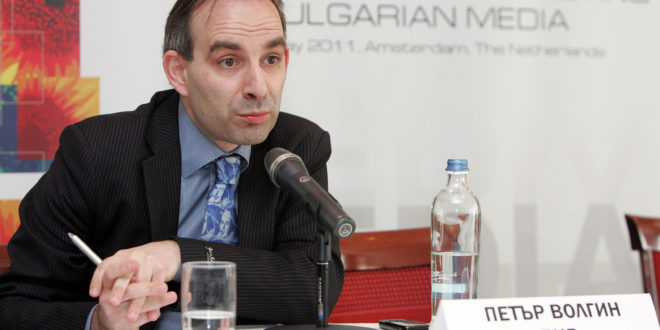
Mr. Volgin's comment begins like this: " Last year, a trend became noticeable in Bulgaria, which I strongly hope will become even more visible in 2014. I mean the trend in thinking. And as we know from Plato, the most important thing is the thought, the most important idea. In order for something to receive material expression, it must first be invented. The joyful trend in thinking that I am talking about is related to the fact that more and more people refused to comply with the clichés of market fundamentalism." It would be difficult for the critical reader of these lines to understand what made Petar Volgin think that "a trend became noticeable" - "more and more people refused to comply with the clichés of market fundamentalism." If this is the fact that a coalition government headed by the BSP was formed, the thesis that the trend became "noticeable" only "(in) the past year" would mean that the author is showing negligence towards history.
Over the past 24 years, the Bulgarian Socialist Party (and its offshoots) have almost always won seats in parliament, having governed three times – either almost single-handedly (1995–1997) or as part of a coalition (2005–2009 and since 2013). Rather, the notion of a “joyful trend” can hardly be based on the election results. Does the journalist not see a trend in the protests? Rather not. Excluding the February protests against high electricity bills, in the second half of 2013, protesters demanded the resignation of the Socialist-led government, a change in the electoral code, and fewer state regulations.
None of these demands supports the “trend”, “that more and more people refused to comply with the clichés of market fundamentalism”. Volgin himself writes further down in his article: “The nice trend, which I mentioned at the beginning, is related to the fact that in 2013, even in Bulgaria, this neoliberal monopoly began to be shaken. More and more people are speaking and writing…” Again, we see no confirmation of his words – i.e. where Petar Volgin comes to the conclusion about a “trend”, apart from some of his own individual feelings, is not clear.
The consequences of the alleged trends are compared to the theses of Martin Luther: “I can compare this intellectual revolution of ours with the revolutionary turn that shook the German lands at the beginning of the 16th century. On October 31, 1517, Martin Luther hung on the door of the church in Wittenberg his notorious 95 theses, directed against the dogmas and actions of the official Catholic Church. This was the beginning of the European Reformation, which would ultimately lead to the creation of Protestantism and the liquidation of the monopoly of papal power.” Again – without presenting any arguments. If he understood the Reformation as a political process and the ideas of freedom that he criticized, he would know that the two had a lot in common as a process, while in one camp were rather his beloved political power and the papal one.
In the second paragraph we read: “ In Bulgaria, over the past two decades, there has also been a clearly expressed monopoly in the field of ideas. And more specifically, there was one idea that was recommended to us as absolutely and unwaveringly true. According to it, all state assets had to be privatized as quickly as possible, no matter what the price. It was even believed that if necessary, they could be given away, just so that they would no longer be the property of the state. The smart Bulgarian heads from the numerous Institutes, Centers and Headquarters were torn apart explaining how everything should be private and nothing state-owned should exist.” It is interesting what kind of monopoly Volgin writes about, although over the past almost a quarter of a century in Bulgaria there have been and are organizations and individuals defending all sorts of political and economic ideas, including a considerable number of left-wing ones. Petar Volgin himself has been involved in journalism since 1998, and besides him there are quite a few authors, publishing houses and blogs that defend socialist ideas. So the thesis of a "monopoly" in the ideological space is also unjustified.
In his article, Peter Volgin attacks clichés that he never clearly defines, using a rhetorical device known as a straw man. He replaces the ideas of the disparagingly named “Institutes, Centers and Headquarters” with his own theses, which he “thunders” without providing logical arguments or any empirical justifications. His attitude towards what he calls “neoliberalism” is interesting: “ Here we must necessarily note that in the developing world neoliberalism was popular thirty years ago, and today it has long been forgotten. The last places where it still enjoys a favorable reception are countries like Bulgaria, where the protégés of ultraliberal non-governmental organizations have so immersed themselves in their favorite dogma that they have long since lost all connection with reality.” If Volgin had taken the trouble to look up information about the term “neoliberalism,” he would never have used it as a target for his attacks. In his article "The Greatest Socialist Lie of the 21st Century," Vladimir Karolev describes in detail the genesis of the concept, as well as its exact meaning.
Neoliberalism “…can be described as today’s social democracy. The mixed economy it proposes is light years away from the liberal society described by classical liberals, in which political power is limited (at most) to the police, army, and court. Rustov combines elements of the social romanticism characteristic of many socialists of his period with his own criticism of the absolute power of politicians and the collectivist society.” This shows journalistic negligence on the part of Peter Volgin, who clearly does not check the concepts he writes against. In the end, he attacks without understanding a doctrine that coincides more with his own views.
Leaving aside the journalist’s ignorance of the things he criticizes, let’s see how he argues, “that what we need is not more market, but more solidarity, that the cult of selfishness and the justification of ever-increasing inequality leads to nothing good.” By the end of his article, Peter Volgin provides absolutely no evidence to support his claim, but on the contrary, he shows himself to be a prophet [1], who piles up more and more empty phrases that he never argues. This only shows how completely unfamiliar the critic of “market fundamentalism” is with the economic phenomena he is talking about and with the functioning of capitalism in general. Although the author is difficult to criticize, because nowhere does he indicate exactly what alternative to “rotten capitalism” he is proposing, I will still assume that in the following lines he is attacking capitalism (or “market fundamentalism”, as he calls it) [2].
“Even in Bulgaria it will become clear that limiting the diverse world to commodity-money relations and to the pursuit of profit at all costs will not lead to universal happiness.” Capitalism is a system of voluntary cooperation between individuals, based on free prices and natural rights (life, liberty and property). Based on these foundations, it is the most effective mechanism for the distribution of goods and services and for universal mutual benefit – even in cases of otherwise warring factions [3]. Nevertheless, Volgin takes the Hobbesian view that “man is a wolf to man” and applies it to capitalism. Not only that, but the author seems to reject the possibility of seeking and offering cultural goods and services. With this narrow-minded view, he seems to imagine that, freed from the aggression of the state, individuals will stop seeking goods that bring them happiness.
Taking people out of their own nature (to consume those things through which they achieve the greatest satisfaction, regardless of whether it is paintings, cars or something else) and placing them in some kind of "capitalist vacuum" in which people seek not to satisfy their needs, but to "make a profit" is yet another proof that the journalist not only does not know economic principles, but also human action.
Volgin implicitly attacks profit and “egoism” (certainly of entrepreneurs), without realizing that it is precisely the profit motive that drives people to invest and produce. This offensive sounds almost religious – greed is among the seven deadly sins. But even if it has a place in a theological debate, the attacks on it once again demonstrate how little Volgin knows about economics. The realization of a profit by individual X means that he has satisfied the need of Y – i.e. profit is the culmination of a mutually beneficial voluntary transaction. If X is simply a greedy and mercantile “economic predator” and does not make someone’s life better by helping other people achieve their desires through his products, he would never make a profit. Unless, of course, Volgin’s beloved state intervenes and forces consumers to buy.
“ The crisis that has shaken the world in recent years is the result of this frantic pursuit of more and more money and goods, of the transformation of market success not only into an economic but also a moral criterion for the value of human life. People in America and Europe have long understood that this is a mistaken strategy, that market fundamentalism ultimately buryes the societies where it is applied.” In reality, the crisis is the result not of the pursuit of more money, but of central planning and state intervention in the economy. If Volgin had checked the information he writes, he might have come across the Austrian theory of the business cycle, which examines in detail how economic crises occur and the fundamental role of the state as a cause of poverty and suffering [4].
Moreover, the article and the author himself are internally inconsistent. Since the first part of the text states that “neoliberal ideas” have been abandoned in the last 30 years, how did they lead to the crisis after 2008? If we cannot expect a lack of internal contradictions in a short text, what can we say about the overall thought of the radio host?
Peter Volgin fails to offer an adequate critique of capitalism – instead we read naked accusations aimed at clichés, the meaning of some of which is completely unclear to the author. He deals with logical and rhetorical effigies of his opponents, without a thorough study of either their theses or even the information he uses as an “argument”. Ultimately, this leads to a situation known on the Internet as “trolling”. We may have to wait a long time before informed critics of capitalism and freedom appear who at least use logical arguments.
[1]“I even dare to say that very soon, the citation of Ayn Rand, this goddess of Bulgarian neoliberals, will be sharply limited in our public discussions.”
[2] The only passage in the entire article that “hints” at what Volgin means by a better economic system is: “…what we need is not more market, but more solidarity, that the elevation into a cult of selfishness and the justification of ever-increasing inequality leads to nothing good.”
[3] вж: I Pencil, Lawrence Reed
[4] вж: The Causes of the Economic Crisis, and Other Essays Before and After the Great Depression, Ludwig von Mises; Money, Bank Credit and Economic Cycles, Jesus Huerta de Soto; What’s Behind the Financial Market Crisis, Antony P. Mueller





Great harm to our society is caused by trolls in the public media, who, under the guise of journalism, fornicate with the BNT camera and the BNR microphone, paid for out of our pocket! Many people, especially older ones, still watch or listen to the national media and believe almost everything they hear “because they said so on the radio”. The height of impudence is the journalist Petar Volgin, who uses the BNR microphone to croak at the “support points” of the parent party and to present every opposition in the country as some fascists (sound familiar?) who stole everything with the help of Soros and his “think tanks” (whatever that means!), and all the protesters are labeled as bought – if not by Soros himself, then at least by Boyko Borisov! Petar Volgin has apparently become so absorbed in his role on the "support points" that he has completely forgotten that he works for the Bulgarian National Radio, which is financed with money from the republican budget, i.e. from all of us, and for this reason he is expected to produce objective, impartial and socially responsible journalism, and not to invent conspiracy theories and fool listeners with appeals similar to "the thief cries, catch the thief". He thinks that no one sees what role the party PRs have assigned him, except that it was written in black and white in one of the leaked support points - "we spit on others without showing how great we are".
Volgin, enough spitting!
Facebook group:
"Peter Volgin & Co - out of the Bulgarian National Radio!"
https://www.facebook.com/groups/464136617019884/