 EKIP– Expert Club for Economics and Politics A Different Opinion
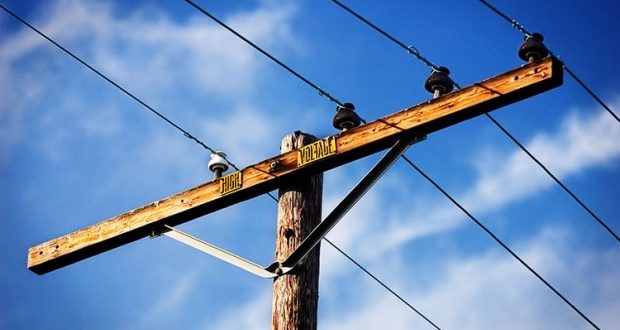
Electricity bills are truly unique to the market (heavily state-controlled) – grid access surcharge, electricity distribution surcharge, green energy surcharge, etc. Unique because I have not noticed in my receipt at the hairdresser that there is access to a beauty salon, a hairdryer surcharge or “unreimbursed shampoo costs” (yes, something like that is present in the slips that are sent to us every month). In fact, I have not noticed it when I buy anything else. Why is that?
The explanation that the supply of electricity is so different from any other business is quite superficial. Human civilization has long learned to do much more complicated things than just transmit electricity through wires. The more Machiavellian thesis is that, in fact, this way of presenting costs is “for the benefit of the consumer” – the wonderful, concerned Bulgarian regulator (SKEVR) makes sure that we are not deceived and do not pay more than we should.
At its last meeting, the State Electricity Regulatory Commission (SEWR) added another fee to our bill. The new rule is for network imbalances, which are formed by the difference between the declared and consumed amount of energy by energy customers. For example, if a given neighborhood was planned to consume 100 units of electricity for the month of July, but it consumed 70 units because 30% of its residents went to the seaside, this will be an imbalance that will have to be paid for. At the same time, these 30% of the neighborhood's residents will cause greater consumption, for example in seaside resorts. Which will cause more electricity consumption than planned there, which will also have to be paid for.*
It is not difficult to remember that all this balancing and unbalancing can only exist as such a problem in the heavily regulated and centrally planned electricity market in its current form, since with free negotiation between all agents and without forcibly established monopolies, forecasting and planning would be much more accurate and much more flexible.
The regulator's special plan, however, is revealed upon a deeper reading of the text. It turns out that we will pay the new fee to the private ERPs, but nothing will remain in them. On the contrary, the entire amount collected will go to the state-owned Electricity System Operator (ESO) for its intended purpose. The purpose of all this is twofold. First, ESO has not yet published its financial report for 2013, but preliminary data in March showed that it is at a loss. And while the state can afford and it would even be useful to let NEK go bankrupt and practically be liquidated (the loss will be for politicians, who will not be able to use it to finance corrupt projects), this is impossible for ESO. There, the infrastructure and tasks relative to the current system are too vital (for the system itself) and in case of critical losses, it will be necessary to proceed to urgent privatization (which would be a good step, combined with liberalization) or another unplanned reform, and both are politically unpopular. That's why the state will not let ESO go bankrupt. On the other hand, the new fee raises electricity bills right during the elections. It powers the state-owned company, but is collected from private ones. Which is a perfect prerequisite and service for socialist formations in Bulgaria such as the BSP and ATAKA to exercise pre-election.
But as already mentioned, the consumer is not particularly interested in the cost structure of the entrepreneurs he buys from. We do not expect McDonald's to tell us what it costs them to produce a burger before we buy it. Quite naturally, since the exchange occurs based on our subjective perception of how much a good or service costs - i.e. no matter how much it cost the entrepreneur to create something, we will not pay more than we think it is worth to us.
In fact, as is evident from the analysis and objectives of the decision, the purpose of this “detailed” account has more to do with the state than with the market. And more specifically - with the interests of the extremely powerful regulator - SEWRC. Like any political institution with a lot of power, the Commission’s aspiration is to have the maximum amount of influence while bearing the minimum responsibility. By breaking down the price, this can be achieved in an easy way - “look, citizens, the problem is not that we have a centrally planned energy system, the high prices are due to the green contribution, the electricity distribution companies, “technical factors”, etc.” Whatever the bad thing is, SEWRC and the gigantic state intervention are certainly not to blame for it.
And so things are in a wonderful corruption balance. The eyes of the payers are blurred and through the "transparency" of the accounts, the system remains in a constant imbalance (i.e. open to all kinds of schemes), the political mentors with the strongest positions in the energy sector cash in and through this resource win more elections so that the cycle can continue. It will also help the elections that the political parties that are most deeply involved in the energy quagmire are also the ones that will shout the loudest against the evil ERPs/imperialist interests. At the same time, all consumers pour money into completely bankrupt institutions such as NEK (which is even redundant for the energy system, serving only to finance corruption projects) and the Electricity System Operator (ESO).
The question is how long will bureaucrats and politicians manage to hide behind populist rhetoric while they refine the system and bring it closer to serious problems, and most importantly, who will be to blame when the bankruptcy can no longer be covered by the end user?
* The information is a light retelling (almost a quote) from the newspaper Standart - http://paper.standartnews.com/bg/article.php?d=2014-07-14&article=498600




TO
EUROPEAN COMMISSION
DIRECTORATE GENERAL
"JUSTICE AND CONSUMERS"
COMMISSIONER VERA JOUROVA
BRUSSELS - 1049
COPY: MR. DIMITAR GLAVCHEV
CHAIRMAN OF THE PEOPLE'S
ASSEMBLY
COPY: MR. RUMEN RADEV
PRESIDENT OF THE REPUBLIC
BULGARIA
COPY: MR. BOYKO BORISOV
MINISTER-PRESIDENT OF
REPUBLIC OF BULGARIA
COPY: MR. LOZAN PANOV
CHAIRMAN OF THE SCC
CITY OF SOFIA
REGARDING: criminal legislation, criminal management and criminal justice in centralized heat supply (steam), as a result of which massive violations of human rights and damage to the interests of citizens have been imposed.
Dear Commissioner Jourova, ladies and gentlemen,
During the transition from a planned to a market economy in the Republic of Bulgaria, market principles and market relations between the parties were not applied to centralized heat supply, which created the conditions for the establishment of arbitrariness, fraud, absolute lawlessness, absolute mismanagement and the criminal solution of public relations in the conditions of the missing heat market and market relations between the parties. The result of the criminal solution of the “heat” problem is the creation by the District Heating Company of a criminal subject of activity “delivery” to the subscriber station” and of the criminal law “General conditions for the sale of heat energy”.
GENERAL TERMS AND CONDITIONS – the criminal law on heating, prepared by Toplofikatsiya!
"DELIVERY" – the criminal object of activity created by Toplofikatsiya!
After the adoption of the Commercial Law, all heat supply organizations (TSOs) have registered in the commercial register at the district courts the subject of their activity in the following way: MAIN SUBJECT OF ACTIVITY:
1. Production of electrical and/or thermal energy (TE).
2. Heat transfer.
In Chapter X "Heat Supply", Section III "Heat Energy Transmission" of the Energy Act, the main subject of activity of all TSOs, in their capacity as a heat transmission enterprise (Art. 129, Para. 1 ZE) is specified as "heat transmission". In Art. 130 ZE, the legal definition of the main subject of activity of a heat supply organization/heat transmission enterprise is given as "heat transmission".
-" Art. 130. The heat transmission enterprise is obliged:
1. (SG, issue 54 of 2012, effective 17.07.2012) to supply heat to customers connected to the heat transmission network under equal and non-discriminatory conditions;”
"Clients" are located in their properties and can purchase and use heating through the equipment installed in their property - heating units and mixing valves.
For each separate activity registered in the court as a subject of activity: electricity production; heat production; heat transmission; KEWR issued a separate license to all TSOs back in 2001-2002.
The Energy Act determines that the supply of society with quality thermal energy shall be carried out through the act on its implementation - "General Conditions for the Sale of Thermal Energy", which, according to Art. 16, para. 1, item 6 of the Energy Act (Government Gazette 64/1999) and the Law on Energy, shall be prepared by the Energy Regulatory Commission.
TSOs, in their capacity as heat transfer companies, refuse to perform the legally established and court-registered subject of activity "transfer of thermal energy", for which they also hold a license "for heat transfer" and to sell the heat energy.
The legislator, in violation of the Constitution, the Law on Electricity and of Art. 16, para. 1, item 6 of the Energy Efficiency Act (Official Gazette, No. 64/1999), transfers the competence for the preparation of the act implementing the law - "general conditions of sale" of commercial companies in the energy sector (Official Gazette, No. 108/2001), for the heating sector Art. 106a of the Energy Efficiency Act (Official Gazette, No. 108/2001).
The transfer of competence to prepare an act implementing a law from a state body designated by law to commercial companies is a criminal act of the National Assembly.
All TSOs, when preparing the General Terms and Conditions for the Sale of Thermal Power Plants approved by the EWRC in 2002, 2005 and 2007, remove from their content the statutory, court-registered and licensed subject of activity "transmission of thermal power plants" and replace it in an unacceptable manner with the criminal subject of activity "delivery" to the subscriber station.
The decision of the EWRC to approve the "General Terms and Conditions for the Sale of Thermal Power Plants", in which the legally established court-registered and licensed subject of activity "transmission of thermal power plants" is replaced with the criminal "delivery to the subscriber station" - a criminal act of the EWRC.
With the approval of the first general conditions by the EWRC in 2002, the Energy Act was suspended/suspended, which continues today.
By applying the criminal object of activity "delivery" to the subscriber station, the following have been established: absolute lawlessness; absolute mismanagement; violation of human rights, and the general conditions have been turned into a single effective act - into a law.
The "general terms and conditions for the sale of thermal power plants" prepared by Toplofikatsia and approved by KEVR do not contain the legally established, court-registered subject of activity "thermal energy transmission", for which they also hold a license "for thermal power transmission", which is why the subject of activity "thermal power transmission" and the license "for thermal power transmission" were never implemented.
"Independent" judges issue an enforcement order without any binding relationship between the parties, accept claims that do not meet the requirements of Article 127, paragraph 2 of the Civil Procedure Code, and decide the case in favor of the monopolist - a criminal act of the court.
All amendments and additions to the Energy Act after 2001 have been made with one sole purpose - to give a legal appearance to the criminal activity "delivery to the subscriber station" recorded by Toplofikatsiya in an impermissible manner in the general terms and conditions.
Personally, I have the following questions for the authorities, the monopolist, and the court:
1. Why does no one exercise control and hold the monopolist accountable for not fulfilling the legally established, court-registered and licensed purpose of "heat energy transmission" when providing heat supply?
2. On what grounds do Toplofikatsiya, in its capacity as a heat transfer company, and the "independent" judges condemn citizens, after the monopolist fails to fulfill its obligations under the legally established, court-registered and licensed subject of activity "heat transfer" when providing heat supply?
3. On what basis do the National Assembly, EWRC, SAC, SCC and Ombudsman take action to legalize the criminal subject of activity "delivery to the subscriber station"?
4. What kind of State is the Republic of Bulgaria: a State of law, or a State of the criminal contingent? For 28 years, the heating system has been implemented in a criminal manner
In order to restore statehood, legality and justice in society, as well as to stop the violation of human rights and harm to the interests of citizens, it is necessary to immediately implement the following actions:
1. Withdrawal of the issued licenses "for transmission of thermal energy" from all district heating companies - the activity "transmission of thermal energy" - is not included in the general conditions for the sale of thermal energy and is not being implemented. The obligations under the current license are also not being implemented.
2. Declaring the "General Terms and Conditions for the Sale of Heat Energy" null and void - they do not contain the legally established, court-registered and licensed subject of activity "heat energy transmission", and therefore the general terms and conditions for the sale of heat energy are in insurmountable conflict with the Energy Act.
3. Termination of interpretative case No. 2/2017 of the OSGK at the Supreme Court of Cassation.
4. The National Assembly to restore the competence of the state body "Energy and Water Regulatory Commission" to determine/prepare and certify the act implementing the Energy Law - "General Terms and Conditions of Sale".
Angel Markov Rangelov, Republic of Bulgaria, city of Pernik, 1/130 Yu. Gagarin Street
16.08.2017
City of Pernik
Sincerely:…………..