EKIP– Expert Club for Economics and Politics A Different Opinion
Paul Kuek
We often complain about government and how it makes farming more difficult. But the situation could be much worse. Take Argentina, for example. The country's producers were some of our biggest competitors just seven years ago. [1]
In 2005, Argentine farmers produced more than 3.1 million tons of beef, of which they exported about 745,000 tons to the world market. The country was the third largest exporter of beef in the world (after Brazil and Australia). And, incidentally, it exported these quantities and satisfied the needs of its citizens, who were the second largest consumers of beef in the world, consuming more than 62 kg per person per year.
For comparison, in 2005 the USA exported 472,668 tons, and per capita beef consumption was 42.7 kg per year.
That was seven years ago. The United States Department of Agriculture reported that in 2012, Argentina exported only 164,000 tons of beef, dropping to 11th place in the world's beef exporter rankings. Per capita consumption has fallen to 55 kg/year. And in those seven years, U.S. exports have grown from 472,668 tons to more than 1.13 million tons.
The decline in Argentine exports is welcome news for American manufacturers. After all, the less Argentina exports to the world market, the less competition American exporters will have. But Argentina's problems are also a warning about how quickly bad government policies can destroy an entire industry.
In March 2006, the Argentine government, in an attempt to bring down the rising price of beef on the domestic market, banned its exports for 180 days. It then imposed a 15% tax on the sale of fresh beef abroad, a levy that is still in effect. It stifled exports and beef prices in Argentina fell.
The government thought that farmers would continue to supply cheap beef. Instead, producers drastically reduced their herd sizes and began growing soybeans on their pastures because it became more profitable than raising cattle to meet the needs of the artificially collapsed beef market.
The area planted to soybeans in Argentina grew from 37.6 million acres in 2005 to more than 48 million acres in 2012 – planted mostly on former pastures and land used for other crops, such as corn.
Nationally, the number of cattle fell from 54.26 million in 2009 to 49.59 million in 2012. In addition to raising fewer cattle, producers freed up land for crops by raising cattle in pens instead of the open grass pastures that made Argentine beef famous around the world.
“I feel really bad about what has happened to the beef industry in the last six years in Argentina,” said Leonardo Airaldi, a producer from Entre Ríos province. He and his family own two large herds that produce 2,000 head of beef per year for the market.
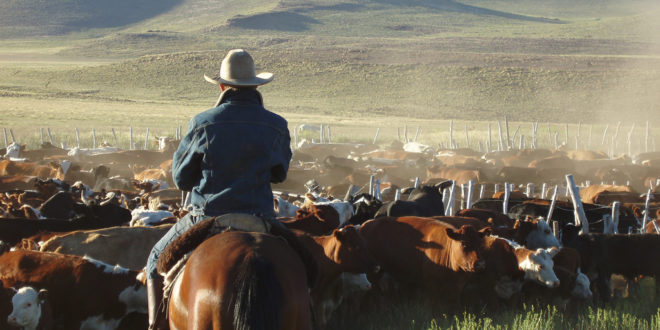
Calves are raised on pasture for over a year and then confined in pens where they are fed corn. Part of the Airaldi family's production includes Red Angus and Hereford breeds.
Like its neighbors, the Airaldi have planted much of their better land with soybeans. “The land that is planted with soybeans will not go back to pasture,” says Carlos Beco, who heads Soybean LAS for Syngenta Agro SA in Argentina. “This land is too valuable now to go back to permanent pasture.”
You can read the original text here.
Translation: Daniel Vassilev
Proofreader: Manuela Guerrenova
Editor: Stoyan Panchev