EKIP– Expert Club for Economics and Politics A Different Opinion
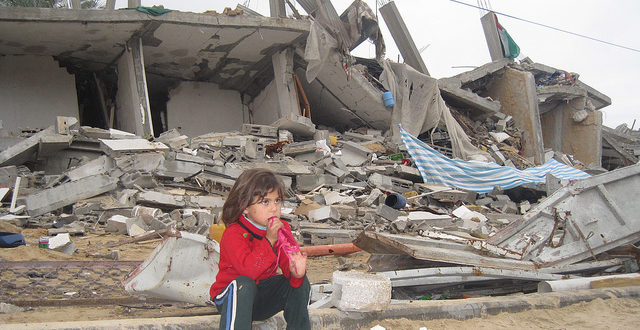
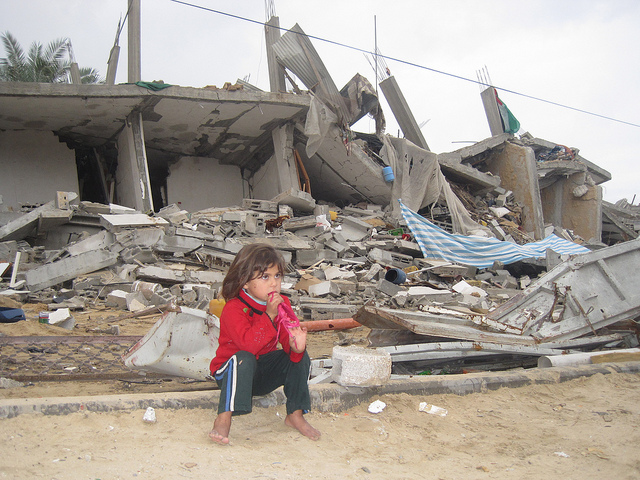
The Israeli army's military operation "Defensive Edge" in the Gaza Strip further shook Israel's already unenviable regional reputation as an aggressor and occupier. This was contributed by the many civilian casualties among the Palestinians (over 1,900 according to data from August 7), but also by the Palestinians' ability to present themselves as the only victims in the Middle East conflict.
The Palestinian Islamist group Hamas, which has controlled the Gaza Strip since 2007, has a network of tunnels through which it has launched relatively unsuccessful attacks on Israeli settlements. The greater threat is the rockets that Hamas fires at Israel, knowing that the Israeli army will respond with much greater firepower and that the high number of Palestinian casualties will attract international sympathy.
The Gaza Strip is a territory with an area of 365 sq. km. and a population of 1.7 million. It is so densely populated that civilian casualties in a military conflict are inevitable. In addition, the Palestinian enclave is blocked by land, water and air by Israel and when bombed by the Israeli army, its population simply has nowhere to go. In addition, Hamas, Islamic Jihad and other extremist groups have built their military facilities and keep missiles and ammunition in civilian objects, including schools. Thus, in a military operation, even the most high-tech army cannot avoid civilian casualties.
Direct Israeli-Palestinian talks, brokered by the United States, resumed in July last year after a three-year hiatus. As part of the talks, Palestine agreed to temporarily suspend its efforts to gain international recognition as a state and Israel agreed to release 104 Palestinian prisoners. But as the April 29, 2014, deadline for a final peace agreement between the two sides approached, it became increasingly clear that no resolution would be found on the main points of disagreement – the future borders of the two states, Israeli settlement policy and the status of East Jerusalem.
Palestine has no interest in a peace agreement at the moment, as it would not fulfill the Palestinian ideal of returning to the borders that existed before the 1967 war. Although Israeli Prime Minister Benjamin Netanyahu has repeatedly argued otherwise, Israel is also not seeking a peace agreement, as it would not satisfy Israeli territorial claims in the West Bank and East Jerusalem. Israel has been able to achieve its goals there successfully and without an agreement with the government of Mahmoud Abbas, through its settlement policy. Israel is building settlements in the West Bank in areas with a predominantly Palestinian population, thereby gradually changing the demographic balance there, so that over time the Palestinians will not be able to claim that a given area should remain within the framework of a future Palestinian state.
Moreover, although the US presents itself as an honest and impartial mediator, Mahmoud Abbas and his negotiating team do not trust them and believe that Washington always gives the carrot to Israel and keeps the stick for Palestine. Recently, Israel’s distrust of the US has also grown, and Obama and US Secretary of State John Kerry have repeatedly been the subject of fierce criticism for not protecting Israel’s interests. So the question was which of the two sides would sabotage the ongoing negotiations, and in what way. Palestine did this by applying to join a dozen international treaties and organizations – a moderate move, enough to sabotage the negotiations, but not enough to incur Israel’s wrath to have serious consequences.
But then Abbas made a grave strategic mistake by reaching out to the Palestinian Islamist organization Hamas, which Israel has designated a terrorist organization. Hamas was in dire need of funding, and under the agreement with Fatah, Ramallah was supposed to pay the salaries of civil servants in Gaza. The overthrow of Egypt’s first democratically elected president, Mohamed Morsi, was a major blow to Hamas, as the new military-led government in Cairo ordered the destruction of tunnels between Egypt and the Gaza Strip that were used to smuggle goods. In this way, the government in the Palestinian enclave was able to circumvent the Israeli blockade and obtain food and weapons. Morsi was actually one of the leaders of the Muslim Brotherhood movement, of which Hamas is a branch. With the coup against him, the leaders in the Gaza Strip lost their most reliable partner and faced the hostile former Egyptian army general Abdel Fattah al-Sisi, who became president of Egypt.
Israel has imprisoned several hundred Palestinians after the kidnapping and murder of three Israeli children, an act that was blamed on Hamas but for which the group has not claimed responsibility. Radical Jews retaliated by kidnapping the three children by kidnapping a Palestinian boy and burning him alive. That was enough to ignite the spark: Hamas began firing rockets from the Gaza Strip into Israel, and the Israeli army responded with airstrikes. The Israel Defense Forces (IDF) then launched a ground operation in the Palestinian enclave to destroy the “terrorist infrastructure”—rockets, launchers, and tunnels leading into Israeli territory.
What is the picture after more than a month of military conflict? Israel is expected to win the war in the Gaza Strip, although this is not a great success for one of the strongest armies in the world, fighting against militias without tanks or aircraft. Several dozen Israeli soldiers and three civilians were killed, but civilian casualties on the Israeli side are small thanks to the Iron Dome missile defense system, which intercepted about 90% of the rockets fired from Gaza. Turkey, which has had tense relations with Israel since the 2010 attack by Israeli commandos on a Turkish ship carrying humanitarian aid to the Gaza Strip, and Qatar, which shelters Hamas leader Khaled Meshaal, support the Palestinian radical group and have tried to mediate, but without success. The major regional player turned out to be Egypt, which, despite the distrust of Hamas and Israel, managed to win the role of chief negotiator and mediator in the conflict.
This latest escalation of tensions between Israelis and Palestinians will end with a truce, but it will not solve their problems. The Gaza Strip will likely remain under Israeli blockade, Israelis will continue to live in fear for their lives, and Palestinians in the West Bank will continue to feel marginalized. A possible permanent ceasefire will not bring back the lives of the Israelis and Palestinians who have died and will only lead to short-term security, along with a possible new round of negotiations under pressure from Washington and another postponement of the big question – what the borders of the future Palestinian and Israeli states will be.