 EKIP– Expert Club for Economics and Politics A Different Opinion

The banknotes and coins in circulation are what most people think of money as. In fact, they represent a very small fraction of all the money in the economy, depending on how you define it. Most of your money isn't in your family safe or hidden under your mattress. It's in the financial system, either as a deposit at a bank or as some other type of obligation to you by a specific financial institution.
The need for banknotes and coins is increasingly felt in everyday life, and the trend of an increasing proportion of payments never leaving the financial system seems unlikely to be reversed. For the period 2008-2014 alone, non-cash payments in 22 countries monitored by the Bank for International Settlements increased by nearly 50%, reaching $883 trillion in 2014.
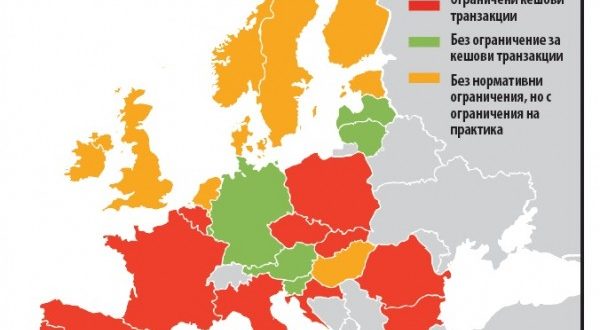
More and more countries are approaching the point where cash transactions will be history. In Sweden, for example, three of the four main banks (SEB AB, Swedbank AB and Nordea Bank AB) have stopped handling banknotes and coins in 65% to 75% of their branches. In most cities, public transport tickets can be purchased only by SMS, and even homeless people are equipped with POS terminals. The country has a law that states that merchants have the right to refuse cash payments, and they are taking advantage of this. In 1661, Sweden first introduced banknotes into circulation, and the time may not be so far away when the country will be the first to abandon them completely. Of course, Sweden is an extreme example, but the beaten path is easy to follow.
In this case, the market is increasingly trusting cashless payments. They are more convenient, save time, nerves and effort. However, in addition to market processes, a number of countries have recently adopted laws that artificially limit cash payments and sanction them in one form or another. The explanation that is being promoted at the forefront is that, being anonymous, such transactions facilitate the financing of terrorist structures, drug channels and generally organized crime and the criminal world.
A debate about whether the above reason is logically sound is unnecessary, but it is appropriate to draw attention to a less popular motive - today's governments are terribly indebted.
Financing political promises is becoming increasingly difficult. For example, in 2013, in order to tighten belts and justify an optimistic budget deficit forecast of 3%, the French government made an unsuccessful attempt to introduce a legislative amendment that would have limited permitted cash payments from 3,000 to 1,000 euros. After the terrorist attacks in Paris in early 2015, at the Charlie Hebdo magazine building and a local supermarket, the same amendment was adopted with “new arguments” and entered into force later that year.
The example of France is not a coincidence. Since the height of the fiscal crisis in the eurozone in 2012, restrictions on cash payments have been adopted by most countries in Europe. At the same time, for the period 2007-2014, the average government debt to GDP jumped by 42% in the EU. It so happens that having money in cash is significantly more expensive than having money in a bank. Imagine the situation in which you have collected 50 thousand euros in cash and want to buy an apartment. Without using the services of the banking system, you cannot perform a legal transaction. To convert your cash into money at a bank, you will need time and costs for bank transaction fees. In practice, the consumer's ability to freely choose a payment method is taken away.
Another scheme that penalizes and makes it more inconvenient to keep cash is the withdrawal of large denomination notes from circulation. Today, the largest US dollar note is the $100 bill. This was not always the case. In 1969, the Federal Reserve withdrew the $500, $1,000, $5,000, and $10,000 bills from circulation for reasons related to the fight against organized crime. Just two years later, in 1971, then-President Nixon declared the largest technical bankruptcy in history, permanently severing the dollar's link to gold (up until then, $35 had bought 1 troy ounce of gold ). Recently, the former US Treasury Secretary, whose term coincided with the 2007 crisis, Larry Summers published an article entitled “It’s Time to Kill the $100 Bill,” in which he argued for the withdrawal of the bill from circulation, highlighting the fight against organized crime. On February 15 of this year, ECB President Mario Draghi hinted that “consideration” was being given to the withdrawal of the €500 bill, which in practice represents 30% of the value of all banknotes in the eurozone. The reasons are the fight against crime. There is still lobbying for the withdrawal of the 1,000 Swiss franc, 50 British pounds, 1,000 Norwegian kroner, and others.
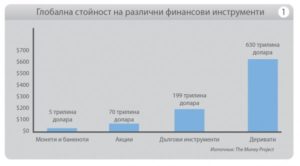
Over the years, cash withdrawals have become one of the few ways people can vote no confidence in the banking system. Fractional reserve banking automatically makes any bank insolvent if its customers decide to withdraw their money in cash. The fear of such a scenario somewhat compels banks not to inflate their balance sheets by handing out easy loans. Banknotes and coins have long represented a negligible share of all financial assets, which carries an inevitable risk if the crowd increases to ATMs. In this respect, the non-market withdrawal of banknotes and coins from circulation and forcing consumers into the financial system harms free choice. The other option to at least partially exit the financial system is to invest in real assets, such as gold, silver, real estate or another asset that represents no one's counter-obligation, which you risk not being honored.
How far with control
However, the latter option would be difficult to implement if your main assets are in the financial system in crisis situations. In such cases, governments have a habit of imposing capital controls in one form or another and may prohibit you from transactions aimed at purchasing real assets. We recently witnessed such practices during the Cyprus and Greek crises. In addition to the ban on operating with your own funds, the risk of your deposit being confiscated increases. In 2013, banks in Cyprus were saved with a “bail-in” of 40% of uninsured deposits in the second largest bank, then “Laiki”. Bail-in is the right of the financial system regulator to confiscate your deposit and convert it into bank capital. In this way, you become the full owner of a portfolio of non-performing loans. Shortly after the example of Cyprus, European legislators adopted a directive in late 2013, which obliges all EU countries to incorporate a "bail-in" clause into their legislation by early 2016. Such a practice was introduced around the same time in countries such as the USA, the UK, Australia, Canada, etc.
The elimination of cash transactions is a welcome development for central banks. After the 2007-2008 crisis, the zero limit on interest rates was reached very quickly. However, the fear of a deflationary spiral and collapse in financial asset prices has not passed. A number of central banks, including those of Sweden, Denmark, Switzerland and the ECB, have already gone into negative levels and there is no sign of a reversal of the trend. Japan recently joined them. According to Bloomberg, more than $7 trillion of government debt offers negative yields, or 29% of all government bonds that Bloomberg tracks. Negative rates mean you have to pay the bank to store your money. The goal is to get that money to be spent on consumption and thus stimulate growth. If you are one of those who believe that savings are what makes the economy grow or you simply don't like someone taking money from you for using your money, the lack of cash will take away one of the opportunities to express yourself.
The days of cash payments seem to be numbered, and it seems that the future belongs to new technologies and cashless payments. The state is trying to force the process, on the one hand trying to limit the use of banknotes and coins, and on the other hand opposing new solutions, such as bitcoin, in which control over transactions is again absent. Imagine that you are making a deal. It is between you and the state. The price you pay is a restriction on personal choice, in return you receive a promise of more security. Don't forget to read the general terms and conditions written in small print at the end of the contract.




The topic of the increasing lack of cash seems like a conspiracy theory. Unfortunately, it is not a conspiracy, but a reality. I remember the words of Margaret Thatcher, which stated more or less the following: "Without financial freedom, there is no freedom at all."
I hope that the authors who discuss the topic of increasing control over personal finances in this way will try to provide alternatives and options that will guide modern people on what is best to do with their money.