Pencho Penchev March 14, 2022 Culture and history
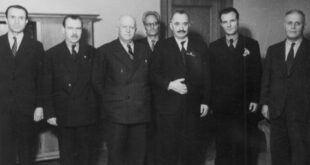
The year 1947 in Bulgarian history is associated with the implementation of an important monetary reform. It is part of a chain of profound and comprehensive changes that led to the establishment of a Stalinist economic and socio-political model: nationalization of industry, adoption of a new constitution, elimination of the parliamentary opposition, collectivization of agriculture, etc. The important lessons …
More » Pencho Penchev March 02, 2022 Culture and history
In 1928, with these words, the Bulgarian economist G. Toshev characterized paper money in conditions of inflation. His definition was the result of the experience gained during the First World War (1914-1919) and after it. This was the first clearly outlined inflationary wave in the history of post-liberation Bulgaria. The monetary system of …
More » Стоян Панчев 15 февруари 2022 Икономическа теория, Политика
One currency rules them, it alone will discover them, it alone will gather them all and wrap them in control in the city of Frankfurt, where the Brussels darkness looms. The debate on globalization shifts its focus from the traditional plane of left and right and reorganizes itself under a new dimension, namely national versus …
More » Pencho Penchev January 26, 2022 Culture and History, Society
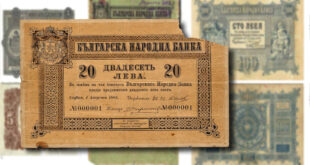
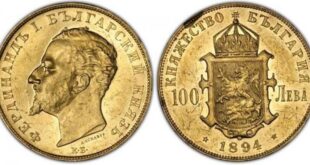
The debate for or against adopting the euro concerns the fate of the leva as the Bulgarian national currency. From this point of view, it seems logical to support the opinions expressed with arguments from the monetary past. The monetary history of Bulgaria is a matter that does not lend itself easily to a short and meaningful presentation. It …
More » Guest Author January 03, 2022 Economy, Cryptocurrencies
Author: Stilgar This is the fourth part of our series "What is Bitcoin?". You can read the previous parts here, here and here. In the last part of the series, we posed the main problem that blockchain technology solves in the field of digital currencies - "double spend". But what would the so-called "double spend" attack actually look like...
More » Guest Author December 07, 2021 Economy, Cryptocurrencies
Author: Stilgar This is the third part of our series "What is Bitcoin?". You can read the previous part, which explains the cryptography behind cryptocurrencies, here. Suppose we want to make electronic cash and we are armed with cryptography. The first, most natural idea is to have a bank and everyone has an account there. With …
More » Guest Author November 22, 2021 Economy, Cryptocurrencies
Author: Stilgar This article aims to introduce non-programmers to how Bitcoin works on a technical level. How is it possible that there is no central server and no one controls it? Although the explanation is simplified, this is not a text with inaccurate metaphors, but a serious description with mathematics. Although …
More » Georgi Vuldjev November 15, 2021 Economy, Cryptocurrencies
What is Bitcoin? What is it for? What problem does it solve? What is this “cryptocurrency” anyway? And why does humanity care about something like this? Thirteen years after its creation, Bitcoin (and along with it other cryptocurrencies) remains a mystery to the average person. Even many specialists and experts in the fields of computer science, …
More » Georgi Vuldjev November 01, 2021 Politics
In the photo: Ivaylo Hristov, Deputy Minister of Finance Last week, at the two-day banking and financial forum of Manager magazine, another propaganda "discussion" was held regarding the pros and cons of Bulgaria joining the eurozone. I call it propaganda because this is another "discussion" in which only ministers, employers ...
More » Christian Atanasov October 26, 2019 Culture and History, Society
Author: Hristiyan Atanasov Money has always attracted attention. Everyone wants to own it, control it, and especially have the right to produce it. Having arisen spontaneously to facilitate market exchange, it quickly becomes the darling of the political authorities, which try to monopolize it. The reason is more than clear…
More »
 EKIP– Expert Club for Economics and Politics A Different Opinion