 EKIP– Expert Club for Economics and Politics A Different Opinion
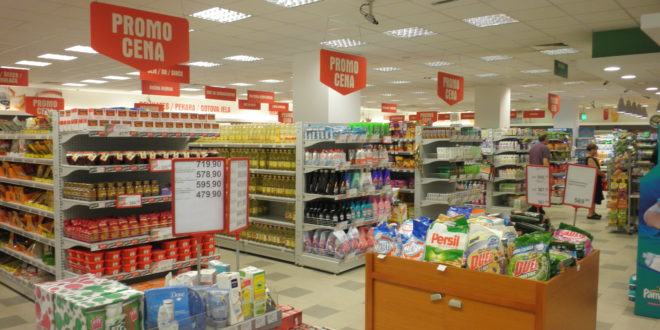
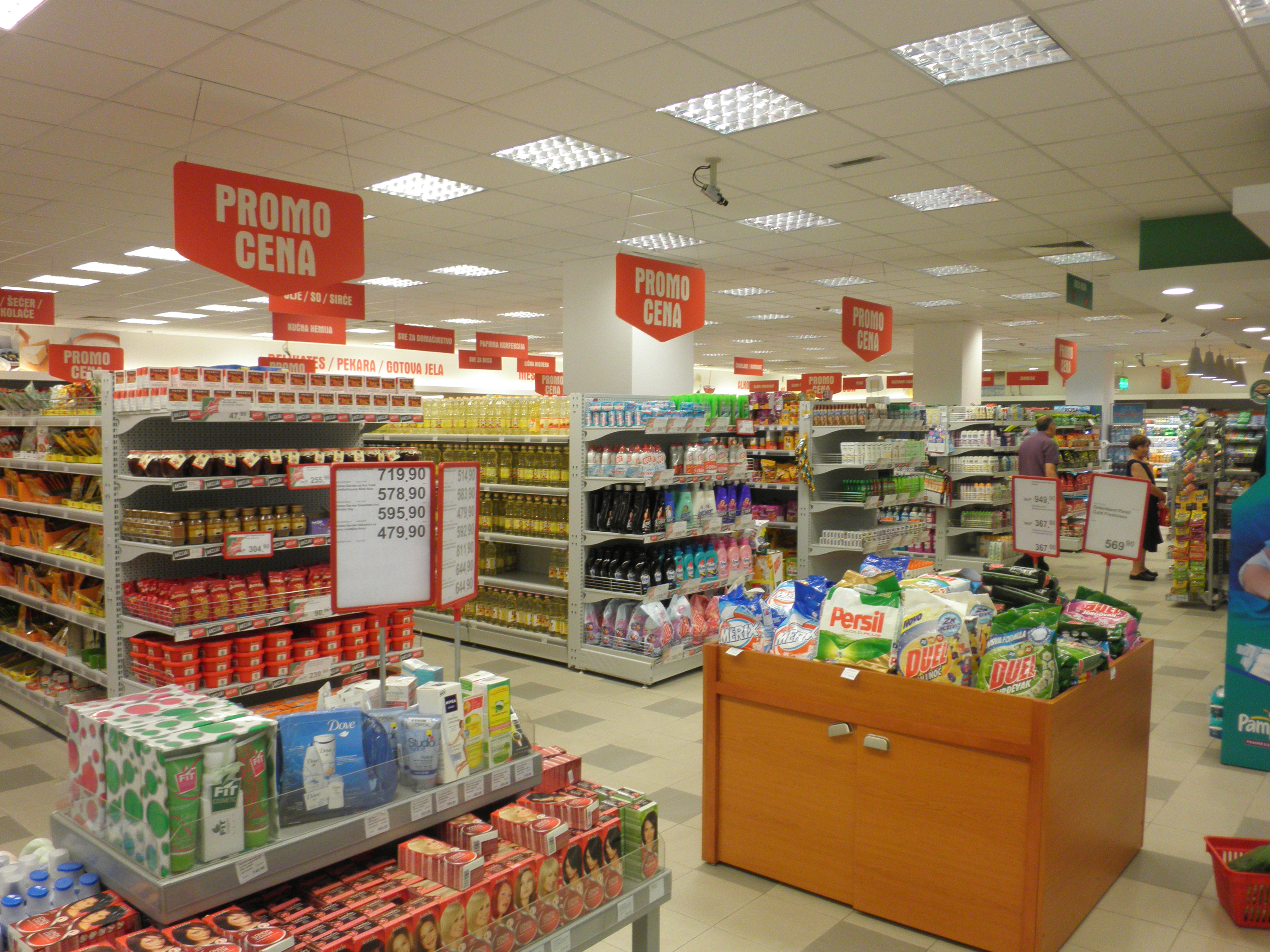
Unfortunately, over 25 years after the start of the transition from a planned to a market economy, domestic politicians have still not been able to understand how it functions and what are the appropriate measures to stimulate sustainable economic growth. In recent weeks, rumors have emerged in the public space that the government is about to impose an extremely dangerous regulation on retail chains, which will have a negative impact on the financial condition of the companies, the sector and the economy of the country. The commented regulation, in general terms, states that retail companies will be obliged to purchase 50% of the food sold through their retail network from Bulgarian producers.
The purpose of the proposed regulation is very clear: to stimulate Bulgarian food producers. The most common argument put forward in defense of this thesis is that traders are flooding the market with low-quality foreign food products. There are two main problems here.
The first is related to the fact that the state is clearly failing to fulfill its function of monitoring the quality of products that enter the state and are sold in the retail network. These are a number of state institutions that are financed by our taxes through the state budget, which are clearly failing to do their job in a sufficiently effective manner. The second is purely conceptual and is related to the fact that if a certain trader systematically offers low-quality products to its customers, the mechanisms of the free market will force it in a natural way to stop supplying these products, because consumers will not buy them and thus the trader will have to accumulate losses. An important point is that even at the moment traders prefer to work with local producers from a purely marketing point of view, and not because some regulation imposes it on them. Due to purely psychological factors, the Bulgarian consumer is looking for Bulgarian products and quite logically traders capitalize on this.
The idea of artificially imposing a 50% limit is devoid of economic sense, because its implementation will lead to many more problems than it can actually solve (if at all). On a practical level, the goal of every commercial company operating in a market economy is to make a profit through the sale of goods. The lower the cost of acquiring a certain product, the higher the profit that the trader will be able to receive upon successful sale of his goods. In cases where the sale of a product does not generate a sufficiently high profit for the trader, he simply stops selling it. The regulation that is currently being discussed with the Ministry of Agriculture is extremely dangerous because it limits the ability of businesses to effectively optimize their operating costs through the power of the free market, and this is the main driving force in a market economy.
In practice, what the state is saying is the following. We prohibit you from buying a certain product from Greece or Romania at 1 leva per kilogram, and for 1.30 leva from Bulgaria just because it is produced here. In this situation, the trader will be faced with the situation in which he will have to realize a loss of 30 stotinki for each kilogram of the respective product sold, if he fails to transfer the higher price of the product to the end consumers. In one case, the trader loses, and in the other, the consumer. Here, I even exclude the hypothesis in which, due to purely climatic, seasonal and force majeure factors, this product is not currently available on the market in Bulgaria. In this situation, the losing parties are many.
Bulgarian producers
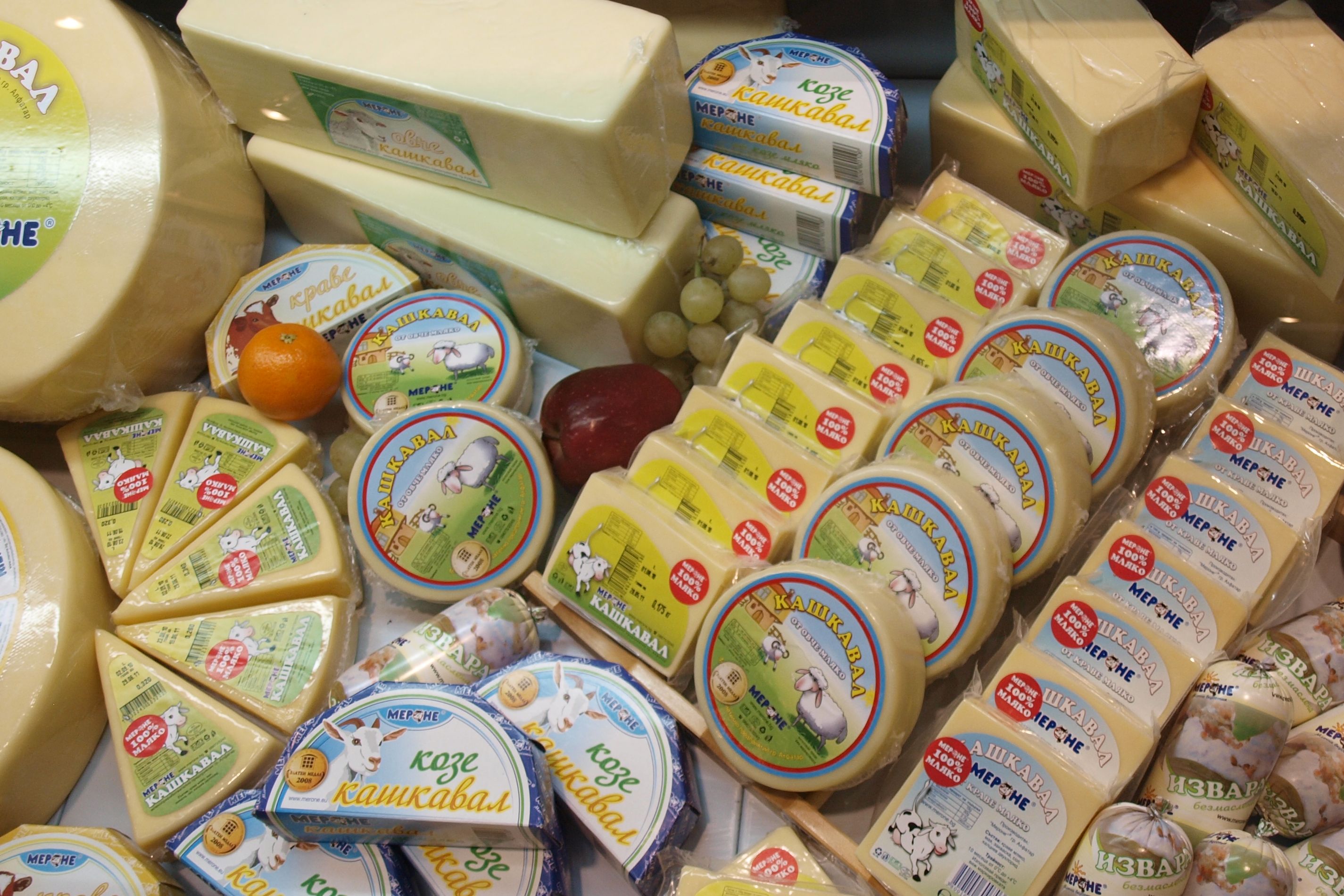
The fact is that even now, traders work mainly with Bulgarian suppliers simply because they manage to achieve competitive prices for the respective price class of products. This applies to the greatest extent to purely Bulgarian products that are specific to our cuisine and culture. This category includes all kinds of dairy products, canned goods and spices. In this aspect, the "invisible hand" of the free market perfectly fulfills its function of creating economic positives for the entire society by following the individual interests of producers, sellers and consumers, and the imposition of regulations by the state is absolutely unnecessary and would only worsen the equilibrium state of the market. This is an extremely elementary economic term that Adam Smith introduced over 250 years ago.
In other food categories, however, the situation is a little more delicate. Take vegetables for example. In order for a trader to have economic benefits in selling them, he must achieve a minimum selling price that covers his operating costs. Following this logic, in theory, it is extremely negative for him to have the state legally force him to buy tomatoes (for example) for 1.30 leva, when he can do so from neighboring countries for 1.00 leva. This would subsequently lead to a major distortion of the tomato market itself in our country, because Bulgaria, anyway, currently imports a huge part of its vegetables from abroad, because there is not enough local production to satisfy domestic consumption. That is, in order for traders to meet the requirements of the state, a non-market price increase will be created due to the artificial increase in product prices. As a last resort, traders will simply have to stop providing this food category to their customers, because under these regulations they will only accumulate losses. Trade will only recover when supply prices meet demand prices. This is taught in the first year of economics at every university.
If the state really wants to help Bulgarian manufacturers, it will simply have to start implementing economic policies that reduce their tax, administrative and regulatory burden, so that these companies can invest more in new machines and technologies that will improve labor productivity and, hence, the cost of production.
They lose users
The negative effects on consumers that will inevitably follow from the introduction of this regulation will be related mainly to increased costs and limited choice. If traders manage to pass on the increase in the prices of the products they sell to the end customer, they will see a reduction in their ability to consume other goods and services. On the other hand, if the trader fails to sell his products on the market at prices that cover his operating costs, he will simply be forced to stop selling the product in question, because there is absolutely no economic benefit from it. And in this situation, the loser will again be the end consumer, who will not have the opportunity to consume the product that has disappeared from the market.
Traders are losing
Retailers will be faced with the situation where they will have to make losses (if, of course, they fail to pass on the higher purchase price of the products to the end consumers) in the trade categories that fall within the scope of the regulation proposed by the state. This, in turn, will reduce their profit margins, which will have a negative impact on net profit. In this situation, businesses will be forced to optimize their costs in other ways, which are most easily achieved by laying off staff or reducing the salaries of employees, as well as suspending the implementation of future investment projects in the country.
In theory, from a macroeconomic perspective, these factors will lead to a limitation of economic growth due to the decline in investment activity, an increase in unemployment and a contraction in incomes. Considering that the majority of retail chains in Bulgaria are large international companies, this will also lead to a decline in foreign investment in the sector. As a secondary effect, investment projects in other sectors of the economy would also be questioned due to the unstable regulatory framework in the country.
Losing country
The biggest loser in this situation, however, is the state for the following reasons. The first and perhaps most significant reason is that such regulations directly increase the levels of uncertainty in any economy. They are extremely harmful because they send a negative signal to business that at any moment there is a real possibility that a regulation will be introduced that will increase the tax and administrative burden, or as is specifically the case with the commented regulation, limit their ability to effectively optimize their operating costs. A direct result of the increase in economic uncertainty is a decrease in the operating profit margins of these companies, which in turn leads to a decline in investment activity on the part of companies operating in the sector covered by the given regulation.
The second significant problem is that the discussion of such changes in the legislation shows a profound ignorance of the purely legal consequences of the introduction of trade restrictions in the European Union. At the moment, the EC has launched an investigation into similar protectionist regulations introduced in Romania and Hungary, which, on top of everything, are much milder than those being discussed in our country. In this context, even commenting on this type of policies discredits the ruling party.
Conclusion
We hope that commenting on this measure is simply a populist idea by the government, aimed at consolidating the electorate before the presidential elections, and that it will simply be rejected soon after, as has already happened several times with other controversial laws.
It is very important that the Minister of Agriculture does not succumb to populist and lobbying pressure. My personal impression of her is of a prepared expert who understands well how harmful the introduction of such a regulation would be for the country's economy.






Order alert from retail chains?
Not at all.
The chains certainly have their flaws. At least for me, the main problem with them is that some of them do absolutely whatever they want with their customers outside of pre-signed contracts, and they do it because they know that no one has the power to oppose them.
This particular regulation, however, is absolutely illogical from an economic point of view and everyone loses from it.