EKIP– Expert Club for Economics and Politics A Different Opinion
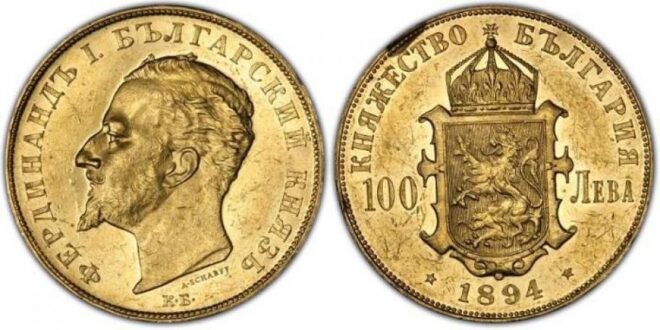
The debate for or against adopting the euro concerns the fate of the leva as the Bulgarian national currency. From this perspective, it seems logical to support the opinions expressed with arguments from the monetary past.
The monetary history of Bulgaria is a subject that does not lend itself easily to a short and meaningful presentation. It reflects important trends and specifics of the economic culture, the relationship between officially announced goals and the results of political actions. Therefore, we will pay attention to only one episode related to the birth of the Bulgarian lev. Based on the presented facts, one can assess what history gives and help reach an informed agreement on the monetary future.
A little background
Money has a long history on the Balkan Peninsula – coins were known and used in Antiquity and the Middle Ages. From the beginning of the 19th century, Bulgarians became actively involved in the economic life of the Ottoman Empire, whose economy was increasingly tied to the market, i.e. money became increasingly important.
By a law of 1844, the Ottoman authorities introduced bimetallism with a ratio of 15:1 between silver and gold (i.e., 15 kg of silver was officially worth the price of 1 kg of gold). This meant that gold and silver coins were legal tender.
Gold coins are used for larger payments, in international trade, etc., and silver coins are used for relatively smaller transactions. Small coins that are not made of precious metals are also used in everyday life: copper, nickel, etc. From a practical point of view, the bimetallic system standardizes money and facilitates exchange at different levels. The problem with it is the price ratio between gold and silver fixed by the state authorities. When the availability of one of the two metals increases or decreases, the market price ratio between gold and silver deviates from the fixed one. One of the coins becomes more valuable and disappears from the market.
In the late 1850s, the Russian vice-consul in Plovdiv, Nayden Gerov, wrote that the premium hindered the development of trade. Premium was the difference between the market and nominal (state-fixed) prices of silver and gold coins, i.e. prices were unstable and difficult to predict. Another problem was that in different cities of the empire, even identical coins had different values. In some cities, the Turkish gold lira was exchanged for 133 groschen, in others it reached 147 groschen. The difference in prices indicated a low degree of market integration. It is no coincidence that larger Bulgarian merchants were constantly interested in the exchange rate, because even the slightest inattention brought serious losses.
The Liberation
After the Liberation, the Bulgarian Principality was faced with the task of organizing its monetary system. The difficulties came from several directions. First of all, there was the overall economic backwardness. In the new Principality, there were no modern credit institutions and traditions, rural households were weakly tied to the market, and there was a lack of free capital. On the other hand, the new state authority had to collect taxes and make certain payments, i.e. it needed revenue. Last but not least, it should be noted that in the years before the Liberation, the price of silver on world markets fell. This continued after 1879 and led to the appearance of more and more silver coins and a decrease in gold ones. The latter were withdrawn from circulation and kept as treasures by the people who had them. One of the practical dimensions of this situation is that prices expressed in silver coins were relatively low, while prices in gold coins were high.
The Russian occupation troops in the Bulgarian lands from the beginning of the War of Liberation in 1877 to the formation of the first Bulgarian government in 1879 purchased their supplies with silver rubles and this money flooded the Bulgarian market. They circulated together with the found Turkish coins and with a wide variety of other, mainly silver, coins. According to the memoirs of Mihail Tenev (future governor of the Bulgarian National Bank and Minister of Finance), the country contained " abundant silver Hungarian mangers, Austrian florins, German thalers and marks, American dollars, English shillings and crowns, Spanish pesetas, Swedish, Danish and Dutch riksdalers, Indian rupees, etc., etc., as well as francs from the countries of the Latin Convention " (we are talking about the countries of the Latin Monetary Union: France, Belgium, Italy and Switzerland). Coins that have been so worn out that it is not clear which country they originate from are also circulating. The precious metal content in them is unclear.
The birth of the leva
In this situation, the Bulgarian rulers were forced to make a strategic choice for the country's monetary system. It concerned the role of the state in the creation of money and what monetary standard would be adopted. On May 21, 1880, Prime Minister Petko Karavelov submitted to the Second Ordinary National Assembly a draft "Law on the Right to Mint Coins in the Principality". There were at least two key points in his speech. First, he stated that the monetary system throughout the world was the same, i.e. bimetallic. The possibility of discussion and possible adoption of the alternative gold standard was excluded, because in the (incorrect) opinion of the Prime Minister, this issue had been resolved in the civilized world. Second, Karavelov pointed out that the Bulgarian parliament had to decide only how many gold coins were needed and when they should be put into circulation. In his opinion, gold coins "should not be minted for now". In other speeches in the National Assembly, Karavelov showed his dislike for gold and gold coins, because their introduction would lead to an increase in prices.
A few days after the bill was presented, a special committee brought it to the plenary hall for discussion and adoption. Its rapporteur stated that with this bill, Bulgaria adheres to the principles of the Latin Convention, which " is the most practical and the most commonly used ". Bulgarian coins will follow the system of French money, i.e. they will have the same weight, purity of the metal and ligature (i.e. addition of base metal). During the discussion of the bill, Stefan Stambolov spoke, who did not accept the name lev/stotinka, but proposed that Bulgarian coins be called franc and santim. He was categorical that money " should be the same all over the world. What are these Bulgarianizations of coins? I want the names to be the same as they are in France. " His opinion was not accepted by the majority. The last question raised in the National Assembly is about how and when Bulgaria will practically enter the Latin Monetary Union. The committee on the bill responds that this cannot happen "for now" because Bulgaria does not meet all the formal conditions. It turns out that the postponement is not temporary, because at least so far there is no open document with which Bulgaria applies for entry into the Latin Monetary Union.
In the first article of the adopted law, the right to mint coins was monopolized by the state. Thus, attempts by individual Bulgarian municipalities before the Liberation to mint their own local money were thwarted. The Parliament, at the proposal of the Minister of Finance, decided how many and what kind of coins would be minted. The lev, divided into one hundred stotinki, was introduced as the monetary unit. Despite some unclear moments, the bimetallism practiced by the Latin Monetary Union was taken as the basis of the Bulgarian monetary system. The difference between Bulgaria and the countries of the classical monetary union is that in Bulgaria there are no restrictions on the minting of copper and silver money. It is envisaged that Bulgarian coins will be gold coins of 10 and 20 leva, silver coins of 5, 2, 1 leva and 50 stotinki, and copper coins of 10, 5 and 2 stotinki. They are designated as legal tender. All transactions of the state and all its monetary documents are expressed in leva and stotinki.
What does this short story give?
It is impossible to predict exactly how the past will affect the future. Today's lev is not the lev of the late 19th, mid- or even late 20th century. The facts examined show that if history gives anything, it is questions. Here are just two that should provoke thought and at least a small dose of healthy skepticism about the bright future of the euro in Bulgaria:
- Intentionally or out of ignorance, politicians who propose the adoption of the national coin resort to misleading the people's representatives. It consists in their assertion that the question of a bimetallic or monometallic monetary system has been resolved by the civilized world in favor of bimetallism. This is certainly not true. Can we be sure that they are not misleading us now with arguments in favor of the euro?
- What is declared in a law does not always become reality. The real or fictitious advantages of the bimetallic standard are not realized. Years after the adoption of the law in 1880, a silver standard was in effect in Bulgaria (i.e. silver coins were used), and at the beginning of the 20th century, a transition to a gold standard was made. Can we be sure that the real or fictitious advantages of the euro will become reality?