Pencho Penchev December 23, 2022 Culture and History, Education
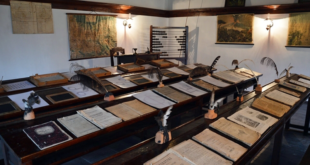
Широко разпространено клише гласи, че образованието е универсално полезно, че който се учи, той ще сполучи, а „науката е слънце“. Икономическият превод на това твърдение намира израз в хипотезата на Нобеловия лауреат Гари Бекер, че образованието е инвестиция, която дава високи доходи, защото увеличава производителността. Здравият разум предполага общоприетите истини …
More » Pencho Penchev January 26, 2022 Culture and History, Society
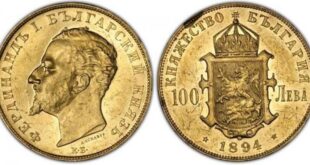
The debate for or against adopting the euro concerns the fate of the leva as the Bulgarian national currency. From this point of view, it seems logical to support the opinions expressed with arguments from the monetary past. The monetary history of Bulgaria is a matter that does not lend itself easily to a short and meaningful presentation. It …
More » Pencho Penchev July 29, 2021 Culture and History, Society
In a previous post, we showed some of the reasons why the political system cannot be relied on to successfully solve socio-economic problems (see here). The theory of regulatory captivity and Bulgarian economic history revealed how the interaction between management structures and interest groups ends in a conspiracy against society and the plunder of resources. …
More » Pencho Penchev June 15, 2021 Culture and History, Society
...between those at the state table and everyone else. The restoration of Bulgarian statehood in 1878 marked the beginning of a deep class division in the Bulgarian nation. From the very first days and months of the Third Bulgarian State, two classes quickly and spontaneously formed. One can be conditionally defined as taxpayers, and the other ...
More » Pencho Penchev January 17, 2021 Culture and History, Society
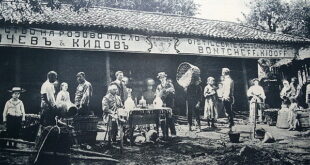
The market process played an important role in the development of Bulgarian society before the Liberation. It steadily penetrated even into spheres and areas that were perceived as isolated from it. Its spontaneous manifestations left an imprint on educational work, cultural institutions and social life. Read through the prism of voluntary exchange, supply and demand …
More » Pencho Penchev May 12, 2020 Politics
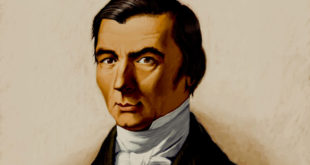
In the mid-19th century, the French economist Frédéric Bastiat gave perhaps the most brilliant definition of what a state is. It is “the fiction by which everyone wants to live at the expense of everyone else.” At the same time, another French-speaking economist, Gustave de Molinari, wrote an article in which he questioned the state’s …
More » Guest Author October 29, 2019 Culture and History, Society
Author: Georgi Georgiev The topic of the forcible seizure of property in the form of various taxes and levies is key to libertarianism (“taxes are theft”). If we take into account the skeptical attitude towards the way tax revenues are spent by most modern Bulgarians and the actions aimed at avoiding taxation, then the majority …
More » Theodore Karakolev May 20, 2019 Editor's Choice, Culture & History, Society
From a historical and political point of view, there is no way to dispute the Liberation of Bulgaria from the Ottoman Empire after the Russo-Turkish War in 1877-78. This was the beginning of the new Bulgarian state with a relatively independent policy in all spheres of life, which gave many freedoms to Bulgarian citizens – or at least those who were lucky enough to have them …
More » Ivelina Petrova October 23, 2017 Culture and history
1. Stefan Ivanov Hadzhienov / Hadji Enyo (1809 – 1894) The founder Persistent, skillful, enterprising, the Bulgarian emigrant in Bucharest managed to gain an enviable position as a large merchant and landowner. He was a prominent Russophile and an active participant in the activities of the “Virtuous Company” in all its cultural, educational and political affairs. He provided significant …
More » Kaloyan Pravov October 05, 2017 Diary of human action
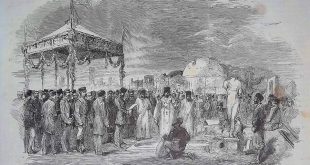
On October 5, 1879, the Governor-General of Eastern Rumelia, Prince Alexander Bogoridi, laid the foundation stone for the restoration of Stara Zagora. The city was almost completely plundered and destroyed by the advancing Ottoman army of Suleiman Pasha during the War of Independence, and its inhabitants were subjected to mass extermination, in which nearly 8,000 Bulgarians died. …
More »  EKIP– Expert Club for Economics and Politics A Different Opinion