EKIP– Expert Club for Economics and Politics A Different Opinion
From a historical and political point of view, we cannot dispute the Liberation of Bulgaria from the Ottoman Empire after the Russo-Turkish War in 1877-78. This was the beginning of the new Bulgarian state with a relatively independent policy in all spheres of life, which gave many freedoms to Bulgarian citizens – or at least those who were lucky enough to remain outside the borders of the Ottoman Empire. However, culture and art develop in their own way, and beyond the positive assessment of obtaining political freedom, we can still comment on whether this freedom could not have been used in a different way.
It is the praxis in some spheres of life of post-liberation Bulgaria that led to a period of about one generation of hiatus* – i.e. a break in the tradition of the predecessors in the relevant spheres of life. The reason for this unnecessary break in the tradition? Theoretical – the complexes of the young Bulgarian state to quickly become a “European” one, practical – the actual legislation and practice of the institutions in our country in the first decades after 1878.
I will pay attention to the visual arts and architecture. Two spheres in which the Bulgarians of the 19th century had centuries-old traditions of distinctive, original and quality culture. Of course, “distinctive” should not be taken as an absolute – every culture is influenced by its neighbors, takes some things or rejects others, but the end result is something of its own and different, which makes it unique and valuable.
In the first years after the Liberation and the subsequent adoption of the Constitution, the new state began to be built. In 1881, an important legal act for our topic was adopted - Rules for the Construction of Private Buildings in the Bulgarian Principality. It practically closed the doors to Bulgarian master builders, as it required academic education for those entitled to construct buildings in our country.
For many people, this is probably a logical action – Bulgaria is emerging from the medieval chaos of the Ottoman Empire to enter Europe, where people study at an academy or university, receive an education and build strong and beautiful buildings. The fact that Bulgarian craftsmen did not go through academic schooling, however, does this mean that they cannot achieve this – and have strong, comfortable and beautiful buildings (to paraphrase the famous three principles of architecture from Vitruvius)?
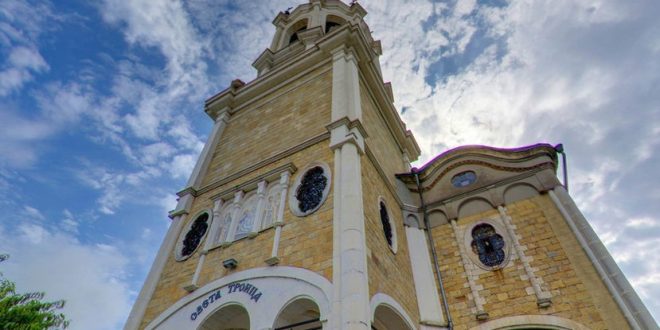
For political reasons – not because of incompetence – Bulgarian architects show their qualities in the construction of Christian churches. I will not bother readers with unnecessary details about individual churches from the Revival. I will only note that the need for such buildings in many of our cities is still met by churches built during the Revival. Some of them have survived severe earthquakes without major damage. The Holy Trinity Church in Svishtov, built in the 1860s by Nikola Fichev (Kolyo Ficheto), is still impressive today. The church was renovated after the severe earthquake of 1977, but it has withstood much better than a number of other buildings in Bulgaria and Romania, built later by academically trained architects.
Three decades earlier, the impressive Catholicon of the Rila Monastery “Nativity of the Virgin Mary” was erected, which is impressive to every art lover in the world. Also erected by Bulgarian masters, it is in wonderful condition even today, nearly 200 years later. We look at these buildings as abstract historical sites, but look around your city, see the buildings that are 50 years old (the difference in maintenance is clear, but still), and judge for yourself whether these are self-taught anonymous masters or real quality builders.
And these are no exceptions. The Metropolitan Church of the Assumption of the Virgin Mary from the 1850s in Plovdiv is still the main one of the Plovdiv diocese. The same applies to the cathedrals of Sliven, Silistra, Ruse, etc., in which the Renaissance masters did their job well enough for 200 years to come.
Of course, we can note that churches are a different type of building from those that the new young state needs. I will dwell on them, but still the churches are a very good and indicative example. Until 1878, Bulgarian craftsmen were good enough to build strong and stable churches, but a little later – not anymore. In fact, the only thing that changes is the state's attitude towards them, a very simple regulation. The result?
Instead of the new socio-economic conditions giving the young state large and impressive buildings that inherited the uninterrupted tradition of Bulgarian masters since the time of our medieval kings, a number of foreign architects came here, literally "copying" from Western, Northern and Eastern eclectic styles that "flourished" in Sofia, Plovdiv, Varna, Burgas and others. The centuries-old tradition was interrupted for several years.
You might say – yes, but a Bulgarian master does not have the skills for the new, much larger dimensions, there is no one to build the Varna Cathedral. In fact, it was architecturally designed by the foreigner Vasily Maas, but the actual construction was entrusted to one of the unfortunate unschooled masters who built dozens of wonderful churches around the country – Gencho Kanev. The Alexander Nevsky Cathedral-Monument in Sofia began to be built only in 1904, when there were already dozens of academically graduated architects in our country.
Let's also look at secular architecture. The other important thing, besides churches, for Bulgarian society – before and after 1878 – are schools. The "Yellow School" built by Bulgarian craftsmen in 1868 for the building of the Men's High School in Plovdiv is still used for educational purposes, now as part of the Academy of Music, Dance and Fine Arts (the building is currently under renovation). Architect Gencho Kanev, who was mentioned at the Varna Cathedral, is the builder of the Aprilovo High School in Gabrovo, a still functioning secondary school. Although with some repairs and strengthening, the building is still functioning today. Kanev also built the konak in Veliko Tarnovo, where the new Constitution was adopted – although this building was rebuilt later, it fulfilled its role as the first Bulgarian assembly in a worthy manner.
There is no point in paying attention to the private houses of Bulgarians, rebuilt by local “self-taught” craftsmen – although it is important to note that a large part of the buildings we see in the “architectural reserves” were rebuilt in the 1960s, and some are completely new buildings. However, this is due to decades of neglect and a complete lack of care until around the 1930s. Those for which there was minimal care still stand today and perfectly fulfill the Vitruvian principles of beauty, stability and comfort. And without sounding scandalous, we can ask ourselves – was it necessary to ban Bulgarian craftsmen and impose only foreigners to build the appearance of our new cities after the Liberation? Artificially, instead of with state “support”, with a state “barrier”, to stop the Bulgarian tradition and replace it for 20 years with a foreign one?
What happened is completely understandable and we cannot judge the Builders of the new Bulgaria of the 1880s and 1890s. For them, Europeanization did not only have an intangible side, such as the forging of modern laws, modern hygiene, technology, etc., but also a visual material side - we had to be in the "classics", in the "European style", which was actually quite eclectic at the time. However, the result is precisely this interruption of the tradition of the completely equal in skills masters of the Revival, whose aesthetic views were lost for about 20 years after the Liberation, at the expense of blind copying of European and Russian aesthetic models. And all this not because of the incompetence of the Bulgarian builders, but because of a poorly written law through which the state, instead of supporting local culture, actually stopped it.
(in the following text we will also examine the development of painting)
* - Hiatus is a term archaeologists use for a layer when life at a site is interrupted, often due to destruction or fire, and a new layer is placed above it, often unrelated to the tradition of the previous one.