EKIP– Expert Club for Economics and Politics A Different Opinion
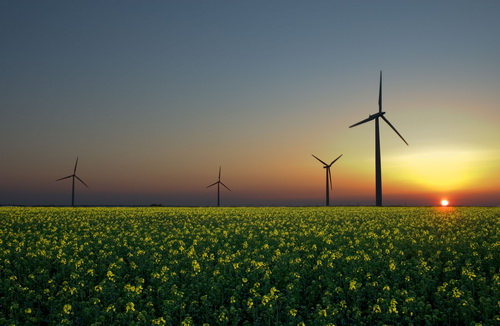
We can expect green energy producers to join the wave of protests against the government very soon. Earlier this week, the parliament's budget committee proposed that revenues from the sale of energy from renewable energy sources (RES) be taxed at a 20% rate. The idea for the tax is included in the draft budget for 2014, which will be voted on (and most likely approved) in the plenary hall at second reading next week.
In a press release, the Bulgarian Wind Energy Association (BWEA) condemned the proposed fee as a "hasty, ill-considered and bordering on arbitrary decision" that "will irreversibly compromise the future development of the Bulgarian energy sector and the economic situation of the country." The Executive Director of the Bulgarian Photovoltaic Association (BFA), Meglena Rusenova, described the fee as an act of nationalization of private capital.
Apparently, the main line of defense of RES energy producers is to present their activities as something new - an alternative and a reform in the Bulgarian energy sector. Since the opinion that there are serious imbalances in the domestic energy sector is generally accepted, they are purposefully trying to suggest that they are doing something that changes the status quo for the better. In addition, RES energy producers are trying to appeal to businessmen from other sectors of the economy and to people who are "right-wing" thinking, equating the proposed 20% tax with nationalization.
If we allow ourselves to fall into the trap of the artificially created debate (to which the media also contributes), we will necessarily have to take a position "for" or "against" the fee. We will either have to approve of the ability of politicians to arbitrarily impose fees and taxes, or defend lobbying and the practice of accumulating benefits through connections with power. But there is another approach - we simply have to ask ourselves how did we get here?
A few years ago, Bulgarian politicians made a "European commitment" to develop renewable energy production. But since electricity production from renewable energy sources is relatively more expensive than from conventional sources, the state committed to buying green electricity (specifically, NEK) from private producers at prices that would cover their costs and provide them with some profit. This attracted serious capital to the sector, leading to the spontaneous emergence of wind farms and photovoltaic parks.
However, Bulgarian politicians have a commitment not only to the European Union, but above all to their electorate. The state buys green electricity at a price set by it, but it also determines the price that end users pay for the resource.
Thus, in the last few years, it has been purchasing electricity from renewable energy sources at a price that would ensure the existence of green energy producers, but at the same time it also sets the final price of electricity at a level that would not cause huge dissatisfaction on the part of consumers. But these are two contradictory promises - a high purchase price for producers of a resource and a low selling price for consumers of the resource. Sooner or later, one of the promises will be broken, and it is not excluded that both cannot be fulfilled.
In February of this year, the GERB government resigned, with the official version being that this was dictated by the protests at the time against high electricity bills. In this regard, one of the first things the current BSP-DPS government did was to reduce the price of electricity. At the same time, the liabilities of the state-owned NEK are enormous and the deepening of the company's problems could create serious turmoil in the energy sector. Since the ways to help it are limited by EU regulations, and since politicians apparently believe that there is a connection between staying in power and the price of electricity, the government has decided to break its promise to green energy producers.
Experts from the sector have warned that imposing a 20% tax on the sector's revenues will lead to its disappearance. Should this worry us? If this forecast is correct, we should expect bankruptcies of companies, an outflow of capital and job losses. But the decline in production and the rise in unemployment will be the beginning of a process of eventually attracting these now free production factors to those sectors of the economy that can pay for their services without state subsidies.
The commitment of capital and labor by green energy producers is currently possible not because consumers are concerned about the effect of electricity production on nature and are willing to pay a higher price to consume "cleaner" electricity, but because of state aid in the form of guaranteed purchase at a price that consumers are not willing to pay themselves. The proposed 20% fee is an attempt by the state to counteract the consequences of its previous intervention through one intervention, and the latest one will inevitably also have its negative effects (it will most likely send negative signals to potential investors - and not only to those who seek benefits through power). Therefore, the state should have nothing to do with the energy sector, which should accordingly be fully liberalized.