 EKIP– Expert Club for Economics and Politics A Different Opinion
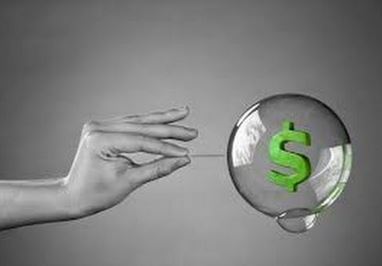 As September approaches, market participants are increasingly anxiously awaiting the Federal Reserve's (FED) decision on the key interest rate in the United States. Will the world's most influential central bank raise the key interest rate, which has been in the range of 0.0-0.25% since late 2008? How will this affect the dollar, whose price is currently relatively high, especially against emerging market currencies? How will such a decision affect financial markets and economic growth around the world? Many questions that create a lot of uncertainty about the future of the global economy.
How did it get this far?
We must not forget that it was the Fed that contributed significantly to the current state of emerging markets, after it launched its printing press at full speed at the beginning of the Great Recession in order to flood the markets with liquidity and keep the price of financial assets artificially inflated. In addition to reducing the key interest rate to 0%, the Fed launched several asset purchase programs, which further poured dollar liquidity into the markets. Emerging markets at the beginning of the Great Recession proved to be a good buffer against weak economic activity in the developed world and were a major driver of global growth. However, the picture is much different now. Not only are debt levels in the developed world higher than they were 6 years ago, but thanks to high dollar liquidity, external debt in emerging markets (both public and private) has reached unprecedented levels. A series of Fed rate hikes would be the final nail in the coffin for dollar-debt-addicted emerging markets, and the global economy as a whole. Because this time, emerging markets will not be able to come to the aid of the richer ones.
Only China still has buffers to draw on, but it is in much worse shape than it was in 2008. The country has increased its debt many times over, and most of the bubbles there have begun to burst one by one. The commodity bubble has already burst, with prices at 13-year lows, and oil continues to sink due to rising supply and stagnant demand. Financial markets remain the last bastion, which to my surprise has held out much longer than I expected. [1] Stock and bond prices have long since fallen short of economic reality due to the constant printing of money by central banks, but that can hardly last forever.
If the Fed starts a series of rate hikes in September, the days of the financial market bubble are certainly numbered. But interest rates are unlikely to be raised. The latest data on the US economy is not very positive, inflation is low, and the dollar is expensive. Add to this the huge exposure to dollar debt in emerging markets and their fragile economic situation at the moment, and the US central bank is unlikely to score an own goal by tightening monetary policy. Rather, the inevitable will once again be postponed. As Japan has shown us for 20 years, with a rich arsenal of financial tricks, solving problems can be postponed for a long time.
[1] But we should not forget that the local stock market bubble began to burst 2 months ago, after its inflation began with the halving of the interest rate in November last year.






One comment
Pingback: The devaluation of the yuan – “market reform” or a desperate attempt to stimulate the economy? - EKIP - expert club for economics and politics