As September approaches, market participants are increasingly anxiously awaiting the Federal Reserve's (FED) decision on the key interest rate in the United States. Will the world's most influential central bank raise the key interest rate, which has been in the range of 0.0-0.25% since late 2008? How will this affect …
More »How will a potential Grexit affect the euro?
Five years after the start of the debt crisis in Europe, which was triggered by the global financial crisis, which later turned into an economic one, Greece is once again at the center of debates about the future of the European Monetary Union. Unlike in 2010-2012, however, the main attention is now paid to Greece, due to the fact that the other …
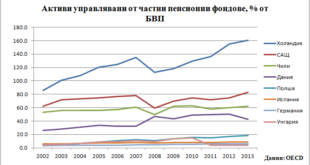
More »When will we catch up with the Chileans (in terms of pensions)?
Often, when something in the economy or politics of their home country is bothering them, Bulgarians start comparing themselves to the countries of Western Europe and the United States, which are supposedly considered models of the good life. However, the Western world has changed a lot in the last few decades, from a symbol of capitalism and ...
More »What's behind Britain's economic "recovery"?
Six years after the collapse of Lehman Brothers, the UK is one of the few developed economies to have managed to regain its pre-crisis level of output (measured by gross domestic product) and is even expected to be the fastest-growing economy among the G7 countries this year. In the third quarter …
More »Whose interests does the ECB protect?
"The European Central Bank (ECB) is the central bank responsible for the single European currency, the euro. The ECB's main task is to maintain the purchasing power of the euro and, consequently, price stability in the euro area. The European Central Bank is committed to performing efficiently all central banking tasks entrusted to it, and in doing so …
More »What will the ECB's new monetary measures lead to?
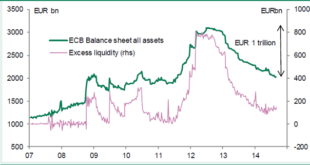
The short answer to the question in the title is “nothing,” or at least none of the goals that European central bankers state to the public. But before that, let’s take a look at the details of the decisions. At its last meeting on September 4, 2014, the board of the European Central Bank (ECB) took several measures that …
More »Is there any sense in international organizations regarding the state of the global financial system?
Almost six years after the bankruptcy of Lehman Brothers, which officially marked the beginning of the latest global financial crisis and the subsequent Great Recession, almost all international institutions of the rank of the International Monetary Fund (IMF) continue to strongly advise governments around the world to use various forms of fiscal and …
More »Ballooned Recovery – Part 3: The London Real Estate Bubble
We have written on this blog many times about bubbles created in various sectors of the economy “thanks” to government intervention in one form or another. Most often through manipulation of interest rates and provision of monetary stimulus by the central bank or government intervention in the form of fiscal stimulus and certain legal …
More »The invisible effects of introducing an APR cap
It seems that the amendments to the Consumer Credit Act will be approved by parliament. According to the advocates of these amendments, they will benefit the consumer, protecting him from some allegedly bad practices of credit institutions. However, politicians often pay attention only to the visible effects that a law creates …
More »What did we learn from the first Fed meeting with Yellen's participation?
The first meeting of the Federal Open Market Committee (FOMC) with the participation of the new Fed Chair Janet Yellen rather surprised the markets with Yellen's statement that within six months (i.e., March 2015 at the earliest) after the end of the current Fed program...
More »
EKIP– Expert Club for Economics and Politics A Different Opinion