“In economics, every action, custom, institution, or law, produces not just one result, but a series of consequences. Of all of them, only one consequence is immediate; it appears simultaneously with the cause (and the action); it is visible. The other consequences appear later; they are invisible; we are lucky if we can foresee them.” …
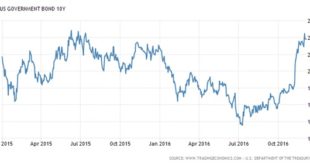
More »Is it a risk or a security to invest in long-term government debt?
In a world where market signals are confused, central banks – extremely dependent on macroeconomic indicators, reforms, savings and investments with their own capital – are left on the back burner, and economies are so fragile in the face of unpredictable events, it is interesting to go back to basics and analyze through the eyes of economic laws and …
More »History and representatives of the Austrian School of Economics
Chapter II. You can see the front parts HERE and HERE How did the Austrian School of Economics originate? In order to more fully and comprehensively understand the contribution of the "Austrians" to economic science, we need to briefly familiarize ourselves with the origin and evolution of their ideas, with the important names in history, and with the result of ...
More »Introduction to the Austrian School of Economics
Chapter I, Part 1* Nowadays, many people feel that the explanations of crises and social processes are incomplete, if not completely wrong. The process repeats itself - political formations change, promises are replaced, and disappointments are not long in coming. Change is needed, but not led by the hope for new state "saviors", ...
More »Argentina's sobering up – if not now, when?!
Argentina is definitely a country with a number of instructive examples in its history, reminiscent of the well-known expression “don’t try this at home.” Its economic past hides a whole series of harmful and destructive policies - state regulations and price controls, nationalization, accumulating budget deficits and defaulting on the country’s foreign debt…
More »How state management of the economy pushed Brazil into recession
Since coming to power in 2003, Brazil's Workers' Party has pursued an economic policy of creating wealth through increased public spending. Until the end of 2010, this model seemed to be working successfully. Government spending rose, consumer demand rose, and economic growth accelerated at an extremely rapid pace.
More »The devaluation of the yuan – “market reform” or a desperate attempt to stimulate the economy?
In recent days, we have witnessed a sharp sell-off in global stocks. The negative trend in Asia, led by the stock market crash in China, has also spread to the capital markets in the US and Europe. The speculative bubble in the Chinese stock market is starting to deflate, and monetary authorities are doing everything they can to …
More »No, tax breaks are not subsidies
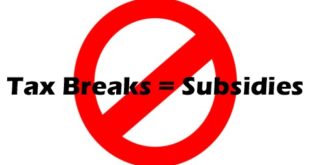
There is a widespread misconception that tax breaks for an industry are no different from subsidizing it. Unfortunately, like many other economic myths, this one just won’t die. The video game industry is one recent example. For years, critics have argued that game developers are given an unfair advantage…
More »What do we mean by increasing the volume of public spending?
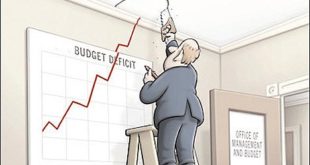
In March, Bulgaria placed three Eurobond issues on international markets for a total value of around EUR 3.1 billion. The issues were considered successful given the good yield achieved compared to the 10-year Eurobonds issued in the summer of 2014 for EUR 1.5 billion. Although the country’s need to exit …
More »Should we expect a tightening of monetary policy in the US soon?
Several years after the start of the financial crisis and the subsequent launch of the quantitative easing program, politicians and central bankers reported a positive change in the values of some economic indicators, reading this as a signal of an improvement in the general situation of the economy and the labor market. In order to achieve some of the desired …
More »
EKIP– Expert Club for Economics and Politics A Different Opinion