In recent days, public discussions have taken place to adopt the new management plans for the Vitosha, Pirin and Rila parks. As expected, two camps have formed in the debates. The first – and larger – is of a wide spectrum of people (athletes, architects, mayors, economists, etc.) who want to replace the lift facilities …
More »How state management of the economy pushed Brazil into recession
Since coming to power in 2003, Brazil's Workers' Party has pursued an economic policy of creating wealth through increased public spending. Until the end of 2010, this model seemed to be working successfully. Government spending rose, consumer demand rose, and economic growth accelerated at an extremely rapid pace.
More »Will Vitosha have a future after the local government elections?
Yesterday, a meeting and discussion on the topic "The Future of Vitosha" was held, organized by "Green Laws" and "For Nature to Remain in Bulgaria", at which mayoral candidates from several parties, including the "Greens", the Reformist Bloc, etc., as well as representatives of the lists for municipal councilors from the lists of the "Serdika" Coalition and ...
More »For September 9th
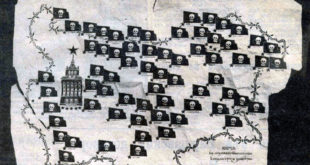
On this day 71 years ago, Bulgarian communists staged a coup d’état and seized power in Bulgaria. Today, their successors once again celebrate the “bright holiday,” trying to convince us of what an achievement communism was for Bulgaria. Let us recall this chapter in the country’s history. The red narrative of the events is that …
More »The devaluation of the yuan – “market reform” or a desperate attempt to stimulate the economy?
In recent days, we have witnessed a sharp sell-off in global stocks. The negative trend in Asia, led by the stock market crash in China, has also spread to the capital markets in the US and Europe. The speculative bubble in the Chinese stock market is starting to deflate, and monetary authorities are doing everything they can to …
More »“Who will take care of the poor?” – the answer of economic theory
One of the most frequently put forward arguments in favor of the government redistributing funds through the so-called "welfare state" states: "If there are no state institutions to collect money in the form of taxes and then direct it to those in need (i.e., the poor), the latter will not be able to ...
More »The direct economic effects of the minimum wage
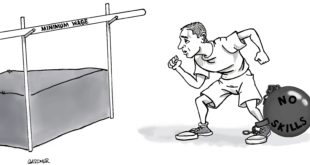
The minimum wage (MW) has been an extremely hot topic lately. After yet another increase in the minimum wage threshold to 380 leva at the beginning of the month, we recently learned that a draft of the Council of Ministers proposes that the minimum wage level be fixed between 35% and 55% of the average. We often hear complaints about …
More »An efficient capital market in Bulgaria – mission impossible
Nikola Filipov We would probably all agree that a functioning capital market is of fundamental importance for a developed market economy. A number of economic studies clearly reveal the strong correlation between market capitalization and the level of GDP per capita in an economy. The positives – both corporate and …
More »Greece and the impossibility of statism
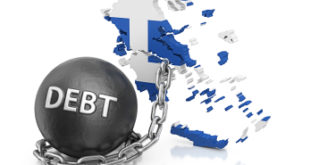
Two days ago it became clear that the European Commission is proposing a new bridge loan for Greece. The idea is that our southern neighbor will receive 7 billion euros, maturing in 3 months, with the money to cover the repayment of its debts to the IMF (3.6 billion euros) and the European …
More »Why are we economists?
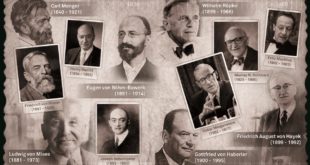
Ivo Kolarov "It is impossible to understand the history of economic thought if we do not pay attention to the fact that economics as such is a challenge to the conceit of those in power. An economist can never be a favorite of autocrats and demagogues. For them, he always remains a troublemaker, and the more convinced they are...
More »
EKIP– Expert Club for Economics and Politics A Different Opinion