 EKIP– Expert Club for Economics and Politics A Different Opinion
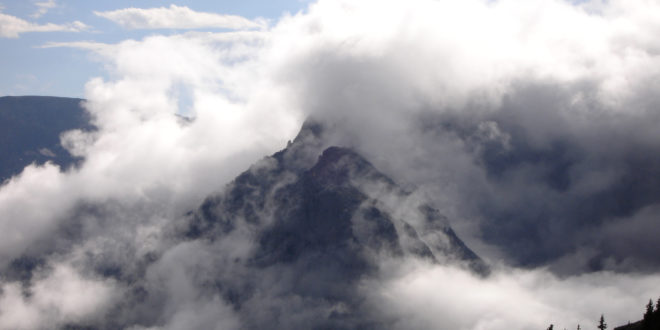
 Вчера се проведе среща дискусия на тема „Бъдещето на Витоша“, организирана от „Зелени закони“ и „За да остане природа в България“, на която кандидати за кметове от няколко партии, сред които „Зелените“, Реформаторски блок и др., както и представители на листите за общински съветници от листите на Коалиция „Сердика“ и ГЕРБ, представиха вижданията си – и респективно политическите действия, които можем да очакваме от тях – за опазването на планината. Те дискутираха три въпроса, а Тома Белев от „Зелени закони“ представи експертно становище по всички теми. Разгледаните въпроси бяха: идеята за разширяване на зоната за застрояване с нови 36 хектара; достъпът до планината и развитието на туризма; водите на Витоша.[1] Нека разгледаме какви идеи издигнаха евентуалните бъдещи управници на града и как ги аргументираха.
At the very beginning, I must note that all the invitees expressed agreement with Toma Belev’s opinions on each of the three topics. Therefore, there was no real debate between the participants, and the ideas they presented were, in most cases, simply variations on the proposals of “Green Laws”. Absolutely all participants in the discussion declared themselves “against” the expansion of the area from the Sofia part of the park, on which new construction is permitted. The candidate for mayor from the Reformist Bloc, Vili Lilkov, even analyzed the currently existing buildings and put forward the thesis that the owners of those of them that are not working full-time or are used for “private interests” should be forced to sell them or their property should be seized in favor of the municipality. The Greens' mayoral candidate Ivan Velkov used the term "black entrepreneurs" to describe the owners of privatized private properties, and Viktor Lilov of DEOS - in theory a liberal party in the classical sense of the word - stated that if the new plan does not limit the zones for new construction, then his party will do so.
During the discussion of the second question, more diverse proposals were heard, although again their overall focus was against privatization and private ownership. Ideas were raised for restoring the public transport lines to Vitosha (specifically to the Zlatnite mostove and Aleko areas), introducing electric buses, and “opening the mountain to Sofians” by nationalizing the private lifts. A surprise was the plan of Vili Lilkov, who proposed nationalizing the lifts and extending them to the ring road, where, according to him, they should connect with the metro lines. This project was not accompanied by an assessment of the buyback of the cable car from investors, its renovation, or the costs that the municipality would have to incur for the creation of a large buffer parking lot between the metro station and the lift and the operating costs for maintaining the lift itself. Of course, it was not clear whether, according to the participants in the debate, a nationalization procedure would not worsen the investment climate in the country and in Sofia in particular. Even more puzzling was the position of Viktor Lilov. He pointed out that Vitosha is currently closed to the citizens of Sofia (without giving any reasons why he thinks so), but also that a correct step on the part of the municipality would be to introduce a fee for using a private vehicle in the mountain. Lilov also expressed his regret that the lifts were privatized, rather than given out to a concession.
Alas, what was not heard in all the political talk was any economic argumentation for the positions put forward. None of the attendees even mentioned the economic concept of the tragedy of the commons, which I briefly explained to the speakers and the audience. [2] I received no answer to my question about what prompted each of the participants (including Toma Belev) to believe that state ownership and state management of the mountain could lead to something good. Viktor Lilov took the floor, whose answer unfortunately had nothing to do with economics. His comment can be summarized as follows: “The economy is important, but good-sounding promises are more important.”
Such a thesis is incorrect; we cannot avoid economic analysis when implementing any policy, because writing it off eliminates the possibility of assessing the impact of the policy itself. This frees the hands of every politician to do whatever he wants with taxpayers' money, without measuring whether the goal is profitable and achievable or what its cost is at all, as long as his idea sounds good in words. It is unnecessary to point out what populism and a surge in government and municipal spending such thinking would lead to. An economic analysis of the use of nature can be read in the article " The Efficient Division of Scarce Resources: In Defense of the Complete Privatization of Nature ".
In short, we heard a lot of good wishes in words, but no argumentation or economic assessment of their effectiveness or effects. One reason for this is probably the fact that – just like socialism – if the quasi-socialist “good wishes” for Vitosha were to come true, their effect would be negative, and the losses (real or relative) would be paid for by taxpayers, not by the politicians who proposed them. If any of those present were to be elected mayor of Sofia on October 25 and fulfill their promises, the economic future of Vitosha would be clouded, with the threat of an avalanche of property nationalizations and the expulsion of investors and a further deterioration of the business climate; i.e. we would witness the exact opposite of what Sofia and Vitosha need.
[1] In the comments on the third topic, the participants went into technical details that are not the subject of economics and I will not discuss them here. It can be pointed out that water also applies to generally valid economic principles. For more information, see the article cited below.
[2] The concept of the “tragedy of the commons” itself is not the subject of this essay. More detailed information about it can be found here.
* From personal conversations with representatives of both countries, it became clear that the Vitosha Ski company is being sold for 50 million euros - editor's note.
* Both Dragalevski, Simeonovski and Knyazhevski lifts have always been on municipal subsidy. Which after our accession to the EU is impossible or at least extremely difficult and that is why their denationalization or practical suspension was necessary - editor's note.




"and Toma Belev from "Green Laws" presented an expert opinion on all topics" - ahahah, the guy you're talking about has an 'expert opinion', hey
The Greens should take off their masks. We all know how they become active during elections, accidentally or not...
Oh my God. I don't know which side to take – Toma Belev presented an expert opinion. This bearded goat wiped out Vitosha. While he was illegally at the head of the park, he allowed the bark beetle to destroy hundreds of acres of forest. Now he brazenly states that this was due to human activity and that he wanted to be tripled. This same individual did not allow the facilities there to be renewed. The strangest thing for me at least is that after it was established that he had illegally managed Vitosha and was removed from his post, no one held him accountable. They simply let him go after all the mess he created. Now he feels untouchable and goes around throwing around his brains on how to do things. Belev is harmful to Bulgarian nature and the sooner the institutions realize this and hold him accountable for all the money he has drained with his senseless projects, the sooner our nature will recover.
Thank God that none of the self-proclaimed environmentalists - politicians have a real chance to get their hands on the mayor's seat, because nothing good awaits Vitosha and Sofia. Solutions such as nationalizing property and expelling investors will not solve Vitosha's problems. Another loud wish that we always hear before elections and no meaningful proposals that would bring the citizens and guests of the capital back to the mountains.
What did this "expert" call himself again? Now, what is his purpose in becoming a politician? It has long been known that his main activity is to obstruct. If, God forbid, he enters politics, it will be very dramatic...
And what happened? All the environmentalists instantly became politicians.