 EKIP– Expert Club for Economics and Politics A Different Opinion
 Ivo Kolarov
" It is impossible to understand the history of economic thought if we do not pay attention to the fact that economics as such is a challenge to the conceit of those in power. An economist can never be a favorite of autocrats and demagogues. To them he always remains a troublemaker, and the more they are convinced inwardly that his objections are well-founded, the more they hate him. "
Ludwig von Mises, Human Action
The need for economists is difficult to understand. In general, the need for people who study society and its actions in light of the fact that they do not produce any specific goods nor discover and explain fundamental natural laws like physicists, chemists, etc. makes their existence difficult to understand for most people. Not only that, but, as a famous Bulgarian entrepreneur points out: “economists are at the top of the social pyramid, with all those creating real value and innovation below them.” Quite unfair according to most people.
The free market, which is the basis of our economic prosperity, if it could speak, would hardly share the same opinion. The reason for this is that its existence is largely due to the development of economic science. Tracing the historical development of economic relations between people , we notice that as our understanding of how to most effectively and rationally distribute goods increases, so does our economic prosperity, which is the first role of every economist.
With the end of the Middle Ages and the beginning of the Renaissance, one of the first large-scale economic doctrines appeared - mercantilism. Its followers pushed for policies of increased protectionism, which limited trade relations between different countries. With the idea that each country should strive to limit its imports and accumulate more and more gold, without realizing that gold without free trade relations has no particular value, mercantilism limited the economic development of the world for three centuries, but also helped the initial accumulation of capital.
With this in mind, we can understand the need for economists. Thanks to the efforts and insights of William Petty and Adam Smith, the old economic order was rejected and a new framework was created that said the exact opposite – open up national borders and produce what you can produce best. This launched the economic revolution in Britain, which doubled the prosperity of the people in just a hundred years.
However, this was not enough for economists. They all sought to compete with the great minds of the past, which led to the creation of theories that better explained the functions of the market, the growth of human well-being, or in some cases completely negating everything past and developing new methodologies and views.
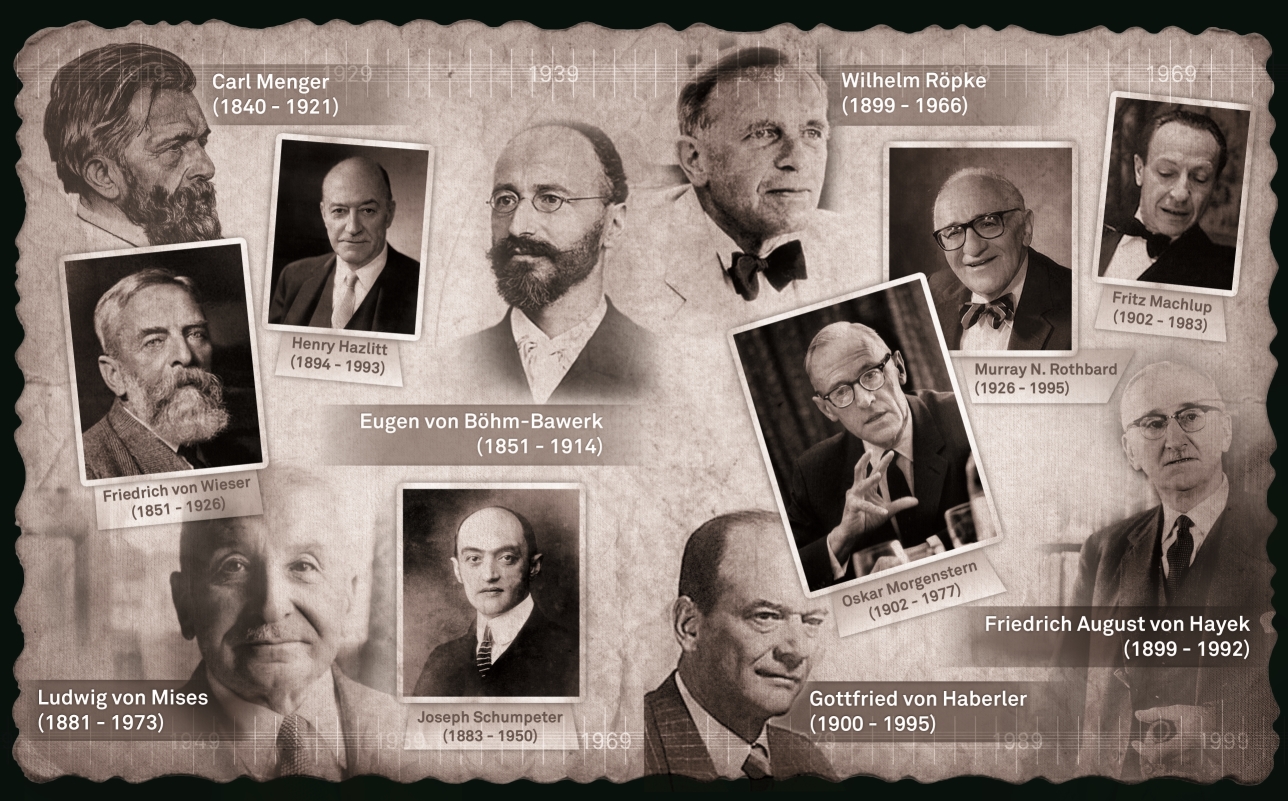
The truth is that economics has not always produced the right solutions. Like any other field of academic expression, many people try to distinguish themselves from all past authors in order to remain in history. Karl Marx is precisely such a theorist. By denying everything that came before and creating a populist ideology that is clearly not sustainable in comparison with the existing scientific basis of the time, he strives to remain in history. Here the second function of the economist is manifested: to fight against populism and untruth with all the means of his science. To read and reread someone else's hypothesis, to attack it intellectually from every side, to unravel and refute it until it is completely refuted. And when populism takes hold and spreads, thinkers like Mises and Hayek are there to limit and denounce it.
But when people today live better than ever and have more and more, they quickly forget the meaning of the economist who supposedly inhabits the top of the pyramid. At such moments, they are also most vulnerable to a possible “reminder”. The last financial crisis was just such an event. Governments around the world managed to create the crisis through demagogy and with the same demagogy to suppress it and probably postpone its real effects. The voice of the economist was drowned out by that of the people who were later ruined. Today, they have bowed their heads, willing to give up their personal freedom, some of their money and become hostages to the huge debt bubble that politicians are inflating.
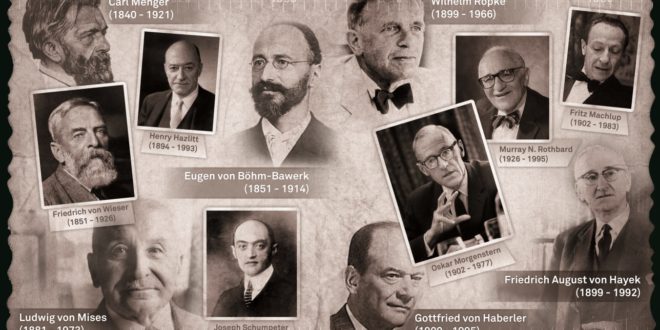
The spiritual successors of the great Austrian economists follow their postulates and fight more and more persistently with this economic order, fulfilling their third function – the fight against demagogy. Stepping on the fundamental foundations of praxeology and logic, they try to provide a sufficiently understandable explanation to ordinary people about why and how economic crises occur. However, the majority is not aware that the people who govern it are precisely the biggest culprits for its economic misfortunes. [1]
Therefore, to the question "Why do we need economists?" I answer that we need more economists. We need such people because we need people who seek the truth about what is harmful to society and can justify themselves with facts, not with agitation. People who are uncompromising in their intellectual pursuit of it and do not compromise with anything or anyone and find general economic well-being the center of their work, not the motto of an election campaign and instead of using populism and demagogy, they fight them with ever more ferocity.
[1] It is worth noting here that theorists of the Austrian School of Economics are quite able to predict impending economic crises with greater accuracy than many of their colleagues. More information on this subject can be found here.






The other day I came across an article by American journalist Finian Cunningham who beautifully says, summarizes everything - https://www.facebook.com/atanas.shalapatov/posts/1630500093894885
I am researching things globally and my conclusion is that the current financial system is based on false foundations and because of usury, continuous growth is needed, and this is impossible, and Prof. Jeffrey Sachs, advisor to the UN Secretary General, also says so.
In 2011, an interesting book by Richard Heinberg, The End of Growth: Adapting to Our New Economic Reality, was published.
The author makes a startling diagnosis: humanity has reached a fundamental turning point in its economic history. The trajectory of industrial civilization’s expansion is facing indisputable natural limits. Further growth will be blocked by three factors: resource depletion, ecological constraints, and the crushing burden of debt.
These interacting constraints, Heinberg writes, will force us to reevaluate cherished economic theories and rethink money and trade rather than continuing to pursue the impossible—an infinite increase in GDP.