EKIP– Expert Club for Economics and Politics A Different Opinion
The historical realignment [1] in the political philosophies of the parties across the Atlantic and in Europe is in full swing – socialist hawks against Russia, conservative pacifists and isolationists, right-wing protectionists and left-wing defenders of free trade and international agreements, modern left-liberals against local heavy industry and covering up blue-collar unionists and modern right-wingers in defense of smoking factories and local energy, side by side with the unions. If Ronald Reagan and Margaret Thatcher looked down on what their parties had become, they would hardly recognize them.
In Bulgaria, political realignment is also underway, albeit rather slowly compared to the West. The Bulgarian socialists are perhaps Putin's last bastion in European left-wing parties, after even Zeman and Mélenchon repented of their previous pro-Russian statements.
The new biggest political player, the PP, is wandering between mutually exclusive ideas and policies, being squeezed by its coalition partners into the impossibility of building its own political vision and identification. Rising inflation actually somewhat accelerates the rearrangement in economic policies, because as we know from Milton Friedman – inflation is a tax without a law. That is, the state treasury is filled at the expense of the purchasing power of consumers/voters, but it unties the hands of the government for any new state projects.
Inflation appears to be "supporting" the existence of two sectors that have become synonymous with public failure in recent years - state energy and state water supply.
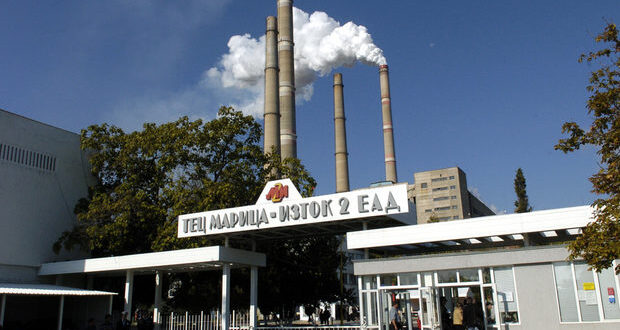
In the energy sector this week, even Capital was astonished by the huge profits that Maritsa-Iztok 2 has made, due to increased electricity prices and international demand for a cheap and secure energy source: "in just two months, the TPP has already fulfilled and exceeded its annual revenues for 2020 by 25%." [2] The state-owned TPP today sells electricity on the free market, which is more than twice as expensive as what the public and Bulgarian politicians considered insanely expensive as a partially fixed price in private "American" thermal power plants (TPP Maritsa Iztok 3 sells to the state at prices around 250 BGN, and TPP Maritsa Iztok 1 at just under 300 BGN, i.e. 2 to 3 times lower than the free market). With the cost of electricity, even with carbon quotas included, of around 260-270 BGN per MWh, we can expect the state-owned TPP to make a profit of over 150 BGN per MWh or over 200 million BGN from this period alone [3].
So, while just two years ago there was talk of technical bankruptcy and possible physical shutdown of the MI2 thermal power plant, due to accumulated losses of over BGN 605 million and debts of over BGN 864 million [4], today there is already a real prospect that the state-owned power plant will turn the inflationary shock into an effective weapon to melt its nominal debts and accumulated losses for several years.
A similar lifeline, albeit much more intricately woven, will probably be thrown to Sofia District Heating. The power plant, which has been transferred like a hot potato between the state and the municipality, and which is periodically saved with financial instruments between the Bulgarian Energy Holding and Bulgargaz, is today so hopelessly bogged down that even the American embassy has set out to save it with analyses and recommendations.
Sofia District Heating is nearly 1 billion leva in debt for natural gas, and it is unclear whether it has managed to pay the 250 million leva owed for carbon quotas to date. The uncovered losses are also shocking – over 700 million leva [5]. The lack of effective cogeneration in Sofia District Heating (although such have been offered for over a decade by potential private concessionaires/investors) prevents the company from recovering from natural inflationary processes, but the billions in profits in BEH will probably make another fire-fighting politically acceptable – why not save Sofia District Heating from bankruptcy and from predatory private investors with 1 billion leva, if BEH will make 2-3 billion leva profit this year anyway?
At a round table "Prospects for the Development of the Water Sector in Bulgaria" last week, dark colors were described that once again painted an ideal picture of state failure - already 15 years of "reform" in water supply, a special law still not adopted, losses of over 60-70% in the network, decapitalized state and municipal water and sewerage companies, collapsing projects due to rising construction materials and several areas on the verge of bankruptcy due to the shock in industrial electricity prices (where electric pumps are used) [6]. In all such discussions, however, the finger is always pointed at the unfinished consolidation of regional water and sewerage operators, which prevents the mythical 10-15 billion leva from being requested from the state and for it to give it. Years ago, this amount sounded impossible to finance from the public sector, but with the inflating of state revenues in this and the coming years, the assessment will probably change. Moreover, Brussels officials are currently frightened by Russian energy and financial influence and are inclined not to fight, but to completely rein in inflationary processes in order to pour hundreds of billions of euros into corrupt public projects in Eastern Europe (i.e., to show local politicians that Brussels can always beat Putin in the financial bidding).
The political realignment on the topic of state monopolies and companies began with GERB's second term, when the supposedly right-wing party gained amnesia for almost all of its right-wing election claims from 2009 and fully embraced the BSP's rhetoric for a "more active role of the state in the economy."
Overcoming the financial crisis of 2008-2009, GERB suddenly found itself with an overflowing state treasury and huge revenues in state-owned companies, which could inject steroids into the “hoop” that had been formed during the Triple Coalition. The rearrangement of the supposedly right-wing GERB into a typically left-wing party in the economic sense culminated in the last term, when private contractors were even pushed out of pork barrel projects in favor of state-owned companies, transmissions for direct redirection of financial flows. State dominance in the energy sector was sealed by the Magnitsky sanctions, which directly personalized the sector, and at the Sofia level, the young and believers in the right-wing orientation of the party were stunned by the mayor’s socialist rhetoric regarding what is probably the worst European water crisis in the last half century – in Pernik.
By shifting the BSP away from the socialist approach to the role of the state, GERB could position itself as a classic right-wing party of the people’s man for the modern realignment, demanding socialism, localism, and a firm hand. But as we discussed in the last article in the series, there is confusion (or short-term positioning) running rampant within Borisov’s party on the wrong side of the new political divide.
On the other hand, however, the realignment also stalled - it took the BSP over 10 years to understand that with the calls for "more state" they only legitimize the GERB party's supply of public resources, and it is no longer an original position, Democratic Bulgaria was drowned out by the green socialism of the Green Party (which only last year with Vladimir Panev began to retreat, and only on a philosophical level), and We Continue the Change so far does not show much desire to solve pressing problems by involving the private sector and international business (the battery project will be state-owned, the state-owned Chaira is a panacea for everything, the Water and Sewerage Holding will only swell, state-owned protected areas will displace private initiative from tourism, there would be a state-owned telecom, etc.).
Inflation and the budget revenues it causes consolidates all parties around the benefits of state capitalism according to the Russian model, as instead of oil and gas, we will work with shitcoins printed by the ECB, euro funds, and debt.
The centralization of critical services in local state-owned companies maximizes the damage from any successful hybrid warfare strike, be it a cyber attack (electricity and banking services in Ukraine were completely shut down in 2015 and 2017), a corruption operation (Bulgarian energy is the most dependent on Russia in the EU), or a public affairs pressure operation (shutting down rare earth mines in Spain, blocking shale gas and methane hydrates in Bulgaria, collapse of water supply systems during a pandemic).
Unfortunately, the reshuffle also includes a new consensus on the old dividing line in politics - namely the participation of the state in the economy. The lack of agreement on issues such as Macedonia and Bulgaria's participation in the war divide and shake the coalition, but when it comes to spending money and more socialism, understanding happens without words. A dangerous development that will have long-term negative consequences.
[1] You can read more about the rearrangement in our other publications – HERE, HERE, HERE, HERE, HERE and HERE.
[2] https://www.capital.bg/biznes/energetika/2022/03/27/4329325_tec_marica-iztok_2_prodade_tok_za_620_mln_lv_za_dva/
[3] https://www.capital.bg/biznes/energetika/2022/03/27/4329325_tec_marica-iztok_2_prodade_tok_za_620_mln_lv_za_dva/
[4] https://www.capital.bg/biznes/energetika/2019/05/06/3427918_durjavnata_tec_marica-iztok_2_e_na_rekordna_zaguba_ot/
[5] Commercial register
[6] https://www.mediapool.bg/vodniyat-sektor-u-nas-e-tsakashtata-bomba-news333695.html