EKIP– Expert Club for Economics and Politics A Different Opinion
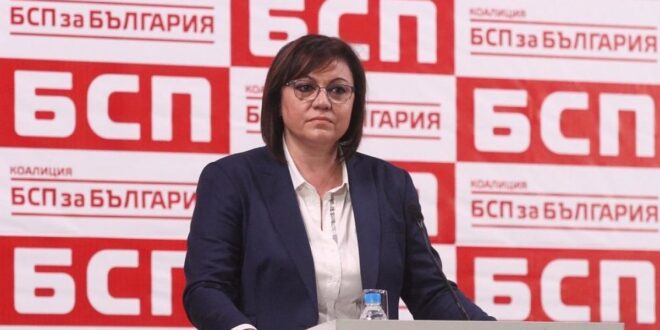
After the shockingly good performance of There Is Such a People in the last elections, the Socialist Party is licking its wounds in third place and is apparently looking for a way to focus voters' attention on itself. The series of proposed left-wing bills in recent weeks are a demonstration of this desire to discover the party's ideological roots. No small success was achieved with the pension initiative in parliament, the topic was stirred up and resonated with voters for the first time in years.
However, the BSP missed the big political reorientation from the summer protests, felt by all other parties and initiated by the president. The race for the vote in April was – who is the most convincingly anti-GERB. In a sense, Positano has not yet fully understood it, after at one of the few sessions of the 45th National Assembly they voted together with the (former) ruling party and the MRF to fail the plenary day. Unlike our liberals, the BSP cannot afford such tactical moves, even if they make sense in the hall. According to Rene Girard's theory, Borisov is already a sacrificial lamb and standing in the way of the mimetic resolution cannot be healthy, even for centenarian parties.
A course correction towards a sharper anti-GERB line is probably already happening, but it will not be enough. The fourth most critical party of Borisov cannot stand out particularly in front of voters. Therefore, it will be important for the BSP to capture the other major reorientation, currently underway and well described by the British historian Steve Davis. It is already in an advanced phase in the Anglo-Saxon world and represents the separation of society around a new main dividing political line. Until recently, this was the degree of state intervention in economic processes, giving way to the issue of nationalism (localism) versus globalism. Trump and the Brexit movement were clearly the carriers of the process in the USA and the UK.
Months ago, I wrote in the Libertarian Society Discussion Group that GERB is the progressive party, BSP is the conservative one, and everyone is liberal. We will ignore the latter, but Assen Genov, like a trained political hound, invited me to talk about this (perhaps) unexpected ideological division. Especially since some are making serious efforts to brand themselves as right-wing, while others wear the left label. How is it possible then that the right-wing are supposedly progressive and the others are conservative?
As we have explained before, GERB imports the progressive policies of the EU wholesale, because of the material interest in the "fat" that goes with them. The ideology is entirely the one that goes with the grants - hence the logical attachment of the outgoing cabinet to the Istanbul Convention, for example. Obedience to the US and Russia is also at a level, but with them the interests include significantly more business than ideology and policies. Fighter jets and patocs, modestly garnished with a gay parade and donations to the Orthodox Church, respectively. The balance has been achieved without too much surrendered sovereignty.
The promiscuous behavior of NGOs is especially visible when we consider that GERB was in a coalition with “patriots”, “nationalists” and “conservatives”. VMRO and its ilk participated in the attempt to abolish the 140-year-old national currency, in the attempt to introduce the IC, in rolling out the red carpet for the Green Deal, in the intensifying process of transferring sovereignty to institutions outside the country. In other words, nominal Bulgarian nationalist politicians took a position on the new dividing line – only on the side of globalism and progressivism. They even helped ban the Lukovmarch, posing as a “legitimate opposition”. It is no coincidence that a party like Vazrazhdane is showing increasingly better results, taking the real nationalist position on the listed and similar cases.
To understand the conservatism of potential BSP voters, we must go through Andrey Slabakov. The artistic long-haired rebel, wearing Che Guevara T-shirts, who is today an MEP and a pillar of traditional morals. How so? What are these morals? What does an AS want?
He wants to "grill" - to smoke his cigarettes, eat his grill, drink his brandy, be a boss at the TPP. He wants men to be men, women to be women, and if we are going to have a certain empire, at least it should not be the most crooked. He doesn't care what some third-rate GERB/VMRO employees have copied that is conservatism from American Twitter. Let life be like the 75th or 95th, but with more levs ( not euros ) in his pocket. He will accept (old) Azis, but in the pub and on Planeta, not in the child's or grandchild's textbook.
They don't need a progressive tax for the rich. They're not Sofia-based intellectuals who suck up to Bernie or AOC, and they're not stupid enough not to understand that in the end, they'll be the ones paying these taxes, not the charlatans. They want you to show them that you're one of their people. Just as Boyko Borisov can no longer fool the (otherwise naive) smart-alecks, Sergey Stanishev is not an option for the future of the BSP. And if you're so worried about what modern leftist thing to do for the Bulgarian youth underclass, legalize their weed, you have no idea what harassment they face every day because of it.
Hundreds of thousands of grilling boomers, disappointed pensioners and literally forgotten marginal youth are like a heavy fruit in front of the noses of Bulgarian parties, waiting to be plucked. Many civil servants are seething in quiet anger at the ladybugs and the complete transfer of sovereignty to Brussels. But all of them must be offered a long-term ideological vision that is not limited to Borisov and the Gerbavshchina. In other words, most parties are faced with the current problem of the BSP – how quickly will the periphery of Democratic Bulgaria melt away, now that the big enemy is gone? What will Slavi do?
There are people with political sense in the Socialist Party, I know some of them. But at this stage it seems that the Centennial Party is not listening to its voters. There is no one to pluck the fruit from the tree. 80% of the BSP members want a referendum on the euro, their party is silent. Why? Because they are afraid that they will be accused of Russophilia. Strange in itself, since the BSP is supposed to be a gathering of people with a bias towards Russia. And what are they actually going to do, clap their hands at Vladi Goranov? How many opposition trains will be missed?
If the application of Davis's theory of reorientation in our country is correct, we will have at least another year or two, at the end of which we will end up with clearly delineated new dividing lines. These processes are nearing their end in the US and UK. The political leaders who are the first to sense where they can position themselves will be the main winners.
With the recent changes in the party leadership, GERB is trying to rely even more heavily on the "Euro-Atlantic" rhetoric. They are trying to win back the votes of the Sofia burghers, but at most they reach the disoriented boomers, who are already passive gerberas anyway. They are trying to pressure President Radev into the aging debate "either with the Kremlin or with the good guys" ( hypocritical in itself ), but it seems that he manages to sense that things are no longer looking so simple.
It is no coincidence that at the summer protests we saw many posters, pleading, smart and beautiful, begging Frau Merkel to pay attention to our oppression under the scumbag rule. There is no good EU. Ilchovski said it right to his face. The entire regime is holding on thanks to European money. Moreover, that is why they were let here by Brussels. I will simply quote Hristo Ivanov:“The EU turned a blind eye to what is happening in Bulgaria”, “European funds are the life-saving blood in the veins of the mafia”, “this level of conquest of the state is only possible thanks to European funds”. Hellooooo, as Chef Rowe would say.
The end of the Transitional Policy is coming, let's see who will reorient first...and win.