EKIP– Expert Club for Economics and Politics A Different Opinion
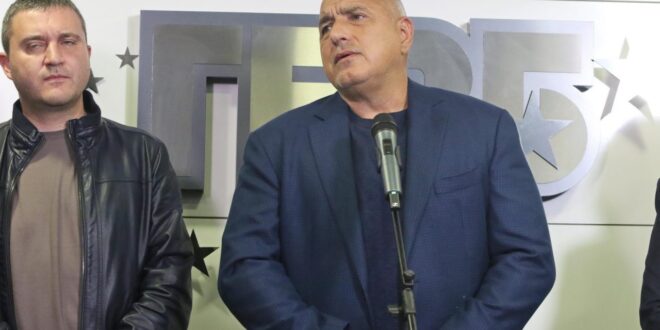
Boyko Borisov and his power apparatus are the main obstacle to the ongoing processes of political realignment in Bulgaria [1]. For and against the Gerbadzhi domination is our, local division, which even today manages to unite in one camp forces with opposite attitudes to the new main dividing line in countries with Western-style politics.
DB, BSP, PP, Vazrazhdane, ITN and possibly DPS – may have different opinions on the war in Ukraine, vaccines, Macedonia, the eurozone and others, but they certainly place among their top priorities Borisov being, if not sent behind bars, then at least permanently deprived of access to government. In fact, all of them, except DPS, were shoulder to shoulder in the protests in the summer of 2020, and some were even persecuted by the repressive apparatus of the state.
The strong and active GERB is the glue that (barely) holds Bulgarian politics from shifting into a clear division along the globalism/nationalism axis. The former rulers are giving the BSP a fig leaf to continue participating in a coalition led by obviously pro-globalist and anti-Russian parties like the PP and DB. It’s not that Kornelia Ninova and the party apparatus itself need access to “resource” ministries, the coalition is there to prevent Boyko from returning to power.
In fact, the coalition was weakening because the new divisions were starting to wash away the GERB glue. Last week in the National Assembly, Borisov's deputies seriously proposed to the ruling party their candidate for governor of the BNB - the outgoing governor - Dimitar Radev. And this seemed like a possible option, considering that the ITN broke away from its partners when voting on the new deadline for candidacies to occupy the post of "banker number one". After the arrest, a brief rally followed, and with the vote for the governor of the BNB, the holes became visible again.
The party of the former prime minister also seems ideologically confused in the new division. It cannot find its place in the new division. On the one hand, it organizes seminars with its youth to promote the moldy anti-national conservatism of the VMRO. On the other, just two days ago, Borisov himself announced that he wants to send Bulgarian weapons for military operations in Ukraine. Obviously, either they do not have ideologists with the necessary knowledge, or they do not listen to them, or they act with strictly conjunctural goals (the approval of our Western allies is sought, for the purpose of protection at home). They certainly do not understand that their chance for survival (as for all parties) is correct and timely positioning along the new dividing axis.
The situation in our parliament today is beginning to resemble that in the lower house of the British parliament before the 2019 elections, when Boris Johnson won a decisive victory, taking many of the votes of his political opponents. Unformed temporary coalitions are positioning themselves along more than one political axis. Supported simultaneously by the old pro- and anti-GERB division, while at the same time being faced with new and new cases based on the new pro- and anti-globalism division – the parties are starting to play more and more in different situational coalitions.
The political forces (excluding Vazrazhdane and perhaps DPS) are worried about new elections and at the same time understand that they are facing a prisoner's dilemma. It is useful to stay in the government to accumulate resources, at the same time the actions of the cabinet harm their chances in a possible imminent visit to the polls. Whoever leaves the cabinet with a scandal (because of Ukraine, for example) will win, but will it be more than if everyone stays at the source of power? After all - the DB and the BSP are in the same cabinet, during a Russian war. On the other hand, parties like ITN and some coalition partners in the DB may never see the parliamentary benches again.
The system has two equations. The reward and salvation are for those who most successfully position themselves in the new rearrangement, but only after Borisov's exit from politics, whoever he may be. A solution is needed for both Borisov and globalism.
[1] You can read more about the rearrangement in our other publications – HERE, HERE, HERE, HERE, HERE and HERE.