EKIP– Expert Club for Economics and Politics A Different Opinion

 Глава II-ра. Предните части можете да видите ТУК и ТУК
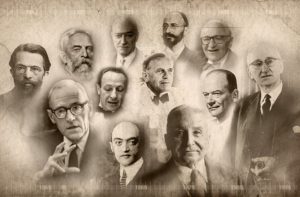
How did the Austrian School of Economics originate? To understand more fully and comprehensively the contribution of the "Austrians" to economic science, we need to briefly familiarize ourselves with the origin and evolution of their ideas, with the important names in history, and with the result of their research. An adventure that will inevitably be both interesting and exciting, as well as useful from a practical point of view.
The main distinguishing feature of Austrian economic theory is its inextricable connection with reality and real people, with economic phenomena as they are, and not in themselves or in the model of some professor. In this chapter we will look at a small part of the contribution of the circle of thinkers along the lines of the ideas and followers of the great "Austrian" economist Ludwig von Mises. Going back years in history, we will see individuals passionately and devotedly defending their positions, facing dozens of challenges and obstacles on their way.
The Birth of the Austrian School of Economics – a Counterpoint to the Historical School
The roots of Austrian economic thought can be traced back to the early 15th century, when Spanish scholastics first attempted to explain the subjective nature of value in the context of prices and labor productivity. Later, in 1871, with the publication of Carl Menger's landmark work Principles of Economics, the foundations of the Austrian School of Economics and the beginning of the Marginal Utility Revolution were laid. [1]
"Principles of Economics" appeared as a kind of criticism of the ideas of the so-called German Historical School, which at that time was also widely held in Austria. It supported the concept that history is the main source of knowledge about human actions and economic processes. Its representatives denied economic laws, including the law of supply and demand. However, these laws are important and have a fundamental meaning for the way in which market participants navigate. For example, the statement that "other things being equal, if the demand for a good increases, then the price of this good will also increase" is a universal economic law. On the basis of it, economic agents can make decisions and plan their future activities. What they cannot know, on the other hand, is how much demand will increase if supply remains constant, or how other market participants will react given their subjective and individual point of view.
The “Austrians” categorically reject the logical relativism of the Historical School. Contrary to Gustav von Schmoller and other representatives of the school, they recognize the existence of universal economic laws that apply to all human actions regardless of time and place, the characteristics of market participants, and their ideological perceptions. According to Menger, of course, this does not necessarily mean looking for a connection between statistics and economic results. Statistics only illustrate, but do not explain, cause and effect, which he considers to be the foundation of economic reasoning. Economics is the science of human action, of choice, and its consequences. It deals with the constant decisions that people make regarding their needs and available resources. As Mises says, a person acts constantly because he wants to improve his current situation and eliminate the accompanying dissatisfaction.[2] Try doing nothing for a while because you like your current situation. How long will this last - a day, two, a month, a year?! Impossible, right? A person's priorities change, and they act according to their own understanding of what is most important to them.
The German Historical School would be consistent in its teachings if it denied the very idea of the existence of an economic science and published reports as an assessment of past events without making predictions about future ones. It denies economic laws, but this, as Mises writes, does not prevent its representatives from recommending or rejecting in the name of science many factors that have an impact on the future environment . [3] The great influence of the Historical School at that time was due to the imposition of such ideas and policies that benefited the government and led to serious negative consequences. The aggressive imperialism that twice ended in war, the unlimited inflation of the early 1920s, the planned economy and all the horrific consequences of the Nazi period were achieved under the rule of politicians advised by representatives of the Historical School. [4]
At first, German professors had a negative connotation for the term "Austrian economists." In Austrian universities, representatives of the school were tolerated as outsiders. The abstract and theoretical nature of Menger's analysis was considered incompatible with their narrow historicism. When Menger and Böhm-Bawerk began their academic careers, however, they were not shy about stating their position in rejecting the interventionism imposed by the classical economists. They considered it their calling to devote themselves to the construction of economic theory, building on their ideas and insights. Menger was deeply disappointed with the interventionist policies of the government in Austria, but he believed that he could contribute only through his books, articles and teaching. Böhm-Bawerk held the post of Minister of Finance twice for a short period of time. His actions were based on the principles of maintaining a gold standard and a balanced budget. [5] He performed well as Minister of Finance and enjoyed great popularity and respect in his academic work.
Representatives and followers of the Austrian School of Economics
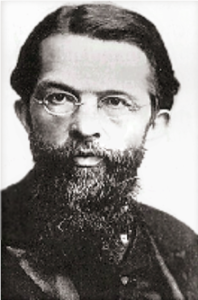
The foundations were laid by Karl Menger
We have mentioned Karl Menger several times – one of the most important figures and founder of the Austrian School of Economics. Karl Menger explains and builds the theory of prices and the price system in an amazing way. He formulates and introduces a precise, praxeological method for analyzing economic processes, placing human action at the center. After studying economics at the University of Prague and Vienna (1859 - 1863), in the summer of 1863, Menger began working as a journalist. Although he received a law degree from the University of Krakow and was oriented towards legal services, he nevertheless chose a different path and decided to return later to his work as an economic journalist. With his work and dedication, he contributed to the publication of a daily newspaper.
As an economic journalist, Menger discovered a great discrepancy between the opinions of classical economists about the most significant factors that influence price formation and what market participants share. Whether this is where the inspiration and passion of the “Austrian” economist for the transformation of price theory originates, we cannot say, but it certainly becomes his ultimate goal. [6] He also argues that choice is the natural right of every person and is directly related to his subjective values and preferences. People’s actions are dictated by their personal motives, goals, and aspirations. We can assume, but not be sure, about the motives that provoke a person to take one action or another. We can study the consequences of the move taken, but not measure the value or predict the reason why the individual takes one step or another.
Despite the difficulties and obstacles he encountered on his way due to the fact that his insights were rejected by the dominant Historical School in the 1970s, Menger's works found many followers, among whom Eugen von Böhm Bawerk stood out.
 The Contribution of Eugen von Böhm Bawerk
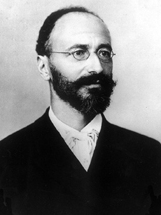 The Contribution of Eugen von Böhm Bawerk
He is a prominent representative of the Austrian School of Economics, who developed Carl Menger's theory of "marginal utility". Early in his career, he answered the question that concerned the general public: "Is it justified to pay interest to the owner of capital?" His answer rests on the undeniable fact that people value current goods more than future ones. Let's assume that you do not have the full amount at hand to buy the car you like at the moment. If it is more important for you to have it now than in 2 years, its acquisition will inevitably become more expensive if you decide to take out a loan to finance the remaining amount. Böhm Bawerk explains that when interest rates are not subject to manipulation by the central bank, they are determined by the different time preferences of individuals and their tendency to consume more at the present moment than in the future.[7] According to him, interest arises as a result of the rejection of current in favor of future consumption, on the basis of which he builds his theory of investment, production and use of capital. Böhm-Bawerk is a strong defender of economics as a theoretical science at a time when "historians" tried in every way to destroy it as such.
"Eugen von Böhm-Bawerk was in the right place at the right time to make a major contribution to the development of Austrian economics," writes Professor Roger Garrison in The Great 'Austrian' Economists. [8] After completing his doctorate in law in 1875, he turned to teaching economics in his native Austria. The most notable period of his career was his time at the University of Innsbruck (1881–1889), during which the first two volumes of Capital and Interest were published. In 1959, the 1,200 pages were translated into English by Hans Senholz and Georg Hunke and published as a separate volume. Mises singled out Böhm-Bawerk's writings as "the most significant contribution to modern economic theory." He points out that no one can claim to be an economist until he is thoroughly familiar with the ideas developed in this book. He believes that no one who takes his civil rights seriously should exercise his right to vote until he has read Böhm-Bawerk. [9]
In his book, Böhm-Bawerk gives a strong and well-reasoned critique of Karl Marx's theory of exploitation, explains the production processes in the economy and interest rates, and develops a theory of value and prices based on Menger's principles. Böhm-Bawerk thinks like an economist and defends his point of view like a lawyer.
In the footsteps of Ludwig von Mises
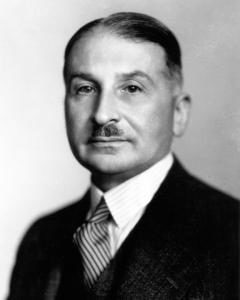 In the footsteps of Ludwig von Mises
Among Böhm-Bawerk's students stands out the great mind who left a great mark on Austrian economic thought - Ludwig von Mises. His first major achievement came in 1912 with the publication of the book "The Theory of Money and Credit". Developing his teacher's ideas, Mises emphasized that the origin of money should be sought not only in the conditions of a free market, what is more - this is the only possible way for its emergence. His interest and research in this area were carried over into the implementation of an even greater initiative - the founding of the Austrian Institute for Business Cycle Research. In this endeavor, Mises was supported by his student Friedrich von Hayek, with whom they jointly laid the foundations and enriched Austrian economic analysis, developing the theory of the business cycle.[10] They consistently and logically explain that the negative economic effects resulting from monetary policy are invariably a consequence of an increase in the money supply by the central bank. The intervention of the central bank to maintain the so-called "price stability" using monetary instruments leads to a distortion of market signals, which does not allow entrepreneurs to adequately calculate their future cash flows. The theory of Mises and Hayek dominated in Europe until Keynesianism failed to impose the opposite belief, namely that the free market is responsible for the emergence of economic ups and downs. The dominant position of this economic trend and the easy way in which it manages to make its way are not surprising, considering the fact that every wave of government spending, inflation and budget deficits is welcome for every ruler.
Ludwig von Mises's great contributions do not end with monetary theory and the theory of the business cycle. He explains the reason for the impossibility of carrying out economic calculation in a planned economy by pointing out that in the absence of market prices for the factors of production, the calculation of profit and loss is impossible. If you cannot calculate the costs of production, how will you choose the most economical option? If you do not know how to get to a given place, you can wander, search, go around, but even if you reach the goal, it can cost you a lot of time and unnecessary expenses. Imagine all economic processes happening in this way. The end will not be good. With his analysis, Mises actually predicts the collapse of the socialist system.
Mises clearly defines economics as the science of human action of individuals with their own free will and proves that economics is the most developed part of the more general science of human action – praxeology (a general theory of human action, dealing with the actions of individuals and the means they use to achieve certain goals). The economic problem of the impossibility of ensuring the best use of resources in a planned economy is also connected with the problem of the use of knowledge in society. A question on which another representative of the Austrian School of Economics – Friedrich von Hayek – focused. In his essay “The Use of Knowledge in Society” [11] Hayek, a Nobel Prize laureate in economics, explains that knowledge in society is dispersed, and thanks to the information carried by price signals, economic agents can most quickly and effectively orient themselves on how to satisfy the needs and preferences of consumers.
Murray Rothbard and a broader view
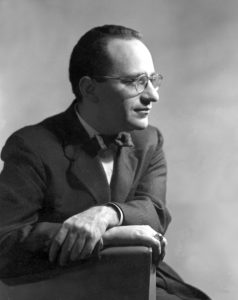 Murray Rothbard and a broader view
Each generation of economists enriches and leaves its contribution to the development of "Austrian" economics. The name of another key representative of the third generation of "Austrian" economists - Murray Rothbard - is also associated with a serious amount of creativity and great merits. He defends the position that economic laws not only exist, but are also "exact" and "apriori". Like his predecessors, Rothbard adheres to epistemological and methodological individualism, but is distinguished by his thought and clarity of expression, as well as his comprehensive view and detailed construction of ideas. His exceptional contribution is the book "Man, Economy, and State", which is considered to further develop and complement Mises's "Human Action". This book saves and popularizes the Austrian method, igniting interest in the school among young American economists working today in this tradition.
Rothbard has become a favorite of many followers of Austrian economic thought today. He is clear, consistent, and uncompromisingly reasoned in his reasoning. Murray Rothbard examines the theory of marginal utility, but he also leaves his personal mark on the Austrian School of economics by developing the concept of eliminating state monopoly in the areas of law enforcement, administration of justice, security, and defense. He denies the idea of limited state intervention or its role in protecting the rights and private property of individuals.[12] A “small” state always tends to become unlimited (totalitarian). According to him, even if the state limits its influence to the fulfillment of the function of protecting the property rights of the individual, the question comes to the fore: what should be the costs of security and to what extent can they be increased. Given the possibility of increasing government revenue through higher taxes, government leaders will inevitably increase spending on security and defense, while at the same time the quality of service will deteriorate. Is there any incentive to provide better service when the revenue to fill the government treasury rests on the possibility of imposing higher taxes in one form or another?!
Returning to the theory of marginal utility and economics as a science of human action, Rothbard considers two laws.[13] According to the law of diminishing marginal utility, the value of each subsequent unit decreases as supply increases. On the other hand, the marginal utility of a larger volume/number of units is greater than that of a smaller one (the law of increasing total utility). For example, according to a person's subjective scale of preferences, 3 chocolates are valued more than 2. But each subsequent chocolate has a lower marginal utility than the previous one (the 1st is valued higher than the second, the second than the third, and so on). In other words, Rothbard concludes that there is no mathematical relationship between the marginal utility of 3 chocolates and that of the 3rd chocolate. A fact that is of great importance for understanding economic processes through the eyes of methodological individualism.
Another notable moment in the work of the Austrian representative is related to the theory of monopoly and competition.[14] According to Rothbard, as long as the conditions for free entry of new market players are in place, prices of goods, services and production costs will be minimized, and the needs and preferences of consumers will be satisfied in the best and most efficient way. Monopoly exists solely and solely thanks to the state. On the one hand, because of the privileges it provides to certain companies close to it, and on the other hand, because of its transformation into the final authority for all decisions in society. Can you compete with the state or choose how to protect property and maintain your security, denying its interference? The answer to this question is indicative.
Changing people's ideas and thinking may take a long time, but the path of development of Austrian economic thought continues to be followed by dozens of awake and searching young people all over the world. A ray of light for justice, a market economy and more individual freedom.
Sources:
[1], [10] - Why Austrian Economics Matters, Llewellyn H. Rockwell, Jr, Auburn, Ala.: Ludwig von Mises Institute;
[2] - 2011, Human Action: A Treatise on Economics, Publishing House "MaK" Ltd.;
[3], [4], [5] - 2003, The Historical Setting of the Austrian School of Economics, Ludwig von Mises, Online edition by Ludwig von Mises Institute;
[6], [8], [9] - The Great Austrian Economists, edited by Randall G. Holcombe; Auburn, Ala.: Ludwig von Mises Institute;
[7] – Austrian Economics, A Primer, Dr. Eamonn Butler, Adam Smith Research Trust 2010;
[11] – 1945, The Use of Knowledge in Society, Friedrich August von Hayek, Liberty Fund, Inc.;
[12], [13], [14] - The Great Austrian Economists, edited by Randall G. Holcombe; Auburn, Ala.: Ludwig von Mises Institute;
The article is part of a project to create a collection of basic postulates of the Austrian School of Economics, which we will publish periodically. You can download and read the first and second chapters together HERE